Mazarin House | Sustainable Apartments East London
Low-Carbon CLT Housing in East London | Sustainable Timber Apartments
Mazarin House is a development of six two-bedroom apartments in Woodford, East London, designed to maximise spatial efficiency, daylight, and environmental performance on a highly constrained urban site. Completed in 2014, the project establishes a low-carbon residential benchmark through the integration of digitally fabricated cross-laminated timber (CLT) construction and a rigorous, fabric-first design approach.
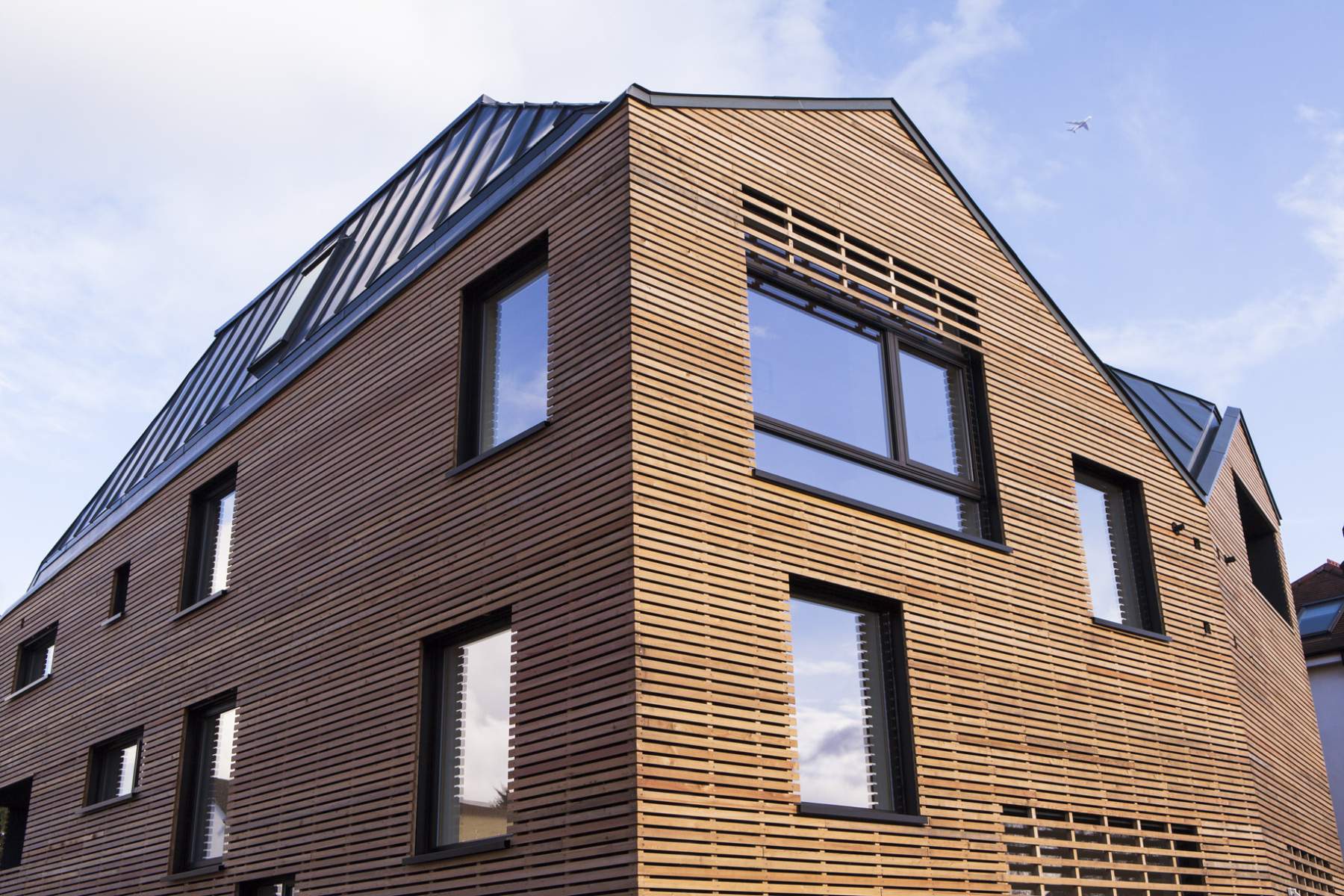
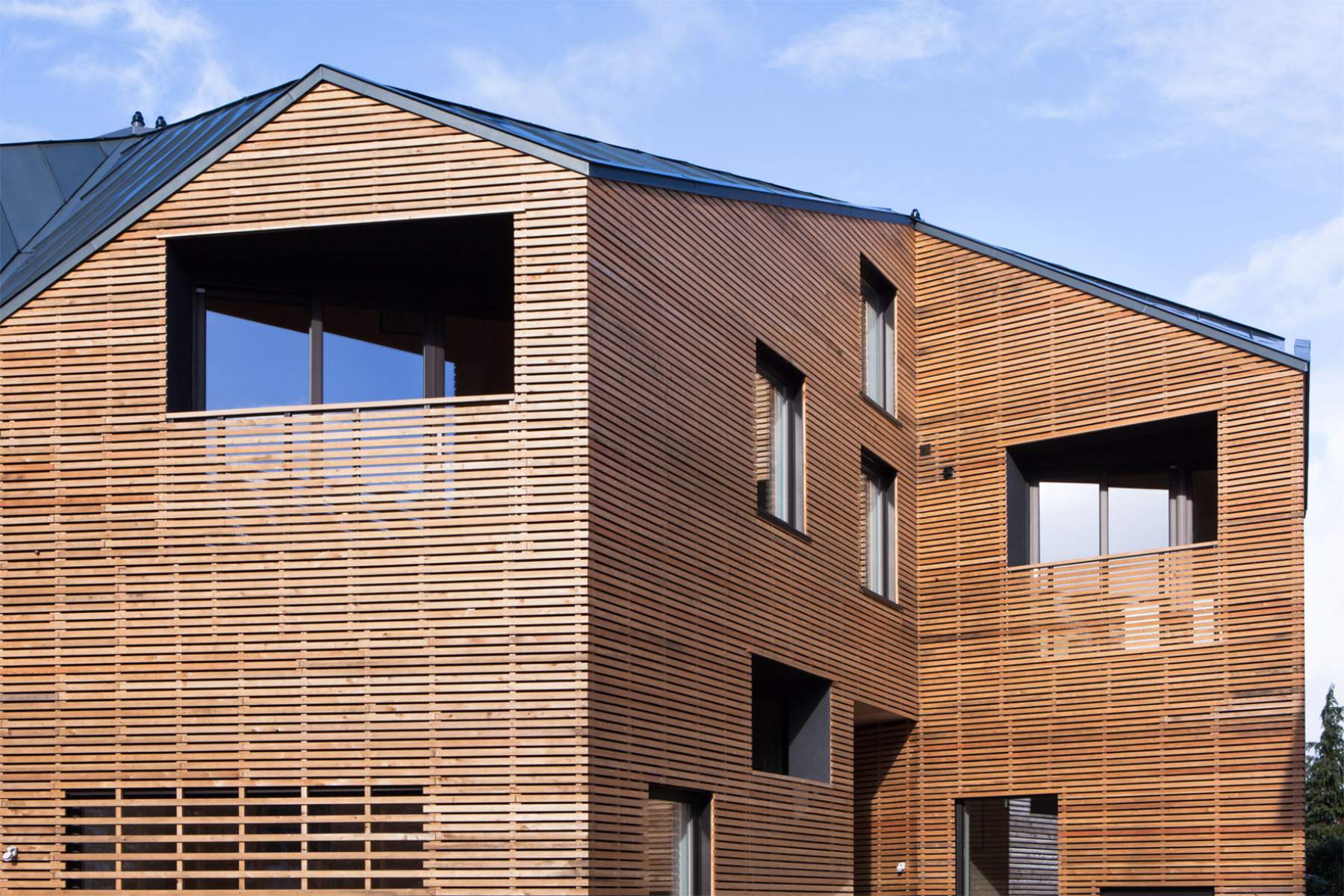
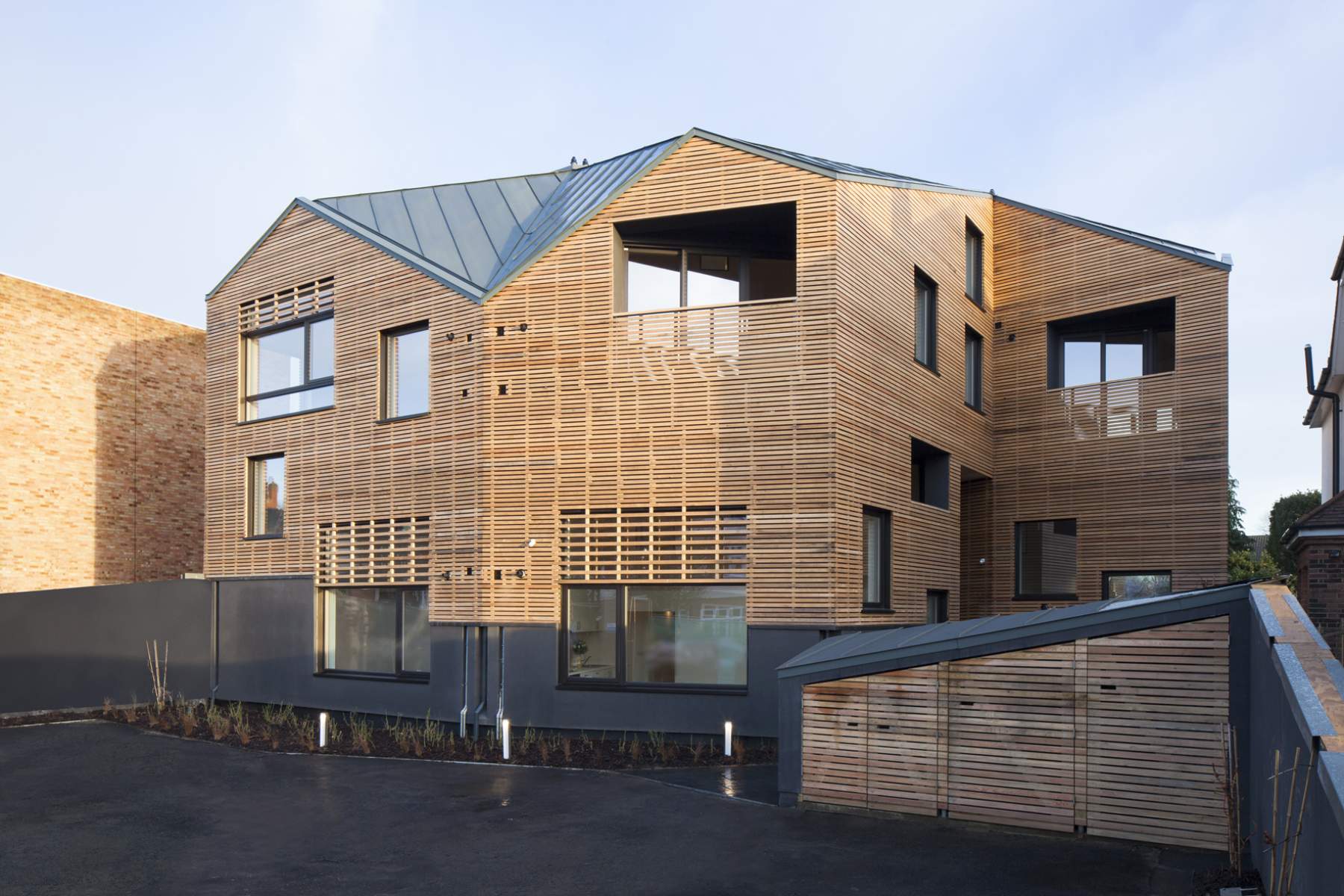
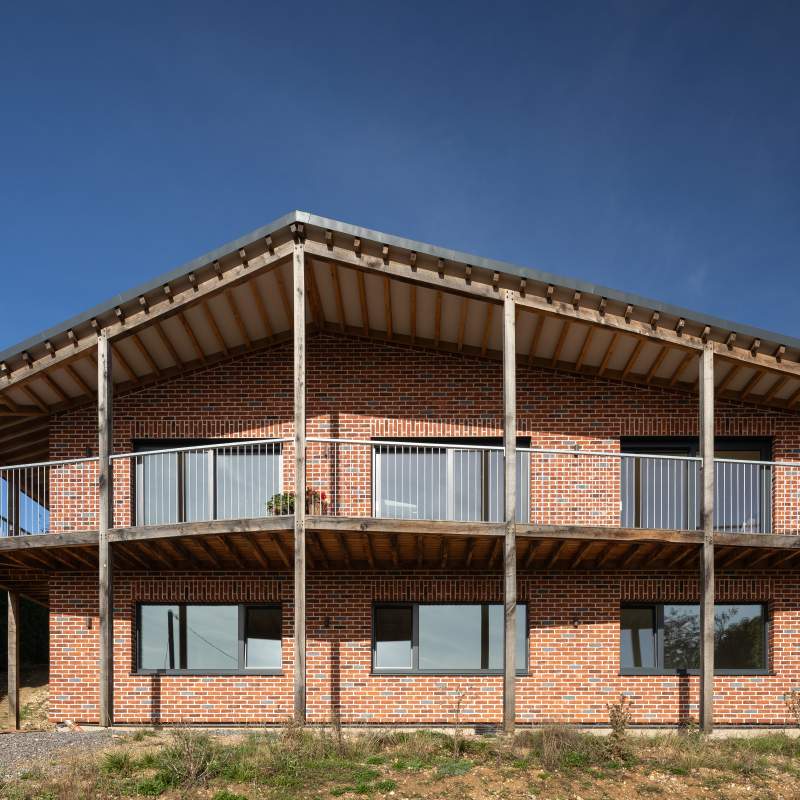
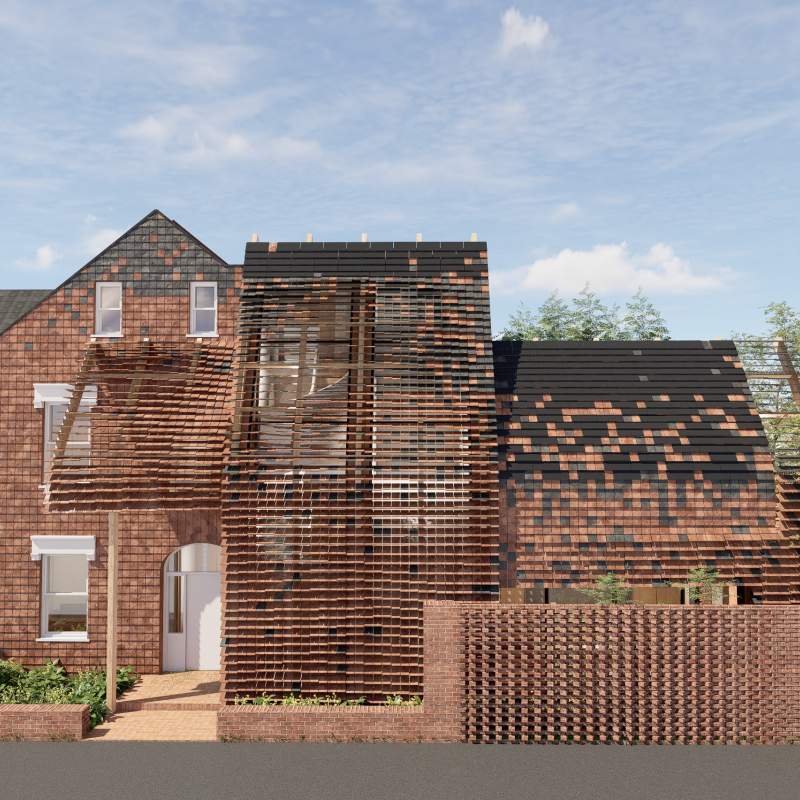
The site is located within a transitional urban condition, framed by 1930s detached houses to the south and west and 1970s apartment blocks to the north and east. The design responds by mediating between these contrasting scales, forming a hybrid typology that combines the density of apartment living with the proportions, massing, and roof character of surrounding houses. The building aligns with neighbouring plot widths and adopts a pitched roof profile derived from local double-bay typologies, enabling contextual integration within a varied streetscape.
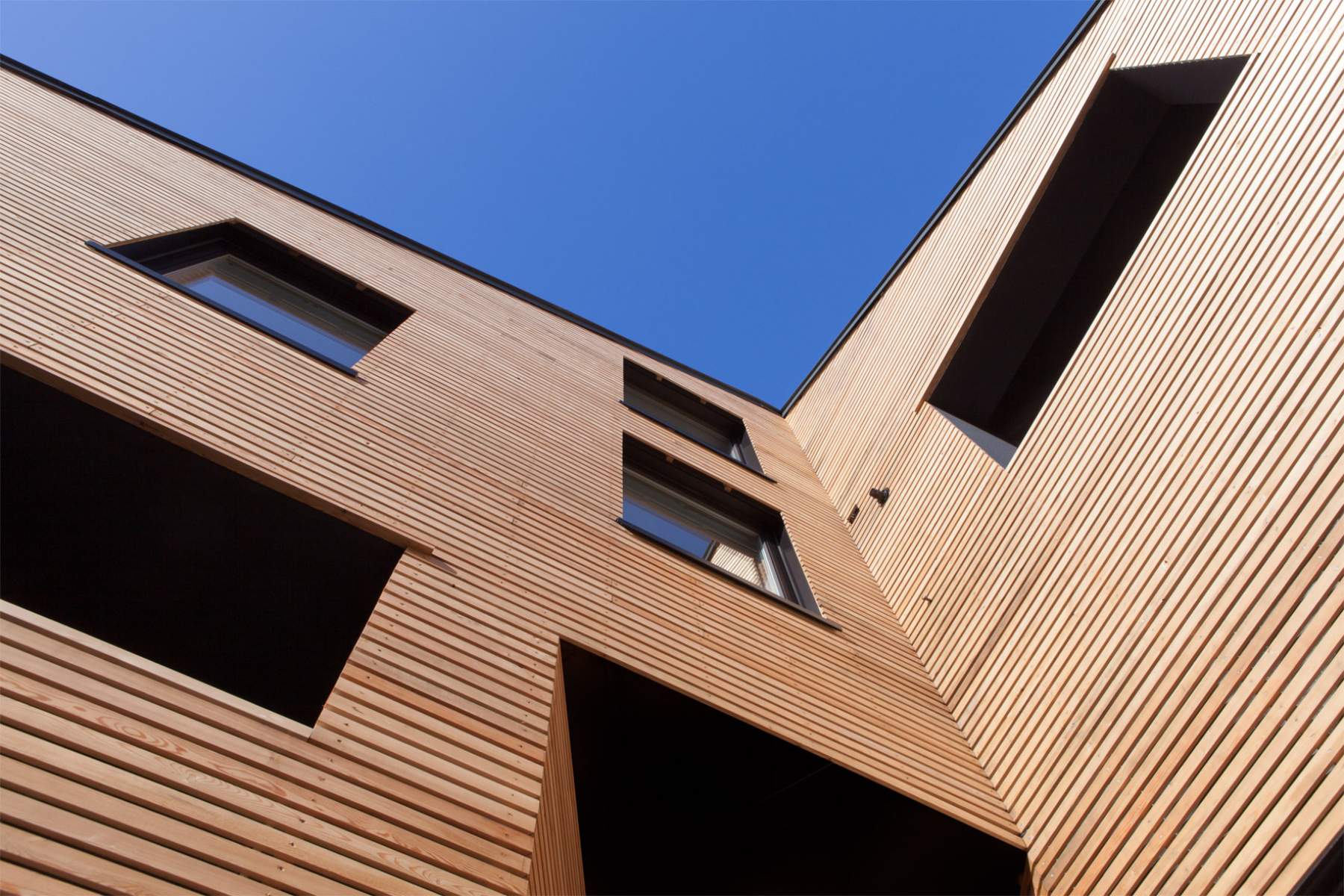
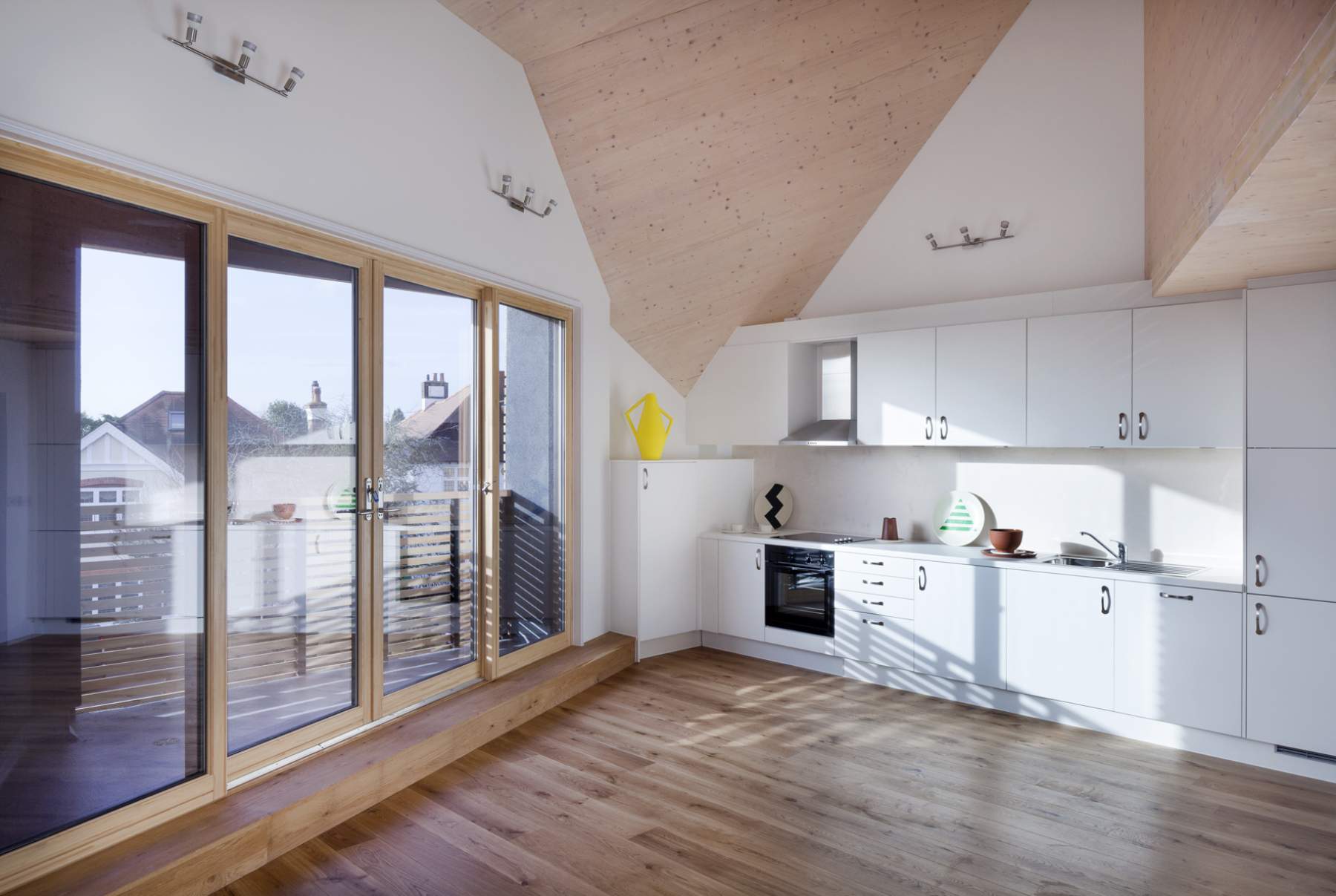
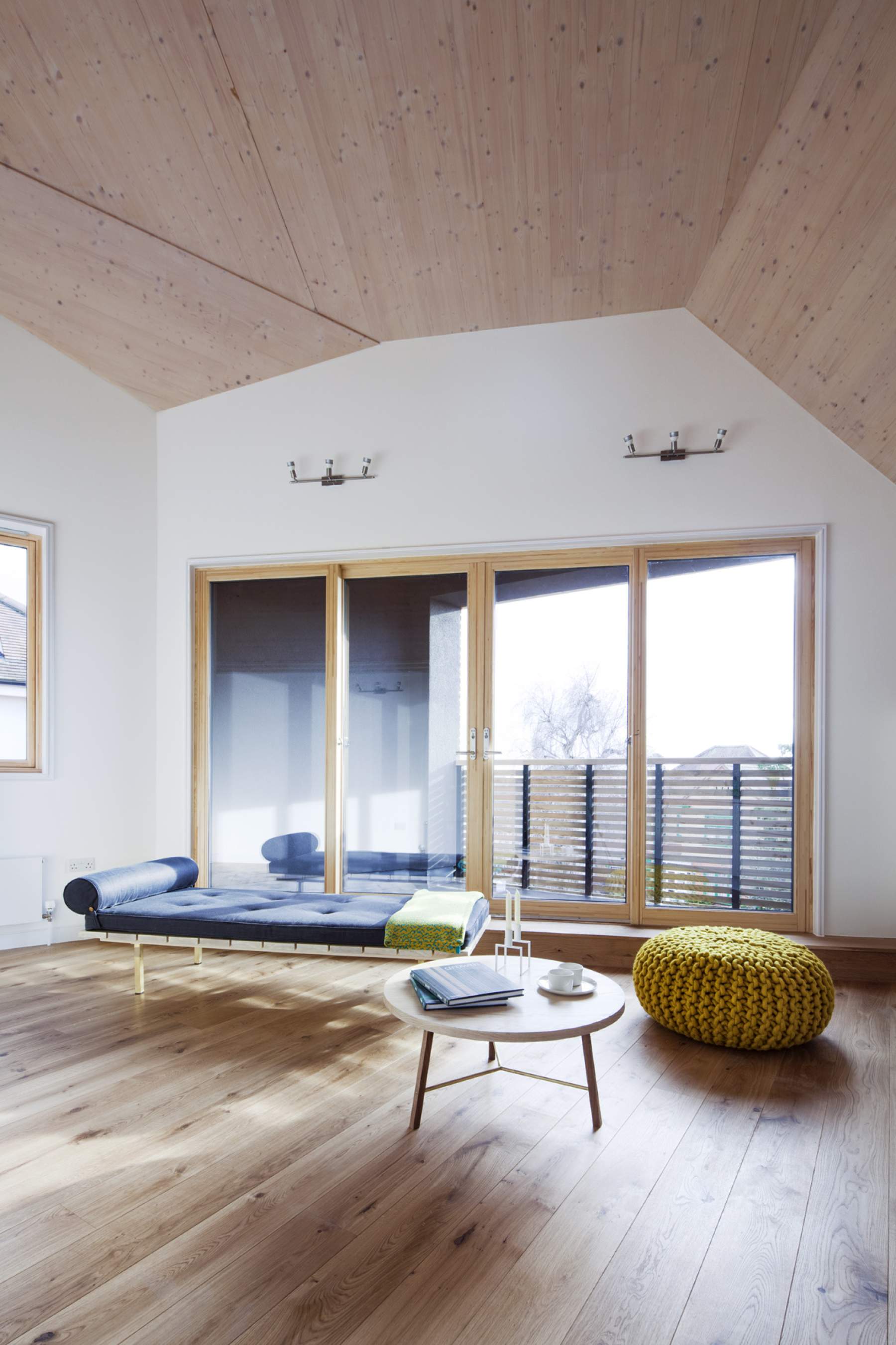
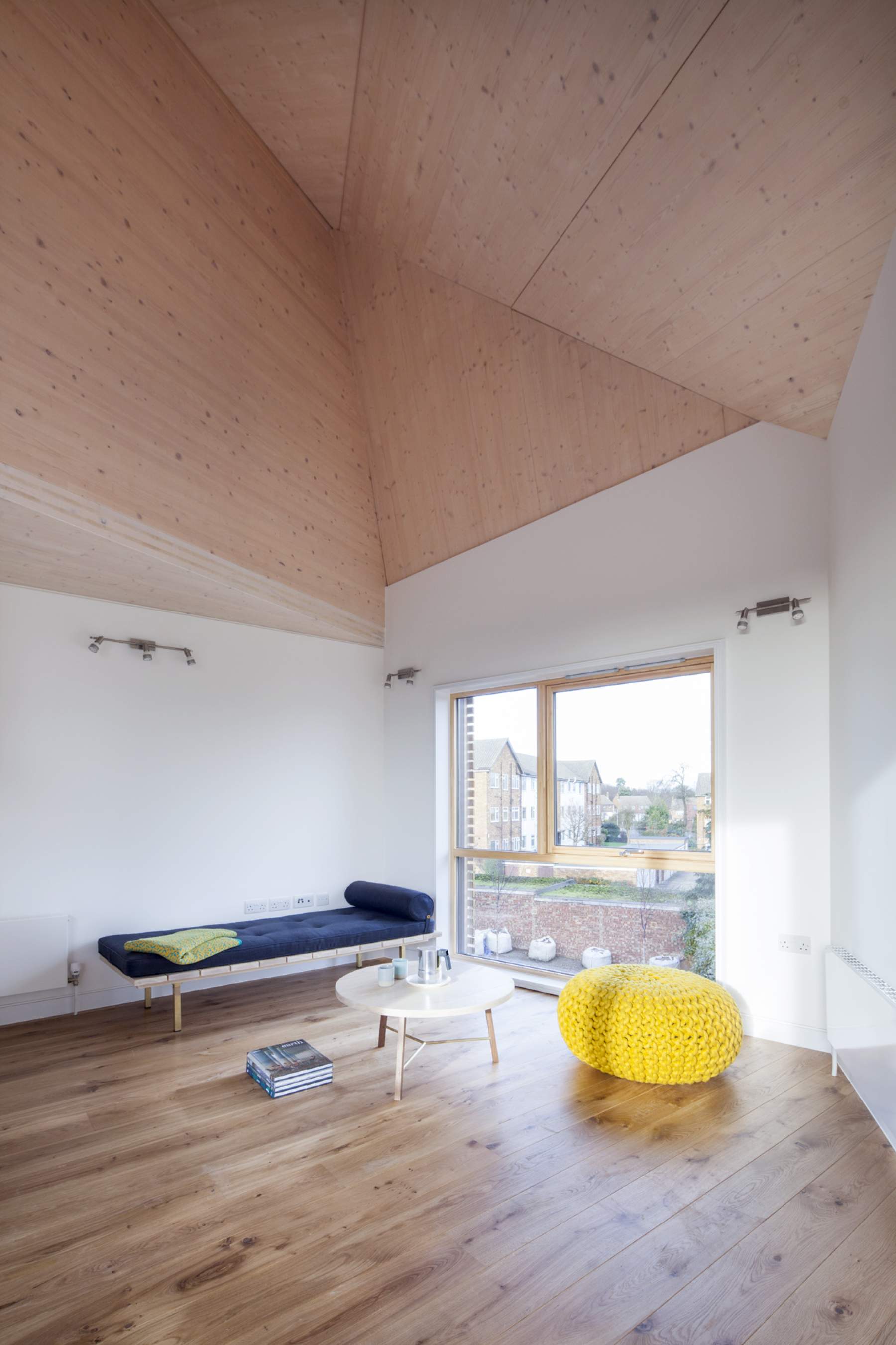
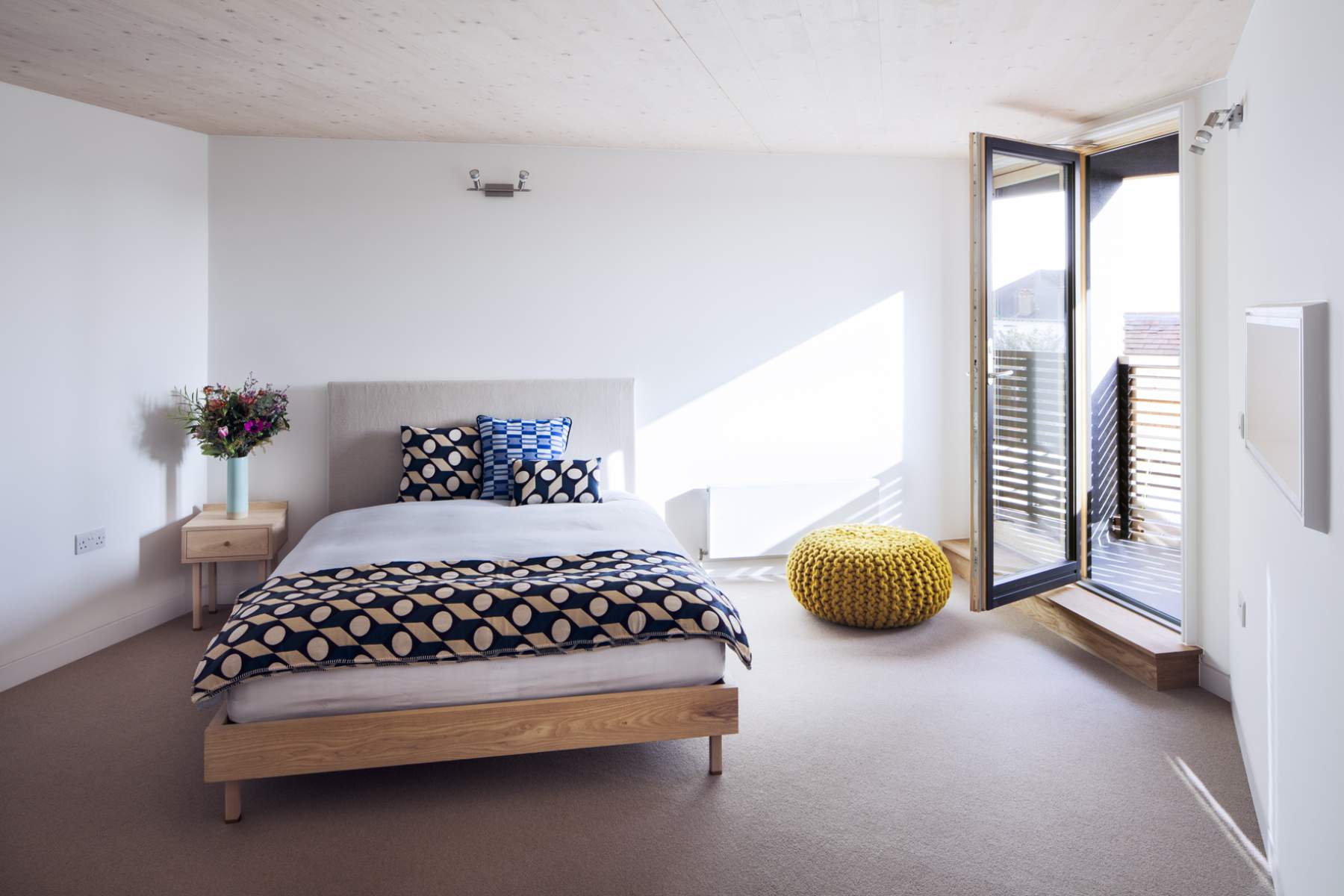
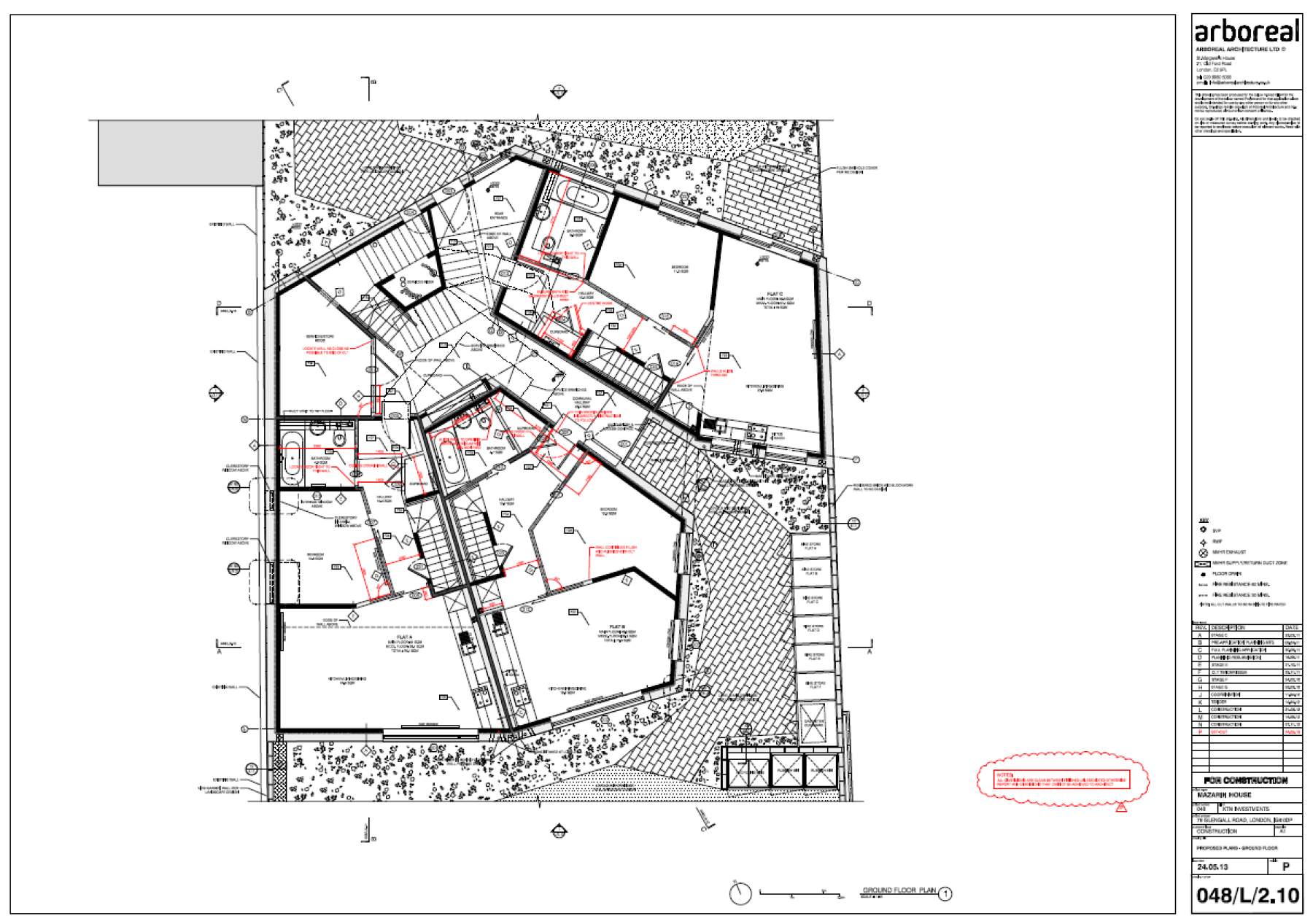
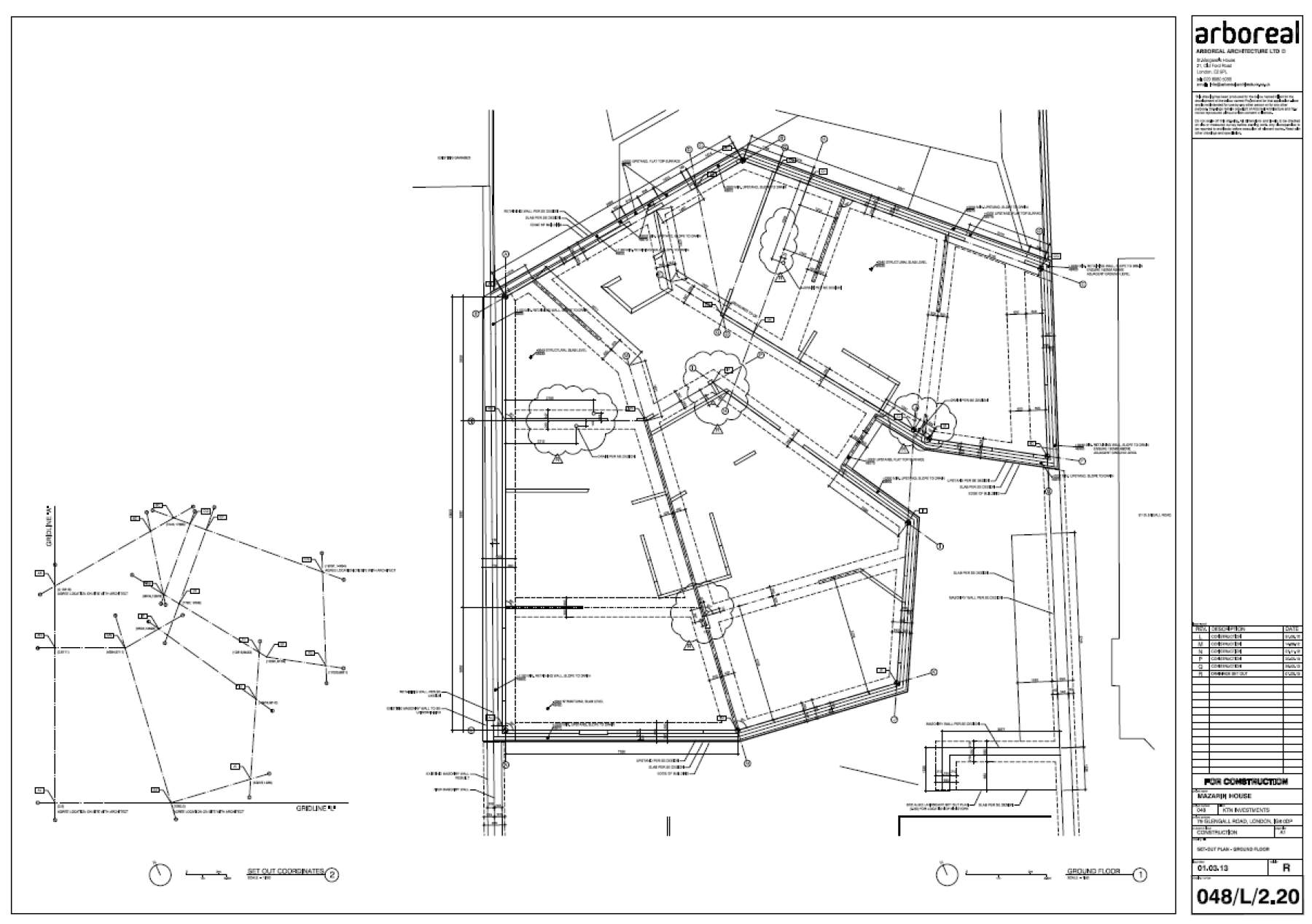
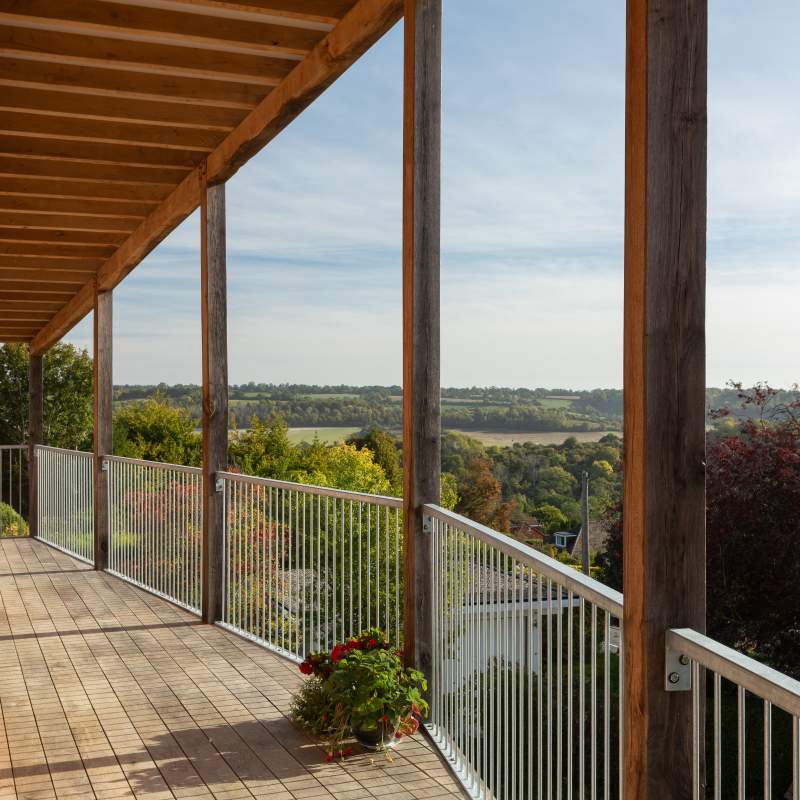
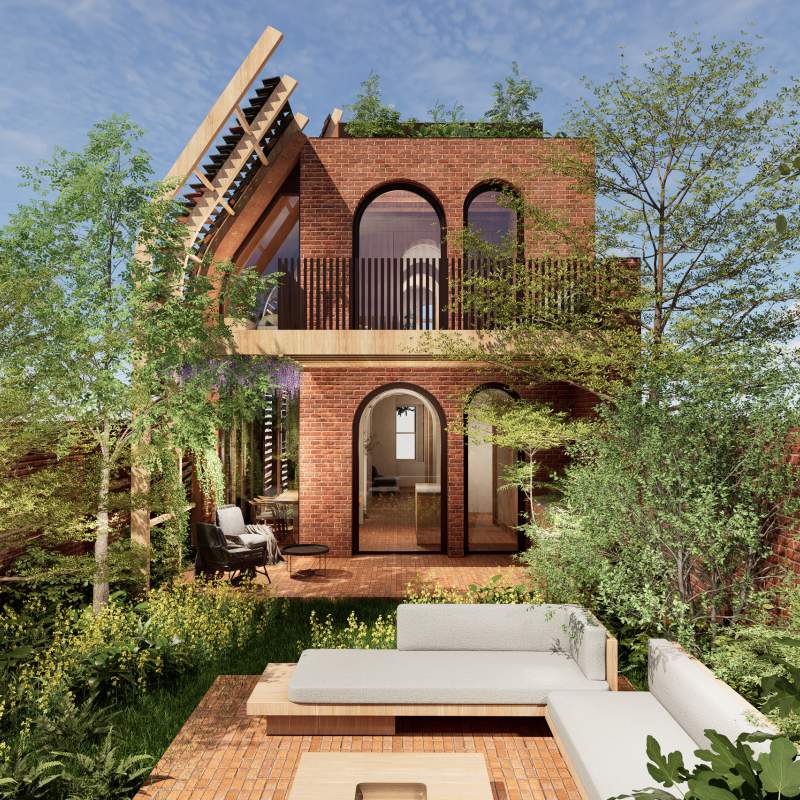
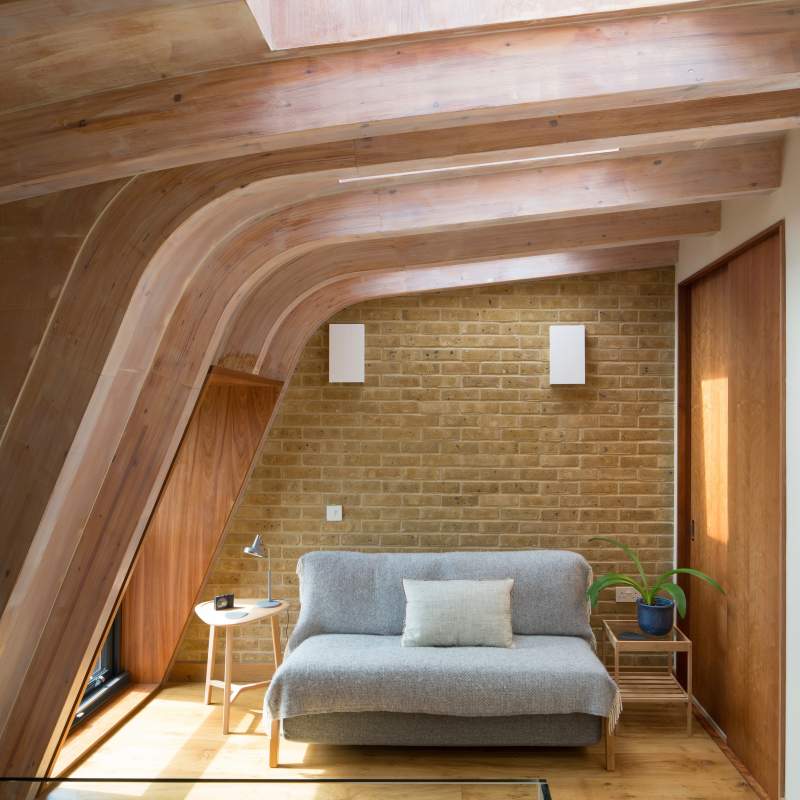
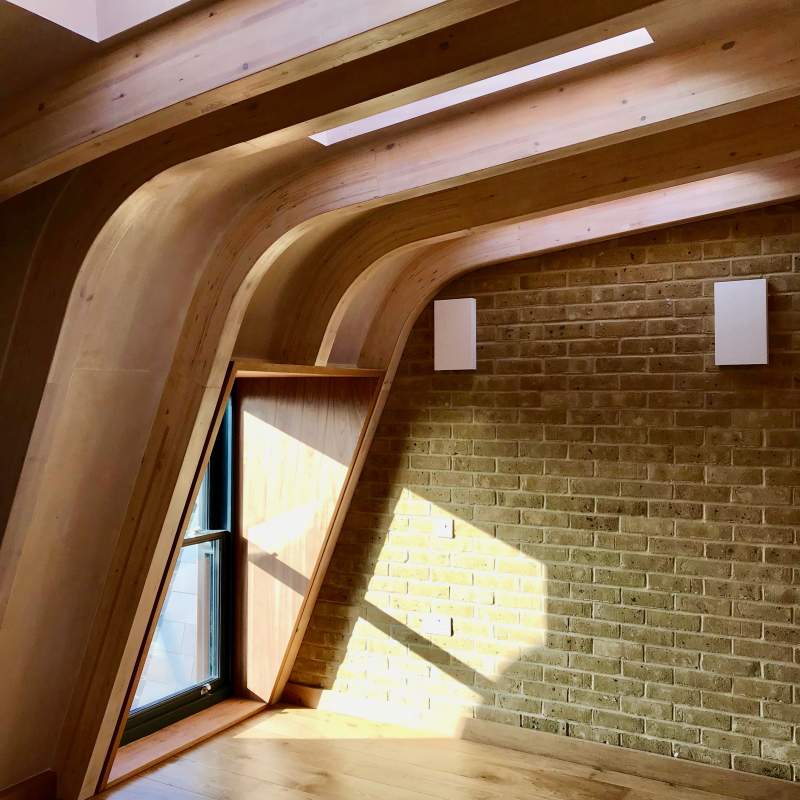
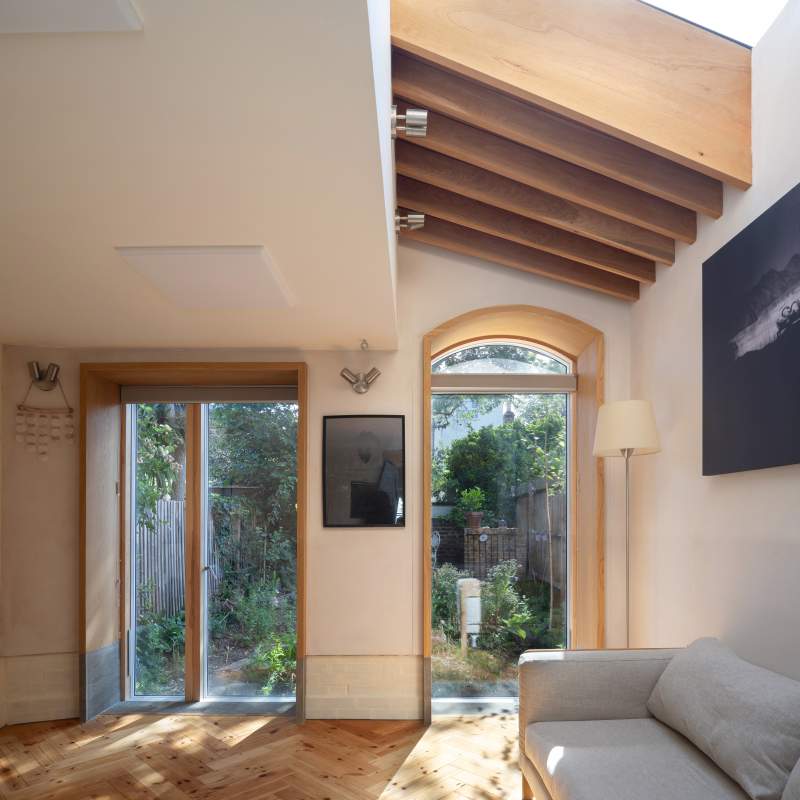
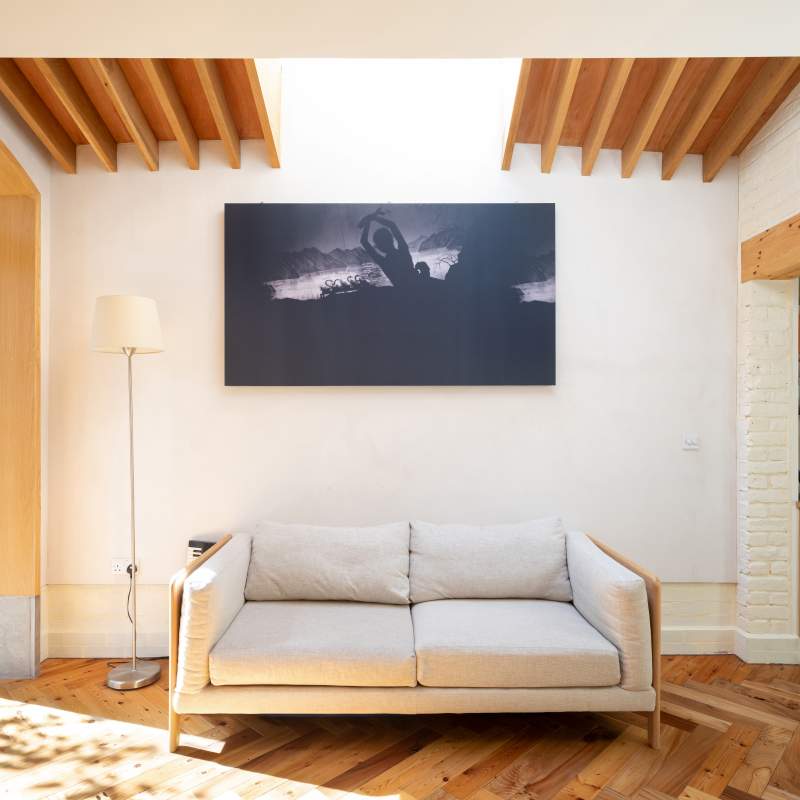
A non-orthogonal planning strategy was developed to optimise internal space, daylight penetration, and external views. This spatial approach enabled the delivery of four storeys on a constrained footprint while preserving light and privacy for adjacent properties. All six apartments benefit from south-facing double-height living spaces and generous private balconies, enhancing both spatial quality and passive solar gain.
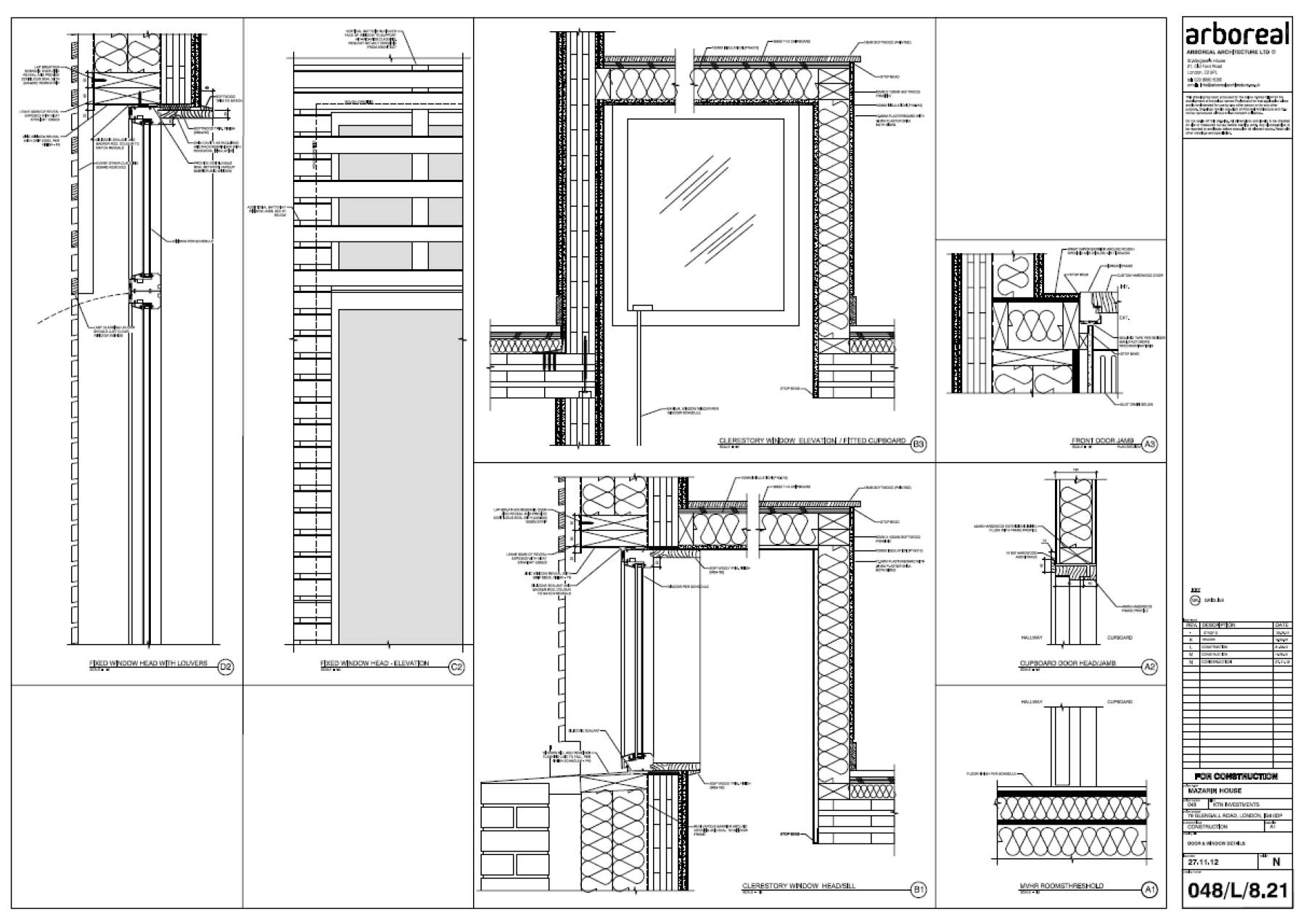
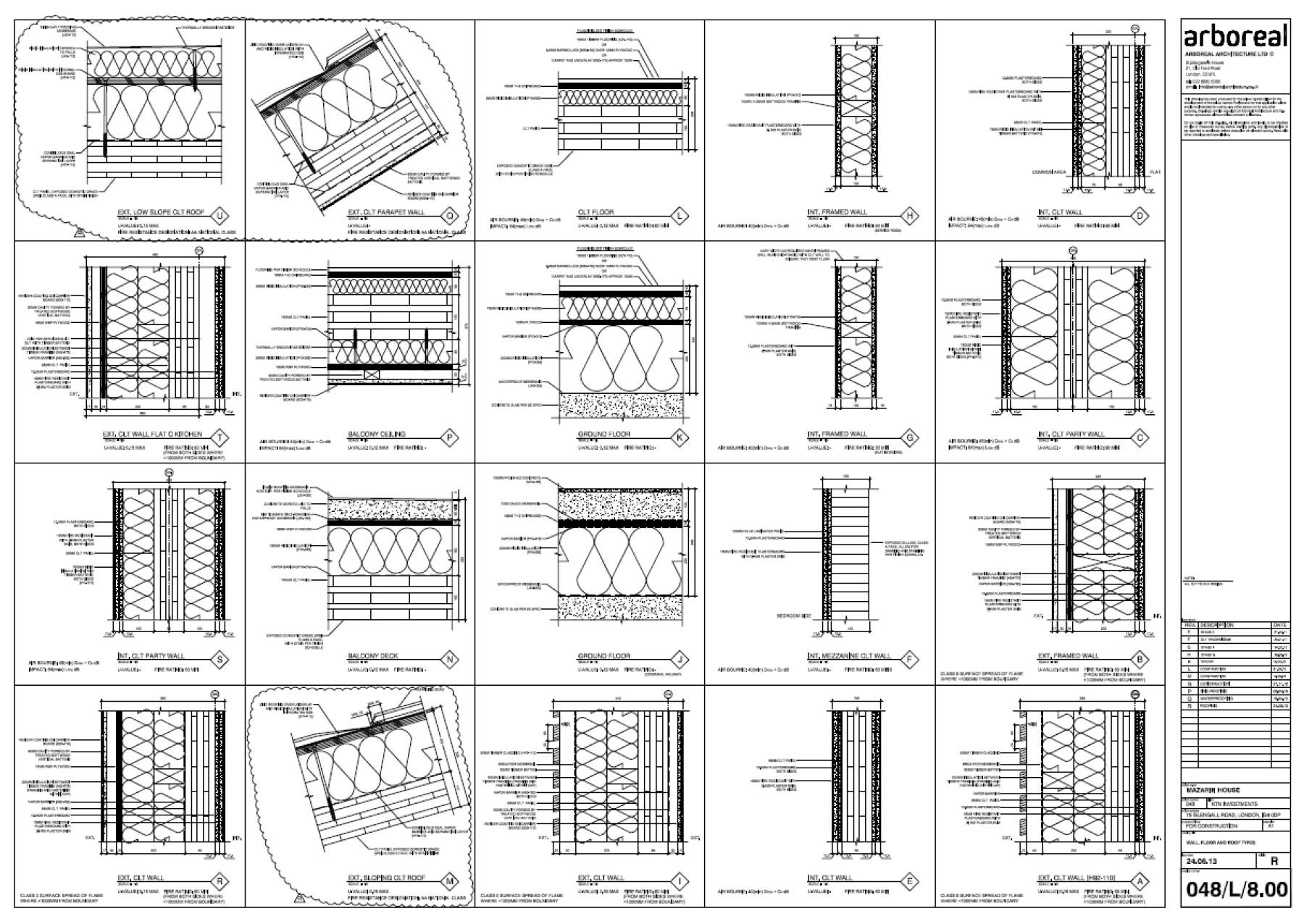
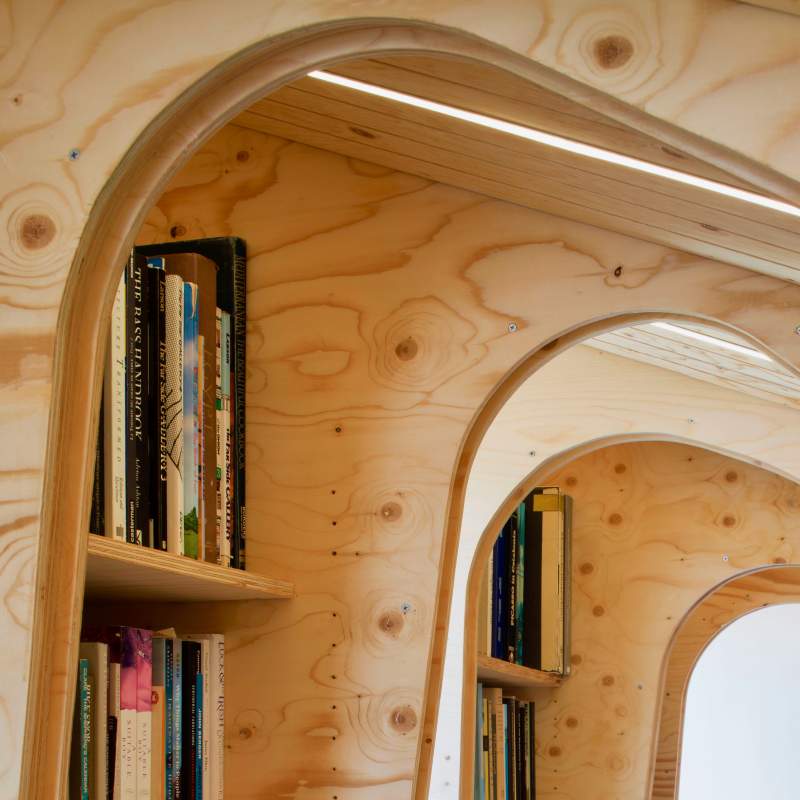
The building is constructed entirely from cross-laminated timber (CLT), forming a continuous structural and environmental envelope across walls, floors, and roof. This system delivers high levels of insulation, airtightness, MVHR and thermal continuity, while significantly reducing thermal bridging. The material strategy also achieves substantial embodied carbon reduction, with the timber structure acting as a carbon store and offsetting emissions associated with conventional construction methods.
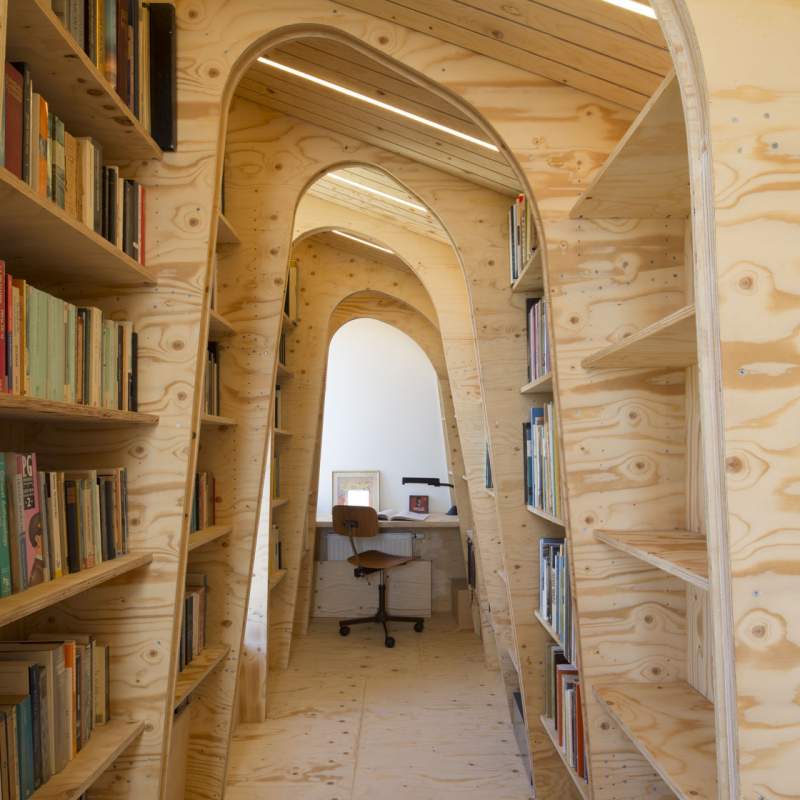
A fully digital design-to-fabrication workflow enabled the complex geometry of the building to be realised with precision. CLT panels were CNC-cut directly from a coordinated 3D model, allowing the non-orthogonal form to be assembled on site as a highly accurate prefabricated system. The result is a finely tuned architectural composition where structure, envelope, and spatial organisation are fully integrated.
Mazarin House was designed by Arboreal Architecture in collaboration with KLH UK engineers and has been recognised for its innovative use of timber construction and sustainable residential design, including publication on ArchDaily.
Location: East London, Woodford
Property type: Residential new-build
Scope of work:
Arboreal Architecture delivered the full architectural scope for Mazarin House, including concept design, spatial planning, and detailed development of a digitally fabricated CLT structural system. The work encompassed resolution of the non-orthogonal building geometry, integration of building envelope performance strategies, coordination with structural engineers, and development of a fully coordinated 3D model for CNC fabrication. The practice also led planning, material specification, and construction coordination through to completion, ensuring the delivery of a high-performance, low-carbon residential building.
Key Features:
Six-unit residential development in East London
Hybrid typology combining apartment density with townhouse proportions
Fully CLT structure: walls, floors, roof, and core
Non-orthogonal geometry optimising space, daylight, and views
South-facing double-height living spaces in all units
Private balconies for each apartment
High-performance building envelope with continuous insulation and airtightness
Digitally fabricated CLT system with CNC precision
Significant embodied carbon reduction through timber construction
Contextual massing responding to mixed-scale urban fabric
Project Achievements:
Completed 2014 by Arboreal Architecture in collaboration with KLH UK
605m² gross internal area across four storeys
Demonstrates early adoption of full CLT residential construction in London
Delivers net carbon reduction through timber sequestration
Featured on ArchDaily for innovation in timber architecture
Establishes a precedent for digitally fabricated low-carbon housing in dense urban contexts
As featured at Archdaily.