Hive Café | Low-Impact Café
A Low-Impact Café Interior in East London, Bethnal Green, Built from Circular Materials, Raw Timber, and Food Waste Pigments
The Hive on Vyner Street is an East London café specialising in organic, vegan and raw food, cold-pressed juices, and natural wines. The interior design follows the same ethos as the food it serves: minimal processing, careful sourcing, and a direct relationship to material origin and waste.
Developed by Arboreal Architecture, the project approaches the café interior as a low-impact constructed landscape, where material selection, fabrication, and assembly are driven by ecological awareness and circular use of resources.
Spatial Strategy
At the heart of the space is a nine-metre-long counter that organises the entire interior. Acting as both architectural device and social infrastructure, it bisects the room and defines a continuous field of interaction between preparation, service, and consumption.
The counter is constructed from pippy oak planks milled from a single tree sourced from a farm in Suffolk. The natural edges of the timber have been retained and turned inward, then cast into concrete, creating a continuous linear expression of raw material transition. This hybrid assembly preserves the grain, irregularity, and character of the tree while stabilising it within a durable structural form.
The counter supports multiple modes of occupation - coffee preparation at its centre, service and sales at the front, and informal seating and gathering at either end - encouraging a shared and visible café experience.
Material Approach
The interior is defined by a limited but expressive material palette, selected for low processing, traceability, and environmental performance.
The floor is formed in rough-finished concrete, pigmented using turmeric residue recovered from the café’s juice production process. This introduces a closed-loop material cycle within the building, where operational waste is reintegrated into the fabric of the interior.
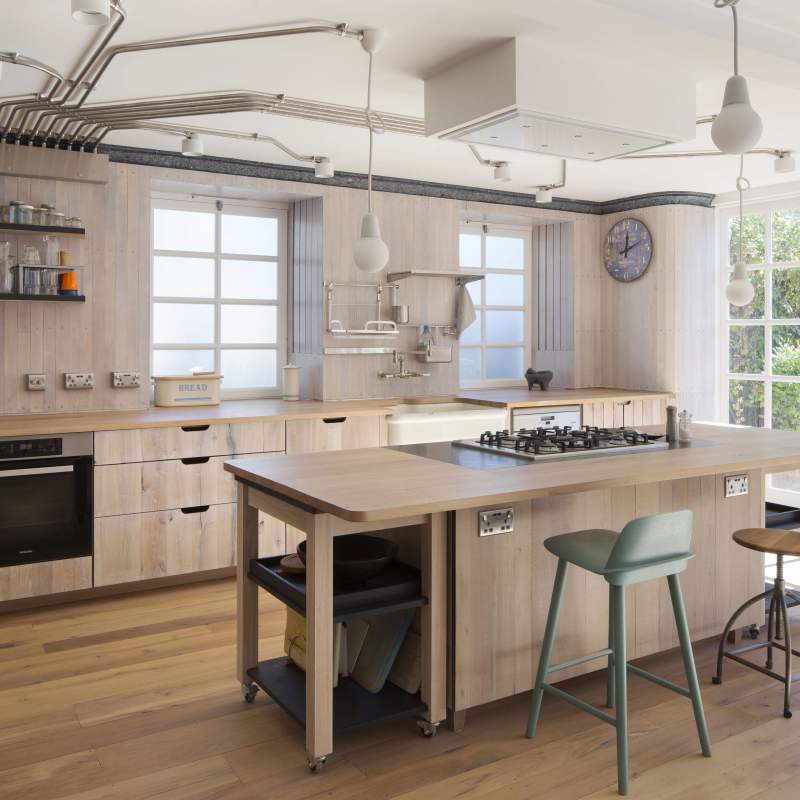
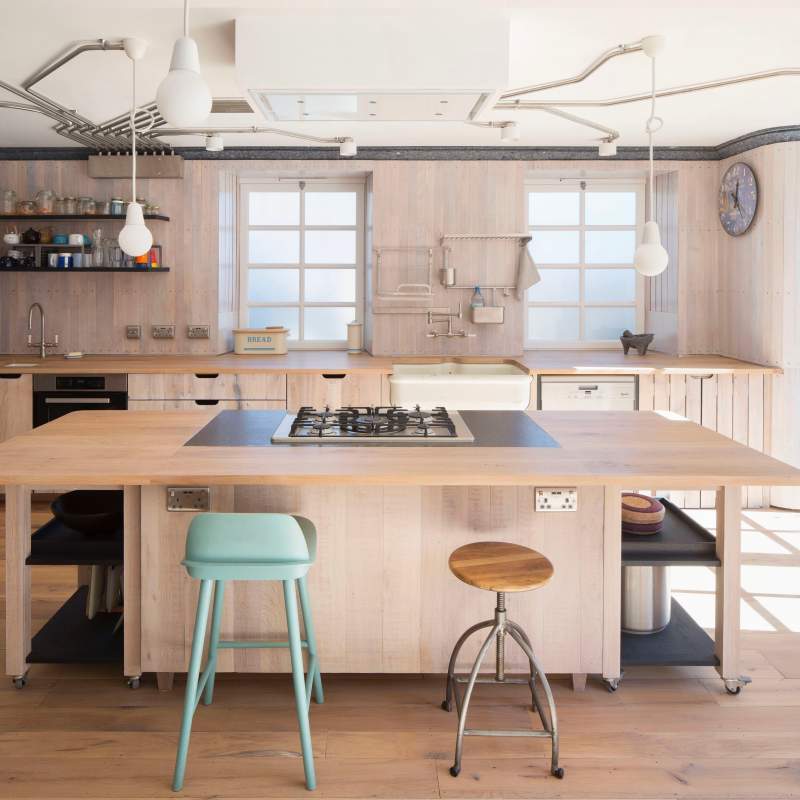
Birch-faced cabinetry provides storage and service elements throughout the space, offering a warm, light-reflective surface that complements the rawness of the concrete and oak. All materials are left intentionally legible, with minimal finishing or concealment.
Environmental and Design Intent
The Hive is conceived as a low-impact interior, where sustainability is embedded in both material sourcing and spatial organisation. Rather than concealing production, the design foregrounds it - turning food preparation, material processes, and daily operations into visible architectural elements.
Warm, low-energy lighting is used to enhance the natural tones of timber and concrete, reinforcing a calm and grounded atmosphere. The space is designed to support wellbeing through tactile materiality, visual clarity, and reduced environmental processing.
Location: East London, Vyner Street, Bethnal Green, East London (E2 postcode)
Property type: Independent café / hospitality interior (organic, vegan and raw food café with juice bar and wine service), East London commercial unit refurbishment
Scope: The project comprised the full interior design and fit-out of a new café on Vyner Street in East London, developed as a low-impact hospitality space with a strong focus on material sourcing, circular design principles, and minimal processing. The scope included spatial planning of the café layout, design and fabrication coordination of a nine-metre communal counter, specification of reclaimed and sustainably sourced materials, and integration of bespoke joinery and service areas. Works also included floor design using pigment-infused concrete derived from food waste by-products, lighting strategy to enhance material warmth and atmosphere, and overall coordination of interior finishes to create a cohesive, low-carbon environment that supports both food preparation and communal dining.
Key Features:
Full interior fit-out of an East London café
Central nine-metre communal counter acting as spatial organiser and social infrastructure
Counter constructed from pippy oak planks milled from a single Suffolk oak tree
Retention of live timber edges, cast into concrete to create a continuous material seam
Open-plan café layout supporting shared dining, preparation, and service functions
Rough-finished concrete flooring pigmented with turmeric waste from juice production
Birch-faced cabinetry providing warm, low-impact service and storage elements
Minimal material palette prioritising natural, low-processing, and traceable sources
Warm, low-energy lighting strategy enhancing material texture and atmosphere
Visible food production integrated into the spatial experience of the café
Project Results
Delivered a low-carbon hospitality interior grounded in circular design principles
Successfully integrated food waste streams into building material systems
Created a highly social, communal café environment structured around a single architectural object
Reduced reliance on synthetic finishes through use of raw and minimally processed materials
Established a strong connection between food culture, material sourcing, and spatial experience
Enhanced operational visibility, turning food preparation into part of the interior architecture
Achieved a calm, materially rich environment that supports wellbeing and dwell time
Photography: Arboreal Architecture