Rain Garden House | Rainwater Harvesting Retrofit
East Dulwich Rear Extension Designed as a Hydrological and Vegetated System
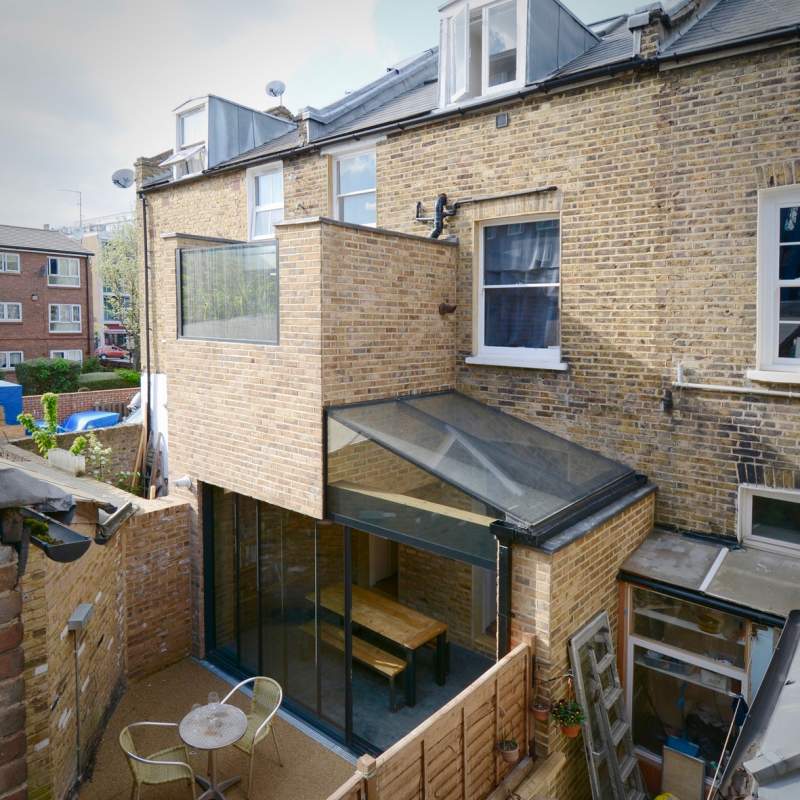
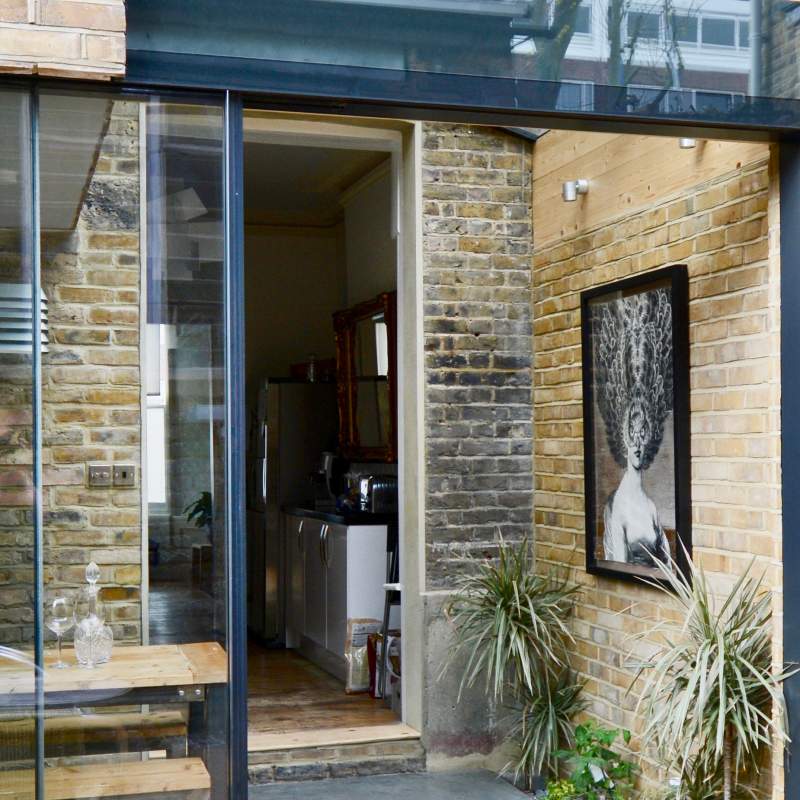
This project reworks the rear of a terraced house in East Dulwich, extending and reimagining the relationship between domestic space and garden through a continuous ecological system that binds structure, water, and planting.
Rather than treating the extension as a discrete addition, the design establishes a synthesis between house and landscape, where environmental processes are made visible and actively shape spatial experience.
Architectural Strategy
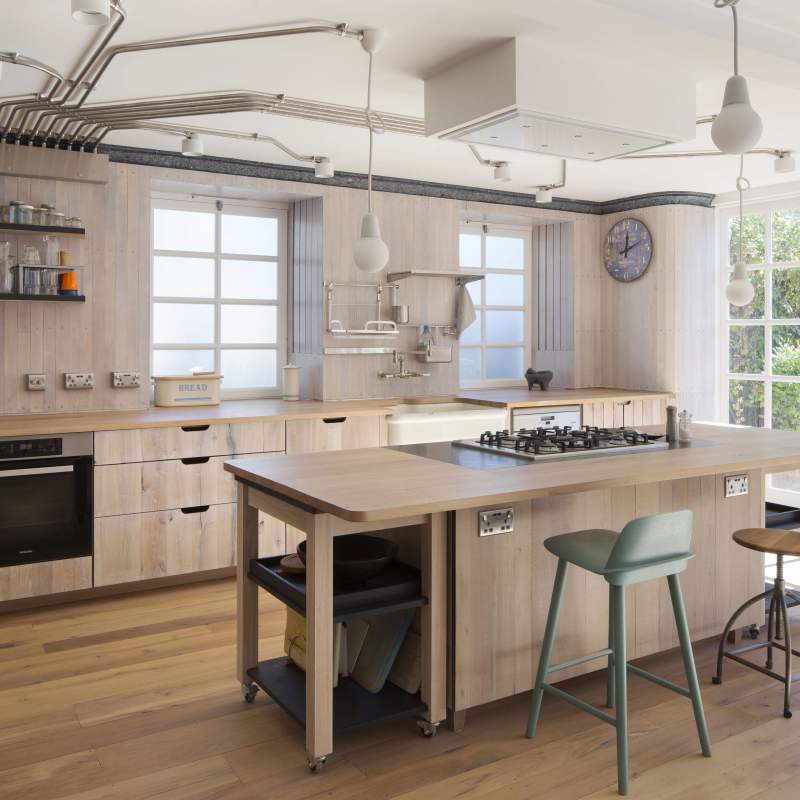
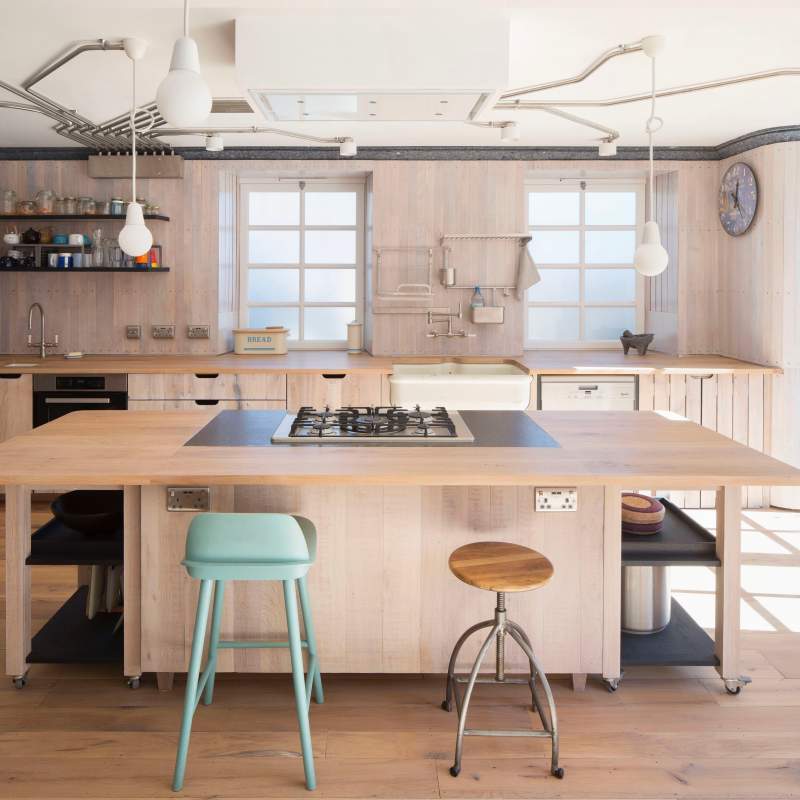
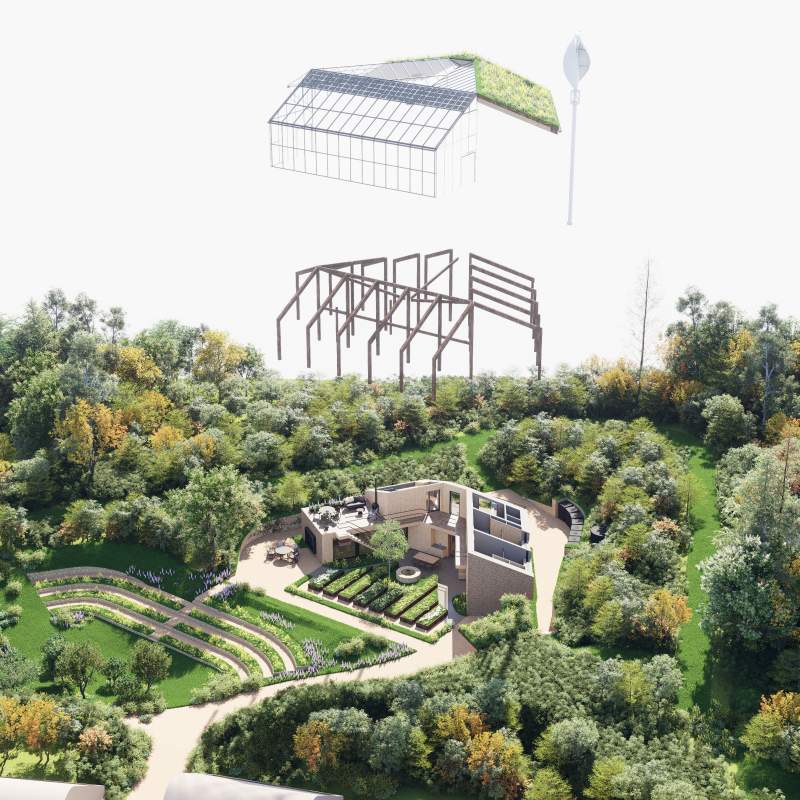
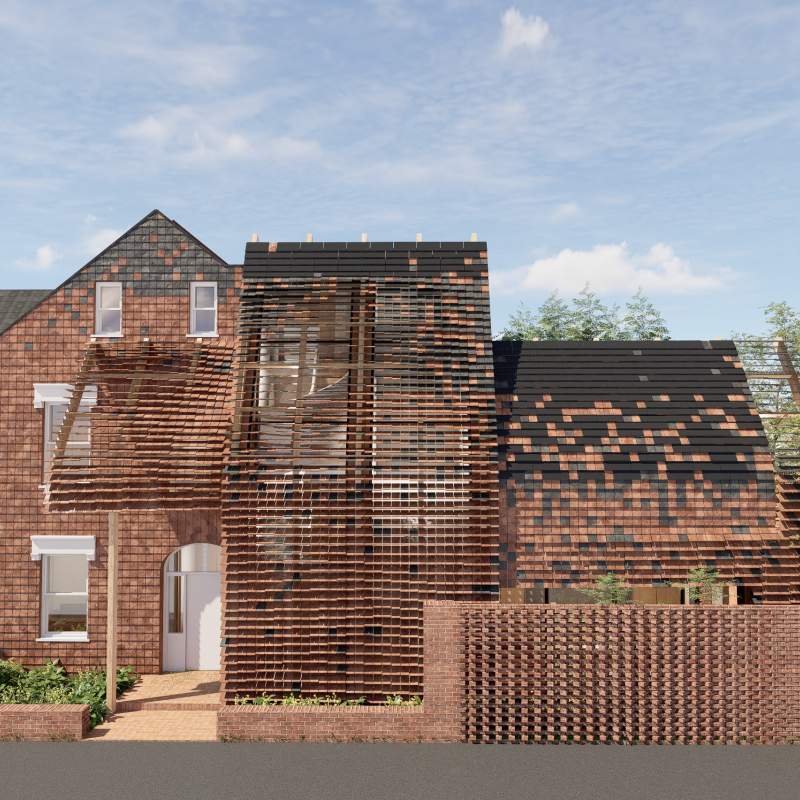
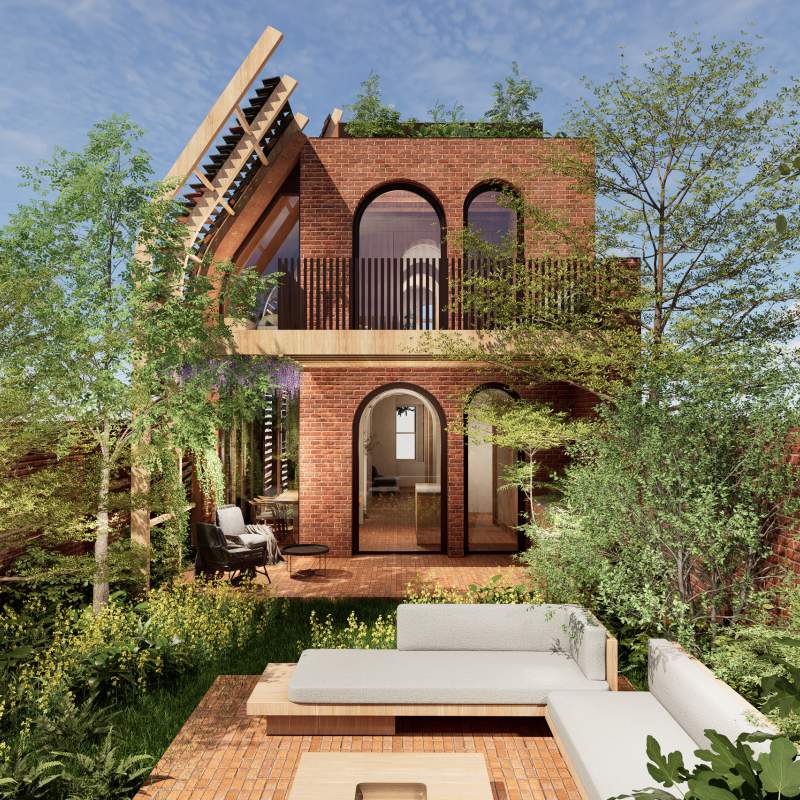
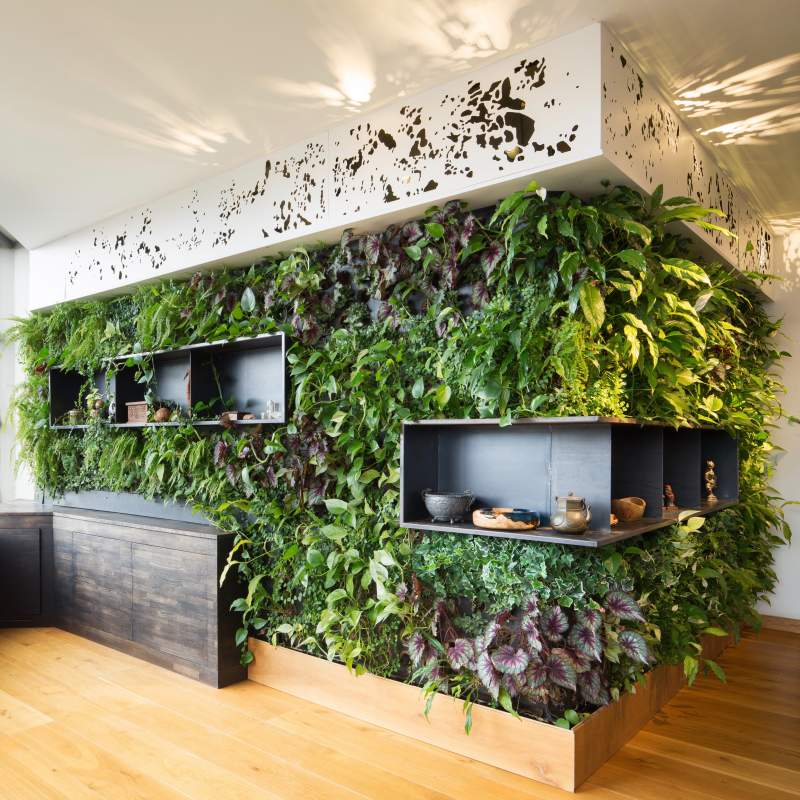
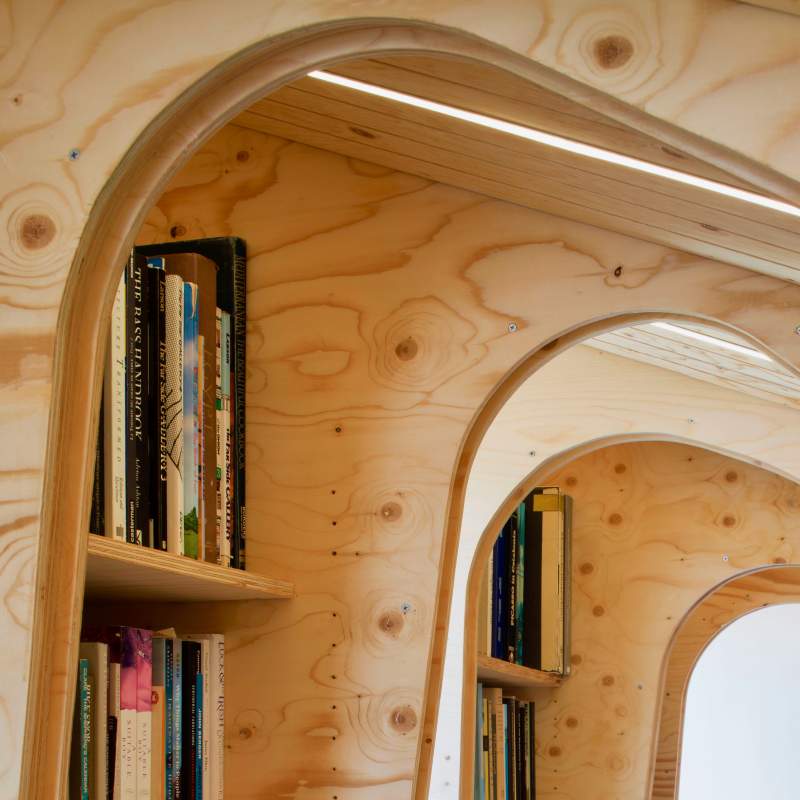
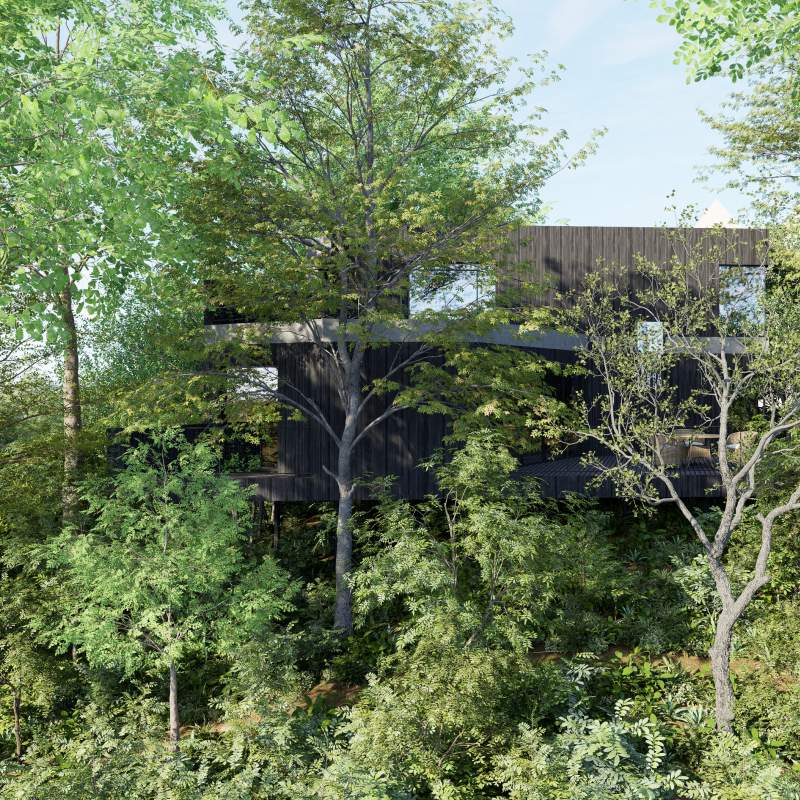
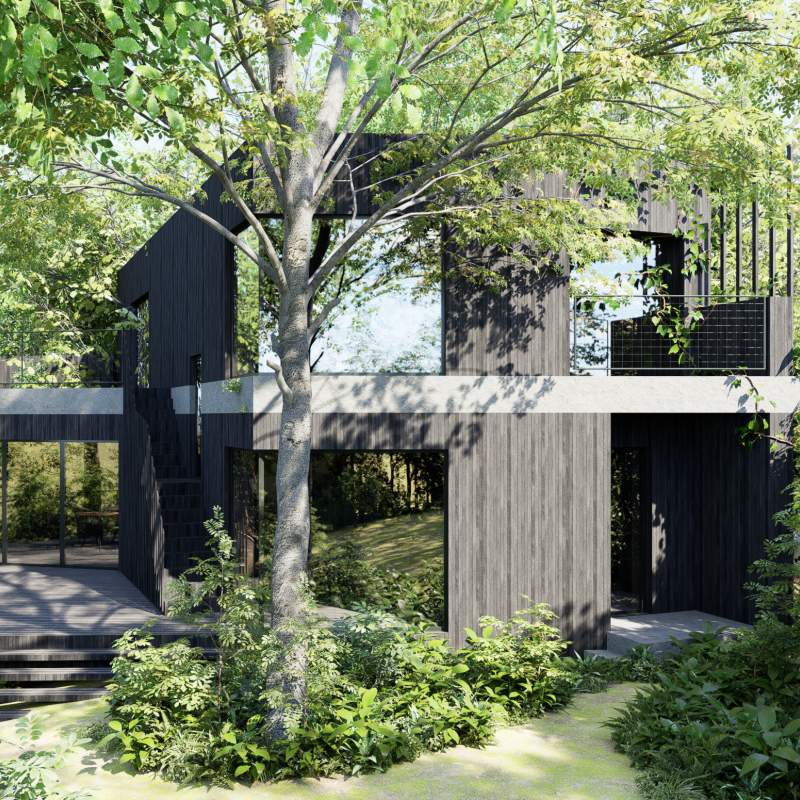
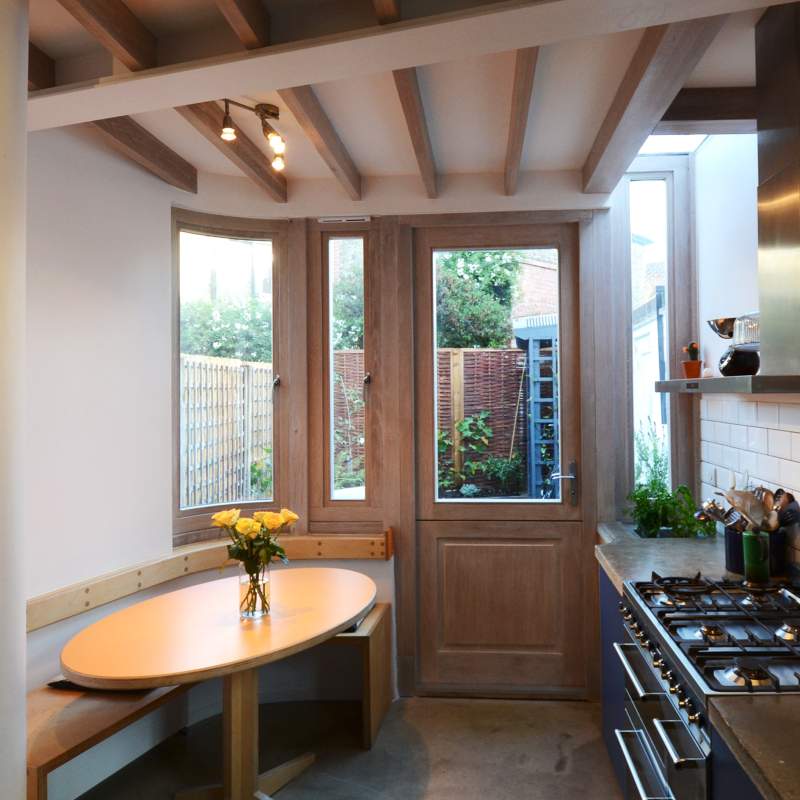
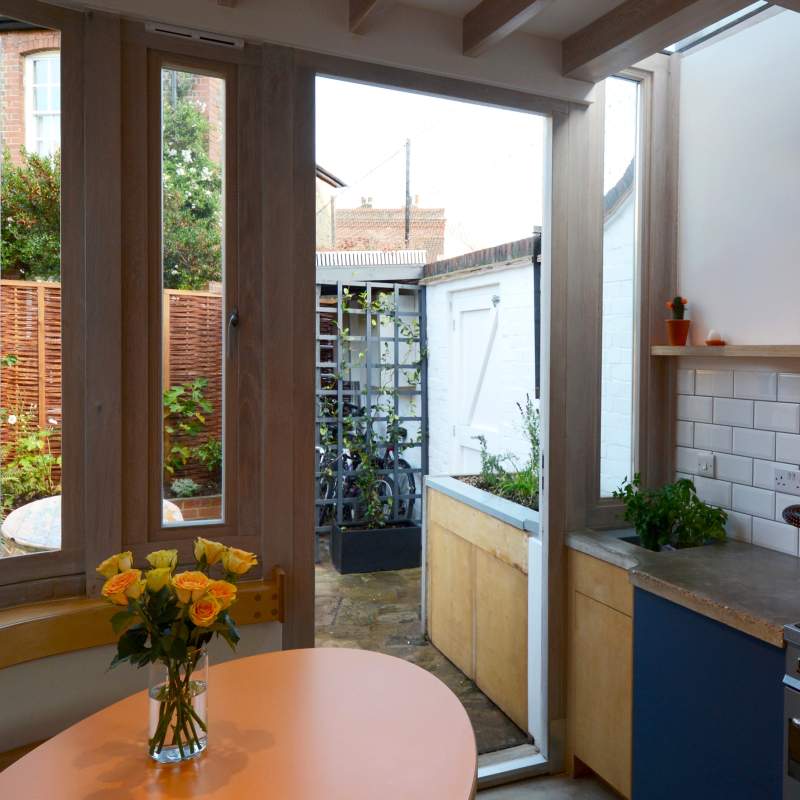
A timber-framed structure forms the primary extension, enclosing a new open-plan kitchen and dining space. This lightweight construction is wrapped in a flexible waterproof membrane, overlaid with stainless steel trellising that supports climbing vegetation across the surface of the building.
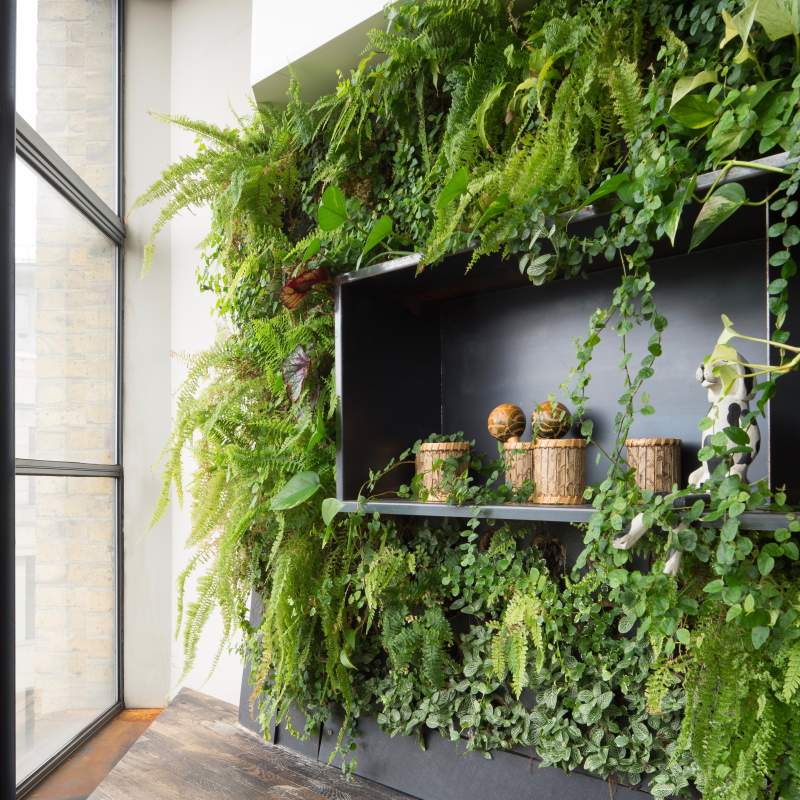
Over time, the extension is designed to be partially vegetated, blurring the boundary between architecture and garden and allowing planting to become an active layer of the building envelope.
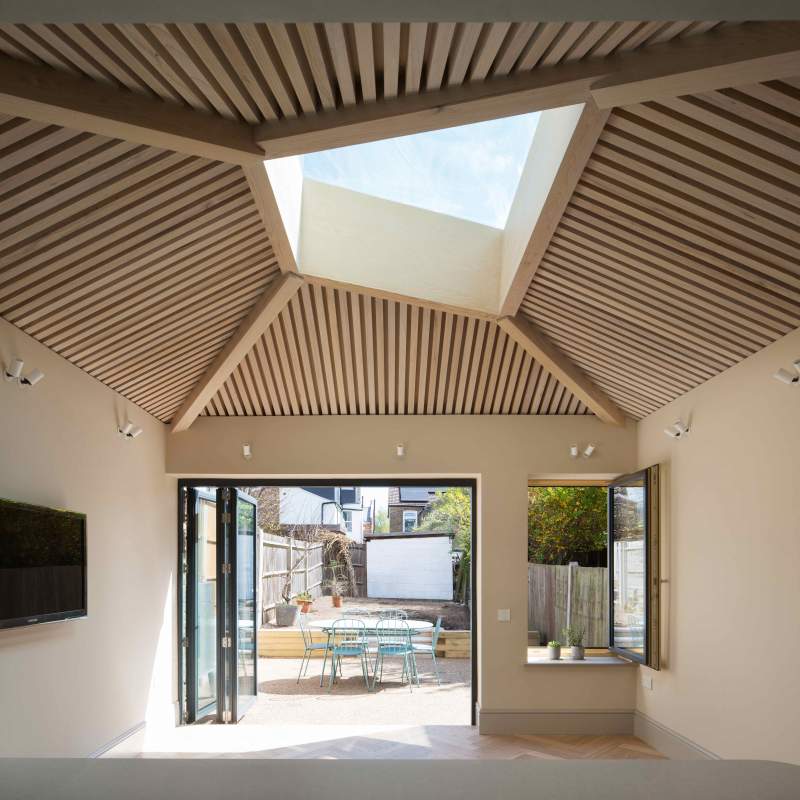
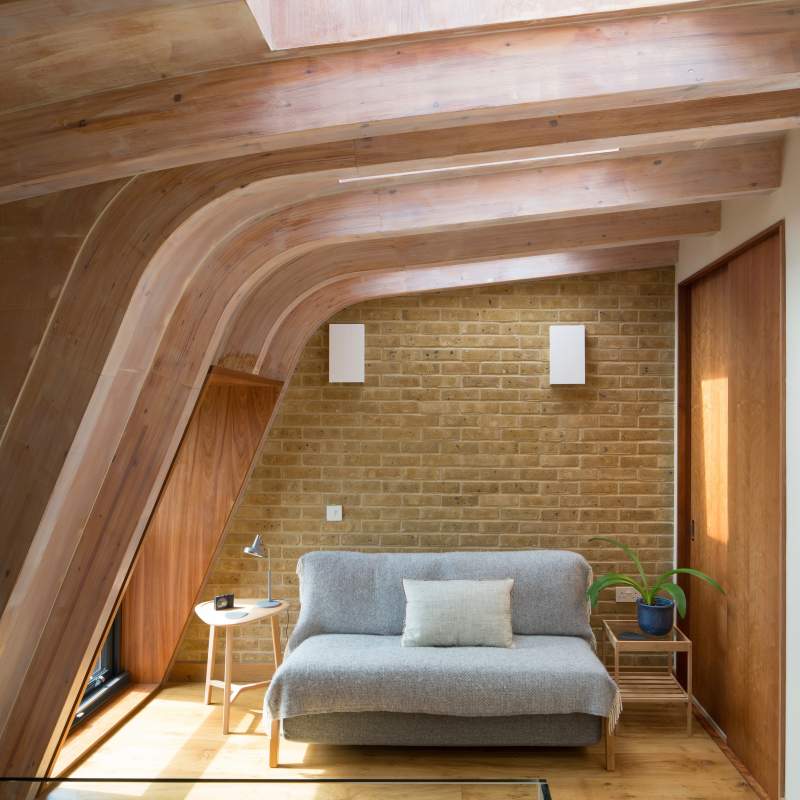
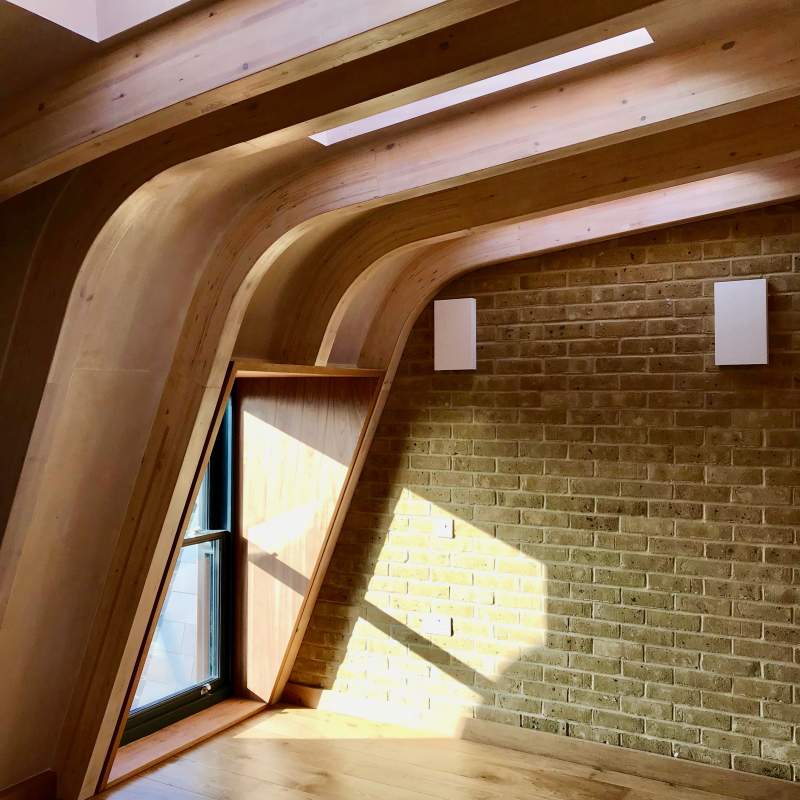
The folded roof form acts as both spatial device and environmental infrastructure, shaping interior volume while collecting rainfall from the wider building. Water is directed through a projecting spout, turning rainfall into a legible architectural event.
Water and Landscape System
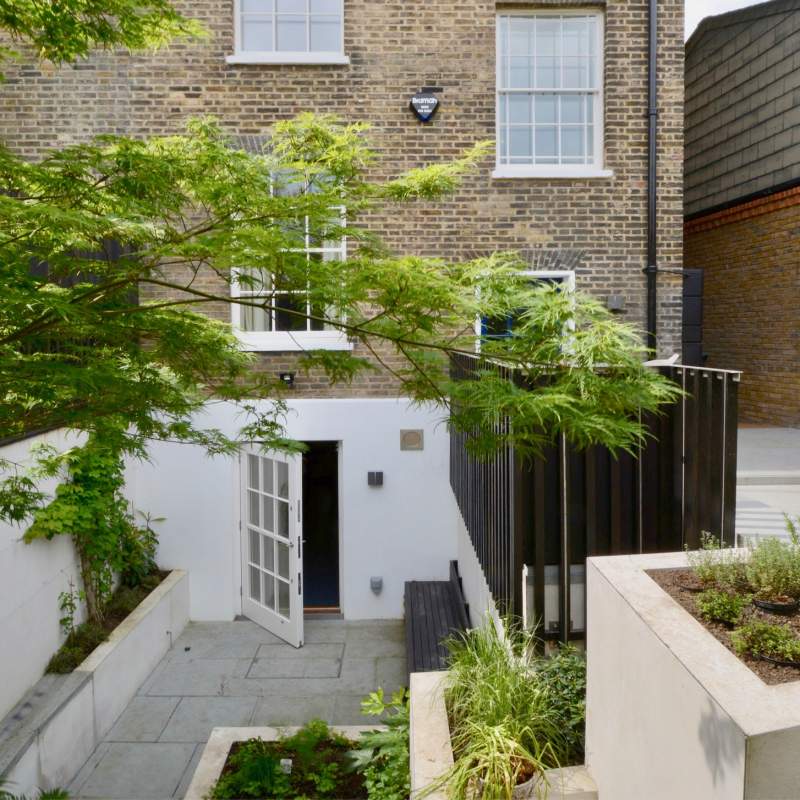
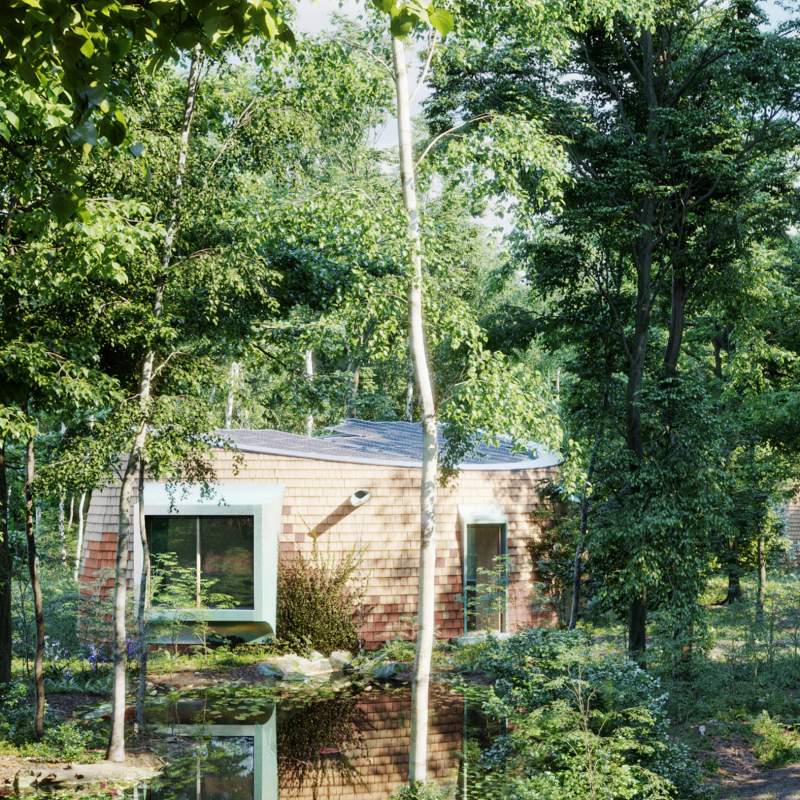
At ground level, a dedicated rain garden receives collected roof water. This landscape basin is designed to temporarily retain and gradually percolate water into the soil below, reducing surface runoff while supporting a diverse planting ecology.
Plant species selected for periodically saturated conditions are combined with reclaimed masonry elements that guide and slow water movement through the garden. This introduces a layered hydrological system where hard and soft landscape elements operate together.
The house and garden function as a single water-responsive system, where rainfall is not diverted away but actively integrated into the life of the site.
Light and Spatial Experience
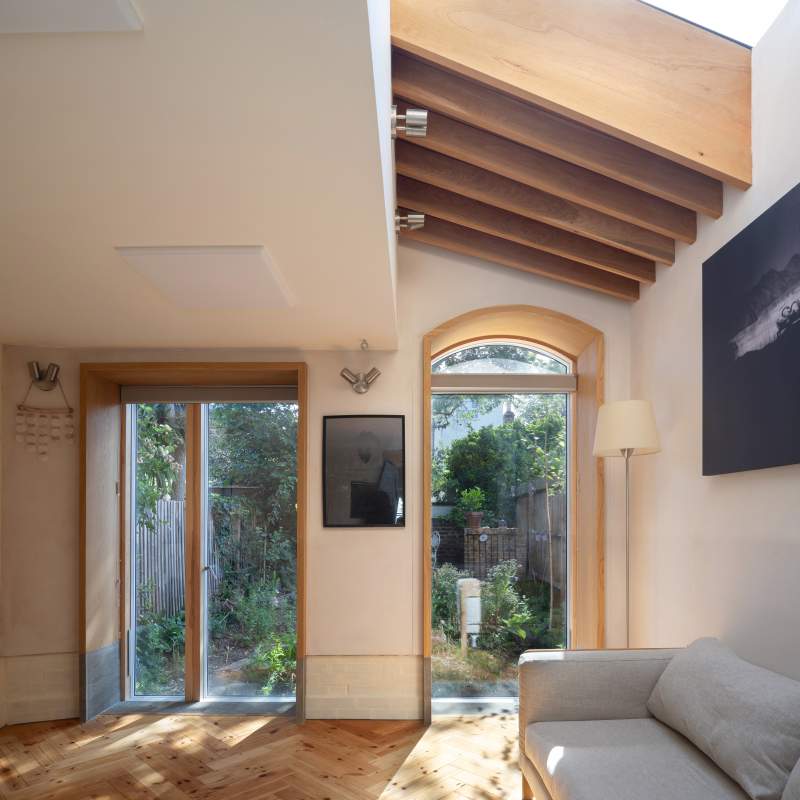
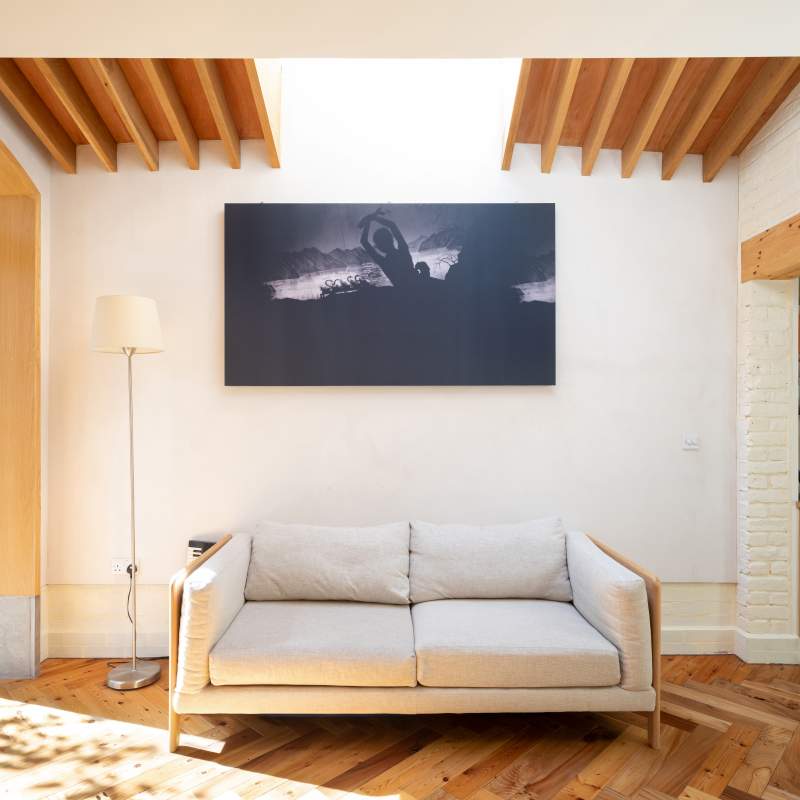
A large triangular rooflight brings diffuse daylight into the depth of the plan and provides framed views of the sky above. This opening reinforces the connection between interior space and changing weather conditions, extending the perception of the garden vertically as well as horizontally.
Photography: Arboreal Architecture
Location: East Dulwich, London, United Kingdom
Property type: Victorian terraced house (rear extension and garden retrofit)
Scope: The project involved the extension and ecological reconfiguration of the rear of a Victorian terraced house in East Dulwich, integrating a new timber-framed structure with a reworked garden system. The scope included the design of a lightweight rear extension forming an open-plan kitchen and dining space, wrapped in a waterproof membrane with integrated trellis systems for vegetation growth. Works also included a folded roof form designed to collect and channel rainwater into a newly constructed rain garden, combining hydrological management with landscape design. The project integrates sustainable drainage, planting strategies for water retention and biodiversity, and enhanced daylighting through a large rooflight, creating a continuous relationship between domestic interior, structure, and garden ecology.
Key Features:
Rear extension to a Victorian terraced house in East-Dulwich
Timber-framed construction forming a lightweight open-plan kitchen and dining space
Building envelope wrapped in waterproof membrane with stainless steel trellis system
Vegetated façade designed to support climbing planting across the extension
Folded roof form designed as both spatial device and rainwater collection system
Integrated rainwater harvesting system directing water into a dedicated garden basin
On-site rain garden designed for temporary water retention and gradual percolation
Use of reclaimed masonry to structure and slow water movement through the landscape
Planting strategy focused on species tolerant of periodic saturation conditions
Large triangular rooflight introducing daylight and framed sky views into interior spaces
Continuous integration of house, roof, and garden into a single ecological system
Project Results
Transformed the rear of the property into a unified architecture–landscape system
Improved site-wide rainwater management through capture, reuse, and infiltration
Reduced surface runoff by integrating sustainable drainage into garden design
Strengthened connection between interior living spaces and external landscape
Enhanced biodiversity through layered planting and moisture-responsive ecology
Increased daylight penetration and visual connection to sky and weather conditions
Created a living building envelope that evolves through seasonal planting growth
Demonstrated a low-impact approach to rear extension combining structure and ecology
Delivered a domestic environment where water, vegetation, and architecture operate as one continuous system