Lastu Shelter | Hand-Built Timber Architecture
A Public Timber Shelter Shaped by Material, Landscape and Collaboration
A Collective Timber Structure in the Forests of Eastern Finland
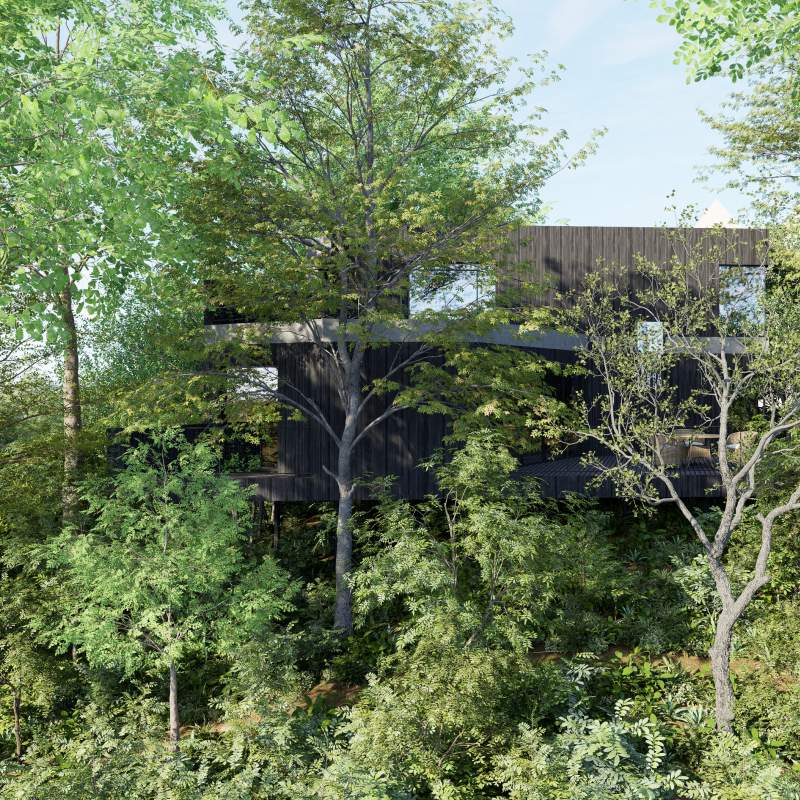
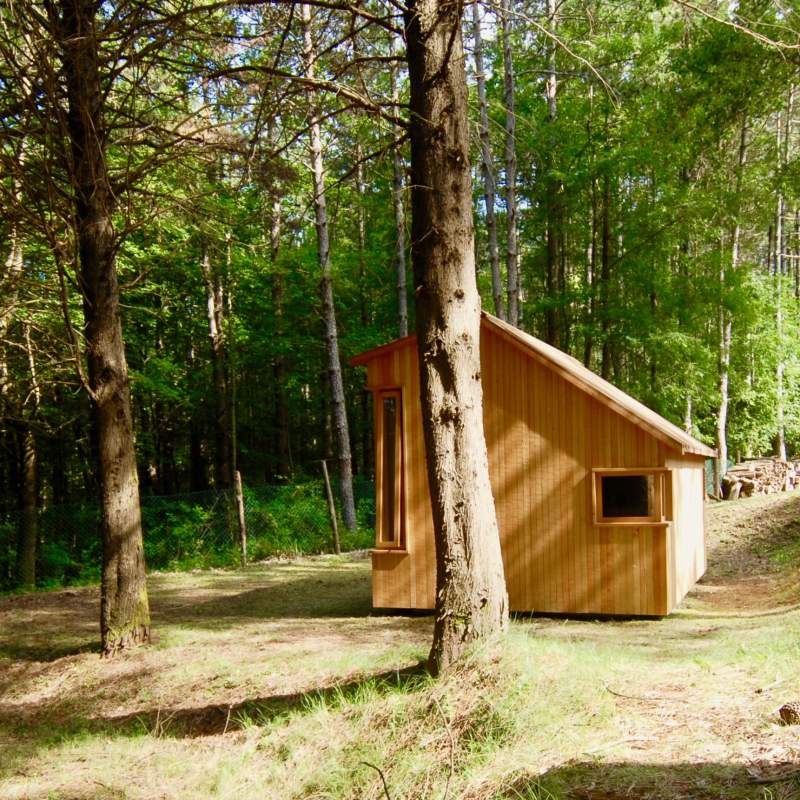
Set within the dense pine and birch forests of Punkaharju in eastern Finland, the Lastu Shelter was conceived and constructed as a live-build architectural workshop exploring collective making, material responsiveness, and low-tech timber construction. Developed with third-year students from the University of Westminster, the project was realised over nine days under the guidance of Sami Rintala of Rintala Eggertsson Architects in collaboration with Arboreal Architecture.
Built entirely by hand from locally sawn red pine, the shelter was constructed without power tools or predetermined drawings. Instead, the process evolved through direct engagement with material, landscape, and collective decision-making. Each structural element - from footings and floor structure to walls and roof - emerged sequentially in response to what had already been built. The architecture developed through observation, adjustment, and negotiation rather than prescription.
This approach produced a structure deeply rooted in its setting. The shelter aligns itself carefully with the surrounding avenue of birch trees, the gradual topography of the forest floor, and the irregular edge of the adjacent lake. Rather than imposing a fixed architectural object onto the site, the project evolved as a spatial response to the character and rhythms of the landscape itself.
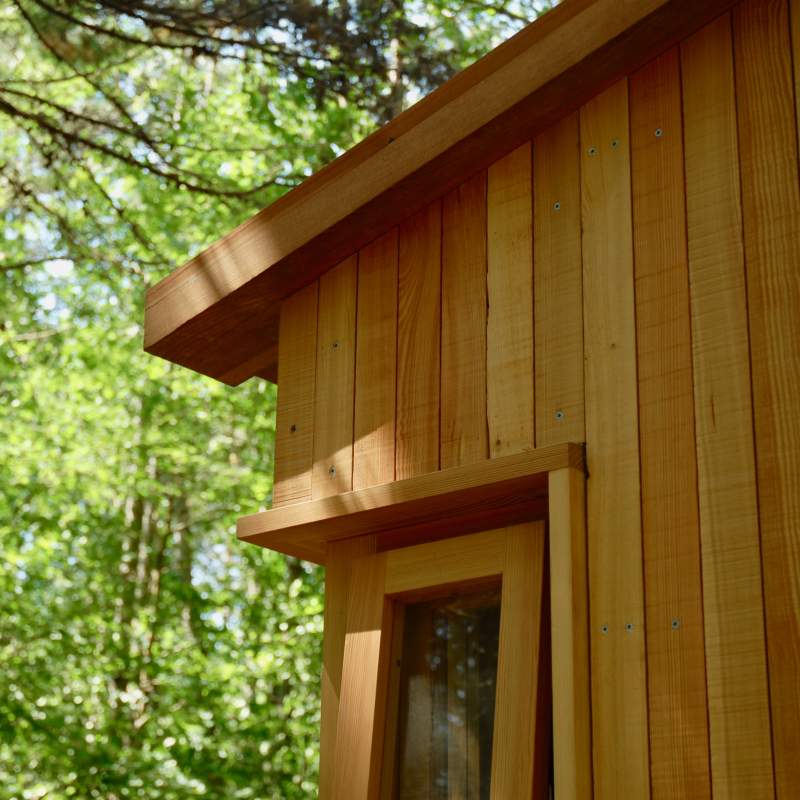
Constructed from rough-sawn timber and simple nailed connections, the building embraces a direct and materially honest form of construction. Linseed oil was applied to the roof for weather protection, while the remaining timber surfaces were left untreated to silver naturally over time. As with many traditional Nordic timber structures, longevity is understood not through permanence alone but through maintenance, weathering, and continued occupation.
The completed shelter provides a public gathering space for up to twenty people along a well-used hiking and skiing route within the grounds of the Lusto – The Finnish Forest Museum. The structure now forms part of the museum’s wider collection documenting Finland’s forestry culture, timber traditions, and evolving relationship with woodland landscapes over the past century.
Named “Lastu” - the Finnish word for a wood shaving or splinter produced through cutting timber - the project reflects both its construction process and its relationship to the nearby museum buildings. The name acknowledges the architecture as something lightweight, temporary, and intrinsically connected to the act of making.
The workshop was commissioned by the Finnish Institute in London as part of the Mobile Home 2017 programme, a collaborative initiative between Finnish cultural institutes in Paris, Berlin, and the Benelux countries. The project also formed part of the Finland 100 programme marking the centenary of Finnish independence in 2017. Lastu opened to the public on 9 May 2017.
Photography: Niklas Nabb, Maryam Saleemi, Ola Hjelen and Tom Raymont from Arboreal Architecture.
Location: Punkaharju forests, Eastern Finland, within the grounds of Lusto – The Finnish Forest Museum
Property type: Timber laavu shelter / open woodland public shelter (experimental low-tech timber structure)
Scope: Design and construction of a hand-built timber laavu shelter in the Punkaharju forests of Finland, developed as a live-build workshop by students from the University of Westminster under the guidance of Sami Rintala (Rintala Eggertsson) and Arboreal Architecture. The project involved the fabrication of a wooden shelter constructed entirely without power tools using locally sawn Red Pine, realised through a collective, drawing-free building process from foundation to roof. Works included full timber assembly, structural detailing, surface treatment with linseed oil to the roof, and integration of a fire pit and public gathering space for up to 20 people. The shelter, named “Lastu,” was delivered within the grounds of the Lusto Forestry Museum as part of the Finnish Institute in London’s Mobile Home 2017 programme, in collaboration with its Paris, Berlin and Benelux partners, contributing to Finland’s centenary celebrations in 2017.
Key Features:
Hand-built timber laavu shelter
Developed as a live-build workshop by students from the University of Westminster
Built entirely without power tools using locally sawn Red Pine
Collective construction process evolving directly through making
Sequential build logic: from foundations to floor, structure, enclosure, and roof
Site-responsive design shaped by birch avenues, sloping terrain, and adjacent lake edge
Linseed oil applied to roof; remaining timber left untreated to weather naturally
Public shelter integrated within forest hiking and skiing route
Part of the Mobile Home 2017 programme commissioned by the Finnish Institute in London
Project Results:
Delivered a fully functional public gathering shelter accommodating up to 20 people
Demonstrated alternative construction methodology based on collective making
Strengthened understanding of material-led and site-led architectural processes
Created a long-life / low-maintenance timber structure designed to weather and evolve over time
Embedded the project within Finland’s forestry and timber cultural heritage discourse
Contributed to Finland 100 centenary programme celebrating national independence
Established a working model for low-tech, ecologically grounded timber architecture
Produced a spatial artefact linking education, landscape, and cultural infrastructure