Larch Hut | Portable Cabin Design
A Demountable Timber Micro-Dwelling Designed for Relocation, Built in Larch and Natural Fibre Insulation
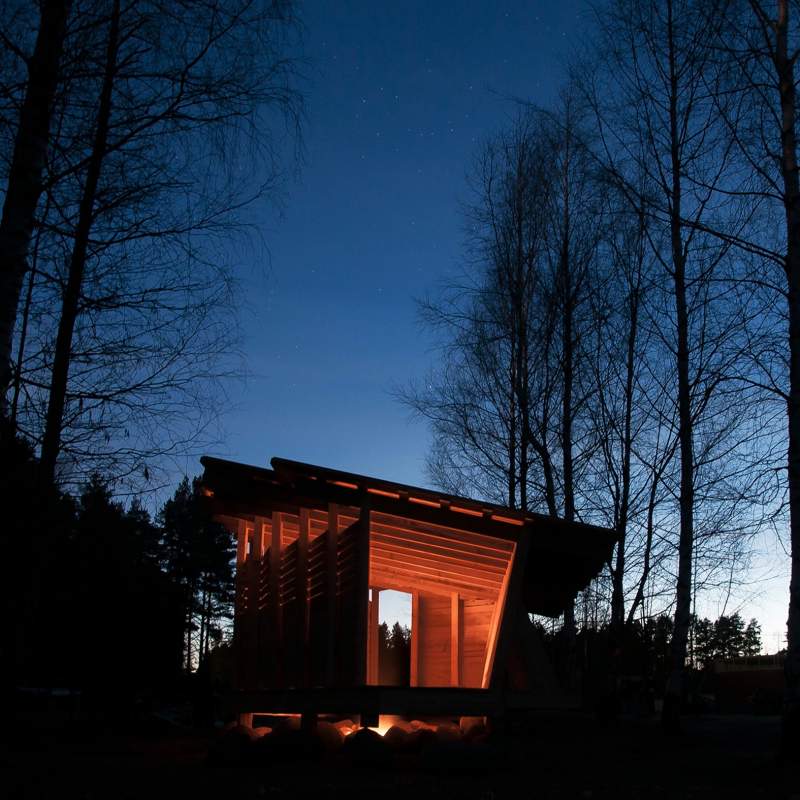
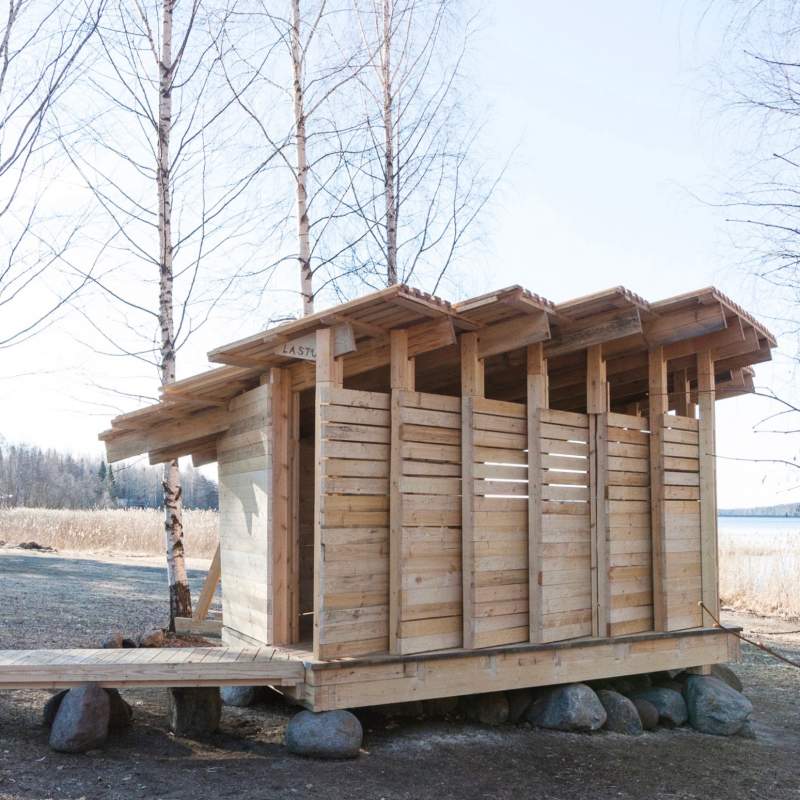
The Larch Hut is a small-scale, demountable dwelling constructed almost entirely from larch timber (Larix decidua), designed as a lightweight, reconfigurable structure capable of being dismantled and relocated. Originally built as a retreat within the grounds of a farmhouse in the Umbrian hills of Italy, the structure was later carefully disassembled and rebuilt in the New Forest, UK, maintaining its integrity through a fully modular construction system.
Structural Logic
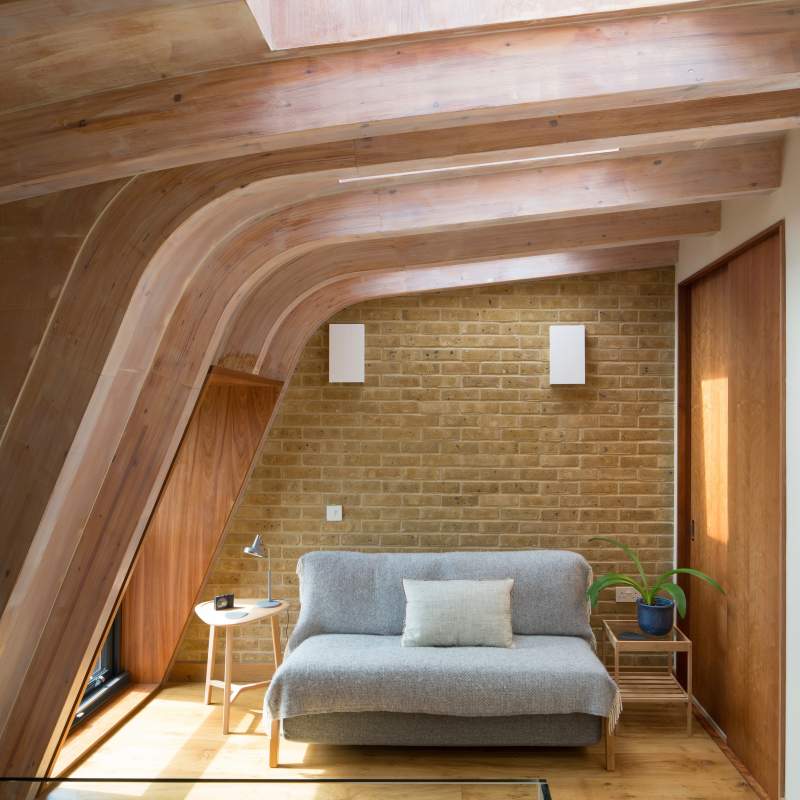
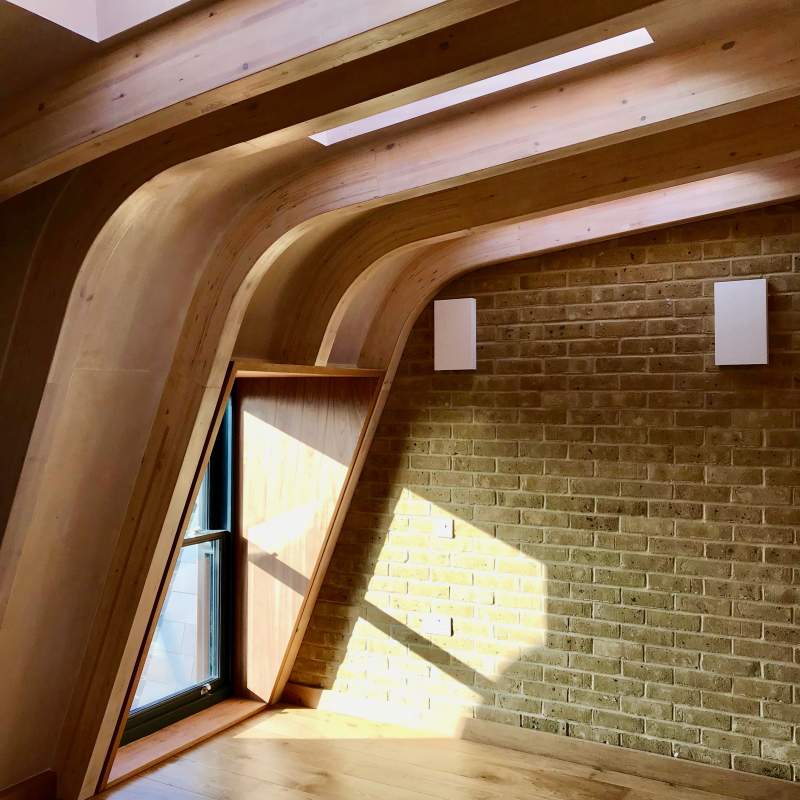
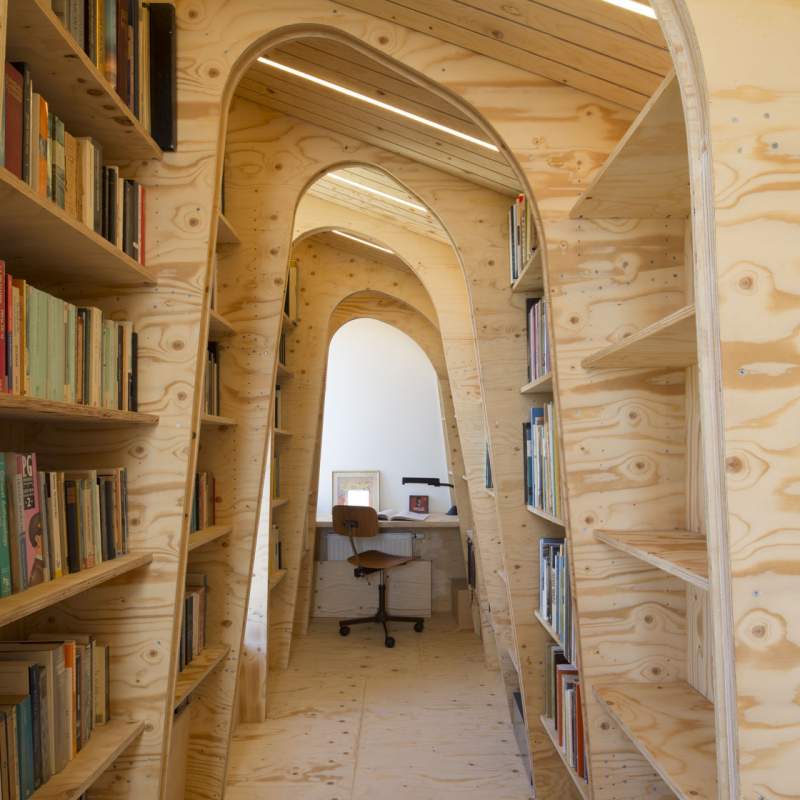
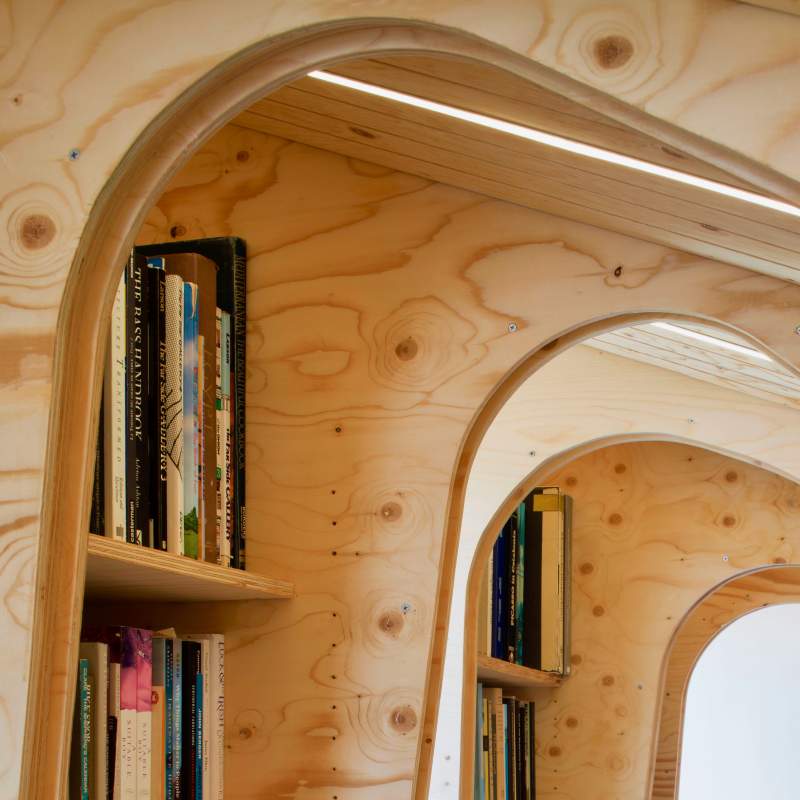
The building is composed of a series of timber panels held together by exposed cross-bracing beams, allowing the entire structure to be assembled without permanent fixings. These structural members span the interior and are integrated directly into the building’s built-in furnishings, including a bed, desk, and shelving system. The result is a compact architectural environment where structure and furniture operate as a single continuous system.
This approach enables full demountability, allowing the hut to be relocated without loss of material or form, and reassembled in response to new landscape conditions.
Material Strategy
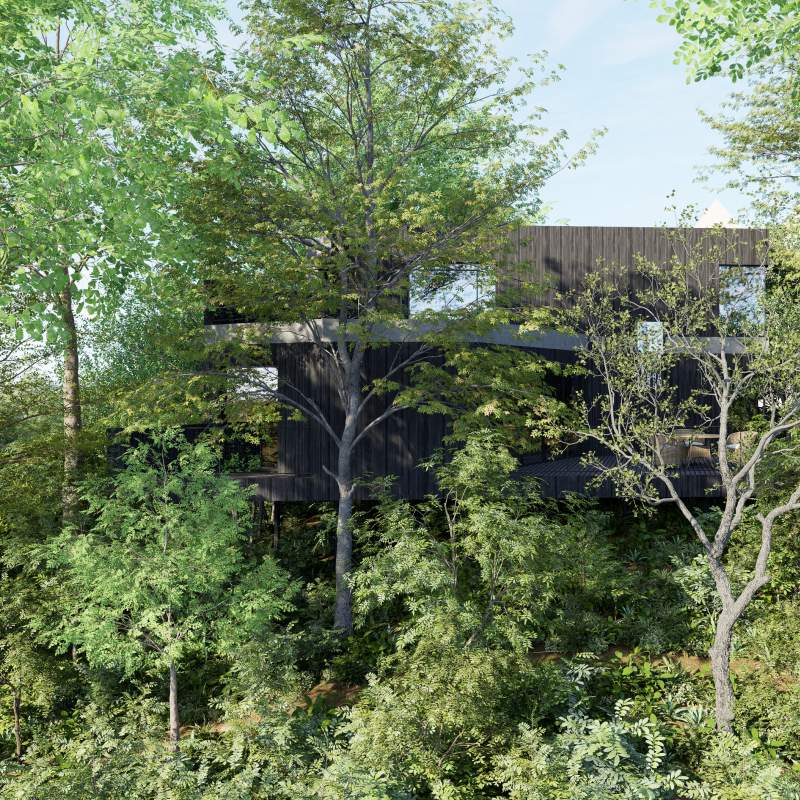
Externally, the larch cladding is left rough sawn, encouraging natural weathering and the gradual development of moss and lichen over time. This treatment allows the building to actively participate in its environment, evolving visually and materially through exposure to climate.
Internally, wall, floor, and ceiling panels are finished smooth and treated with linseed oil, creating a more controlled and tactile interior environment. Insulation is provided by sheep’s wool, packed within the panel system to deliver a natural, breathable thermal layer with low environmental impact.
Offcuts from the primary larch boards are reused to form a small entrance platform, extending the material logic of the building into its immediate threshold and ensuring minimal waste across the construction process.
Outcome
The Larch Hut operates as a compact, reversible dwelling that explores lightweight timber construction, material efficiency, and ecological ageing. Its demountable system allows the architecture to move between landscapes while maintaining continuity of form and use.
Location: initially Umbrian hills of Italy and rebuilt in the New Forest, United Kingdom
Property type: Demountable timber micro-dwelling / portable retreat cabin (small-scale off-grid shelter)
Scope: Design and construction of a relocatable micro-dwelling built from modular larch timber panels, developed as a fully demountable structure that can be disassembled, transported, and reassembled in different landscapes. The scope included structural design using cross-braced timber framing integrated with built-in furniture elements, envelope construction with sheep’s wool insulation, and internal/external timber finishing strategies to support durability and ecological ageing. The project also incorporated material reuse of offcuts for external platform construction, delivering a compact, low-impact retreat designed for flexible occupation and long-term reusability.
Key Features:
Demountable timber micro-dwelling constructed primarily from larch (Larix decidua)
Modular panel system enabling full disassembly, relocation, and reassembly
Originally built in Umbria, Italy and later relocated to the New Forest, UK
Cross-braced structural system integrated with internal furniture (bed, desk, shelving)
Rough-sawn external larch cladding designed to weather and support natural colonisation
Smooth internal timber surfaces finished with linseed oil for tactile interior comfort
Sheep’s wool insulation providing breathable, low-impact thermal performance
Material efficiency strategy with reuse of offcuts for entrance platform construction
Compact, landscape-responsive form designed for minimal environmental footprint
Structure and furnishings conceived as a single continuous architectural system
Project Results:
Delivered a fully relocatable, reusable micro-dwelling with minimal material waste
Demonstrated circular construction principles through disassembly and reassembly lifecycle
Achieved low-impact thermal performance using natural, renewable insulation materials
Strengthened relationship between architecture, landscape, and seasonal occupation
Extended building lifespan through adaptability rather than fixed permanence
Reduced embodied carbon through timber-based construction and material reuse strategies
Created a durable yet lightweight retreat architecture responsive to multiple sites
Established a replicable model for demountable, ecologically grounded micro-housing