Brenthouse Extension | East London Rear Extension & Retrofit
Reworking a Constrained Hackney Victorian Terrace Through Light, Section, and Material Continuity
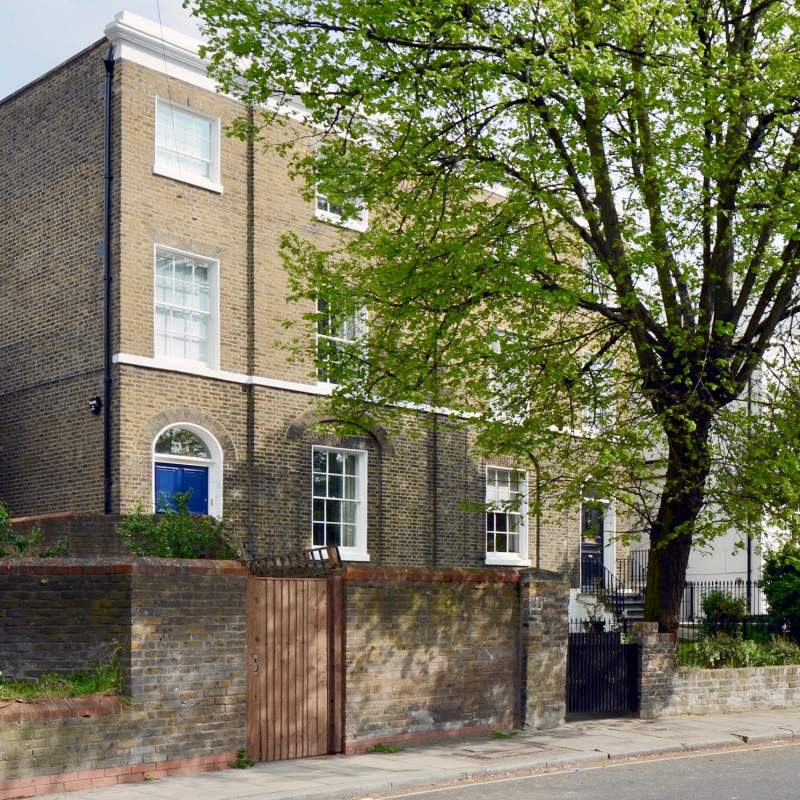
This late-Victorian terraced house in Hackney has been carefully reworked in response to an unusual urban condition: a truncated rear garden, the result of a former industrial unit built across the back of the terrace. The constraint became the catalyst for a precise, space-making intervention that rethinks the relationship between house, yard, and light.
The project extends the ground floor to reclaim continuity between internal rooms and the compressed outdoor space beyond. Rather than treating the extension as an isolated addition, it is conceived as part of a continuous spatial sequence running from the front reception room through to the kitchen, dining area, and rear yard.
Ground Floor Extension
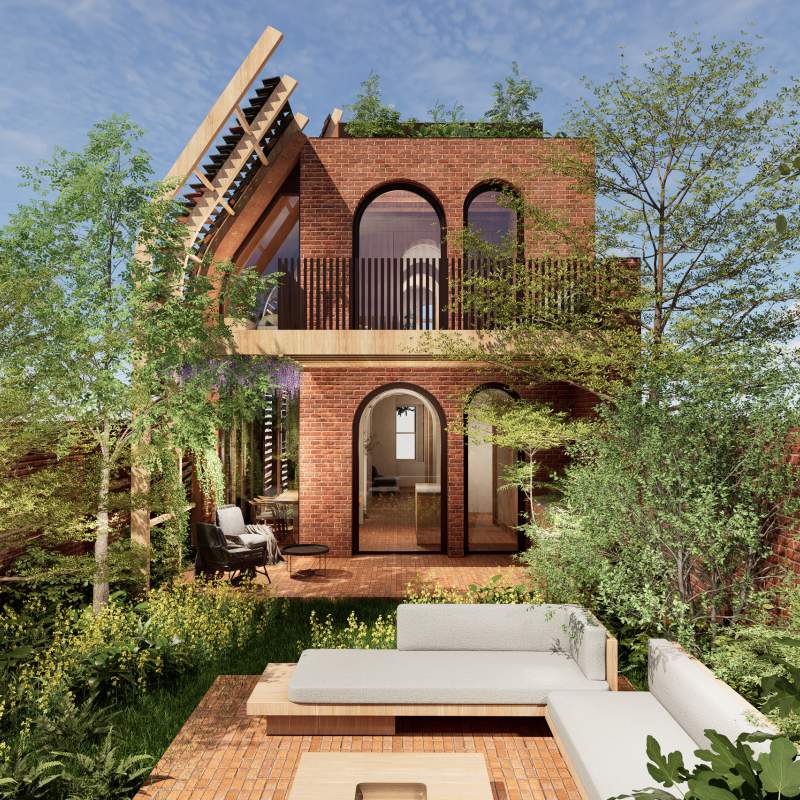
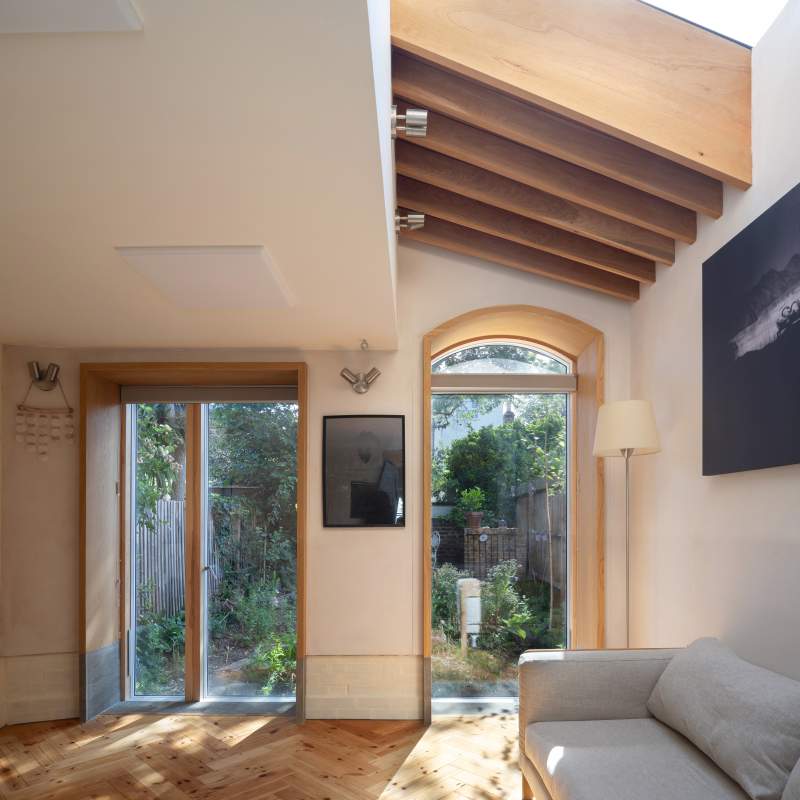
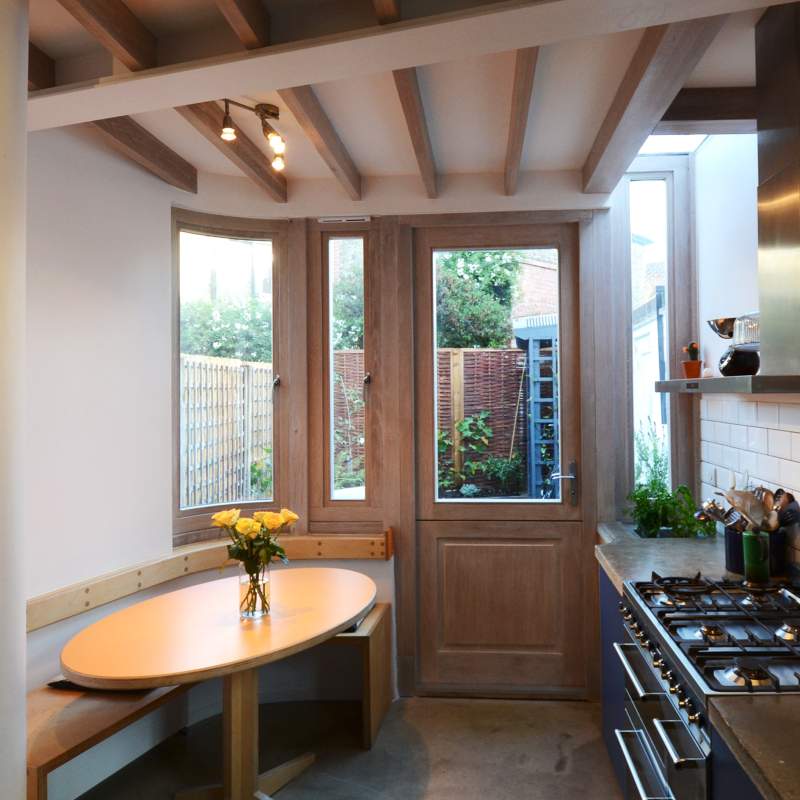
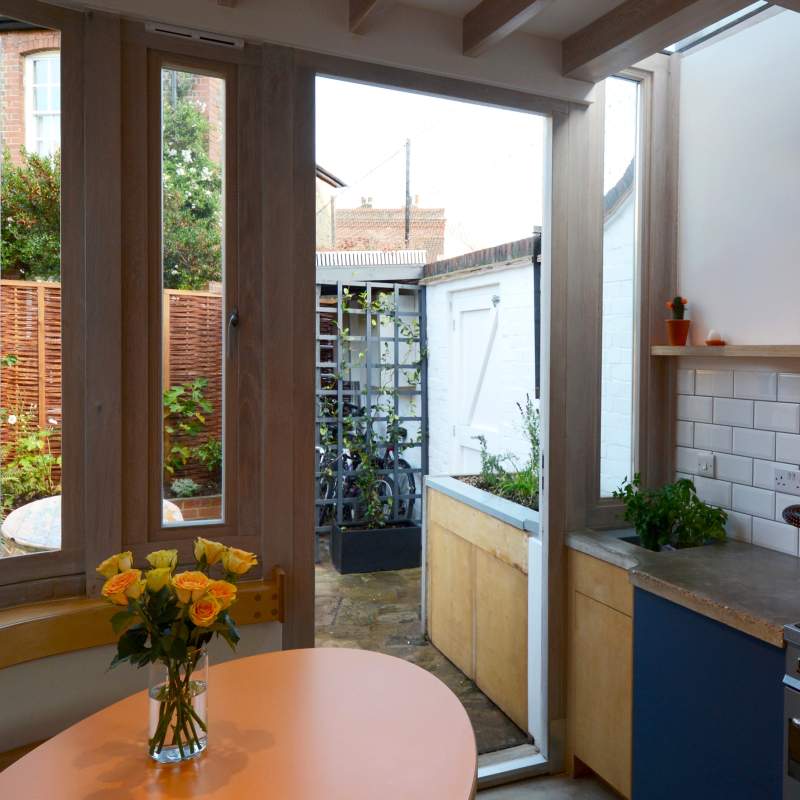
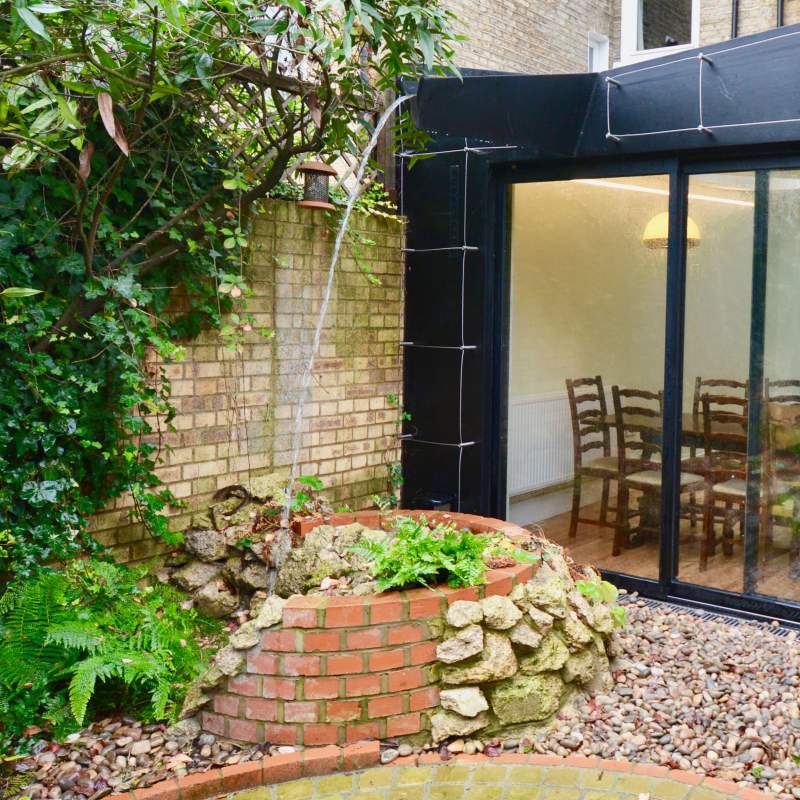
At ground level, a new dining space is introduced as a transitional chamber between interior and exterior. It operates as a threshold space, mediating light, material, and use across the full depth of the house.
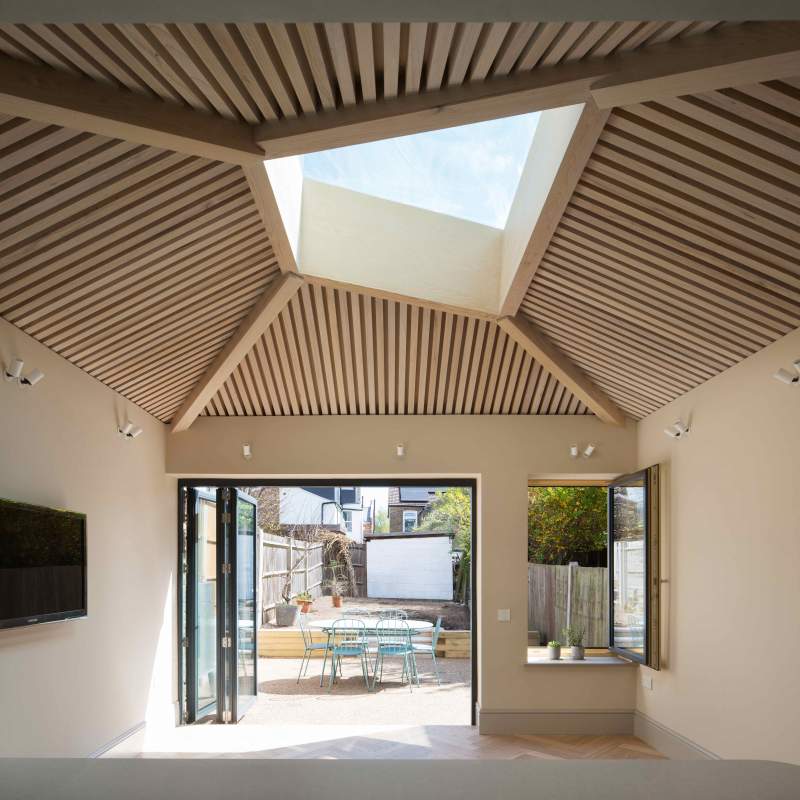
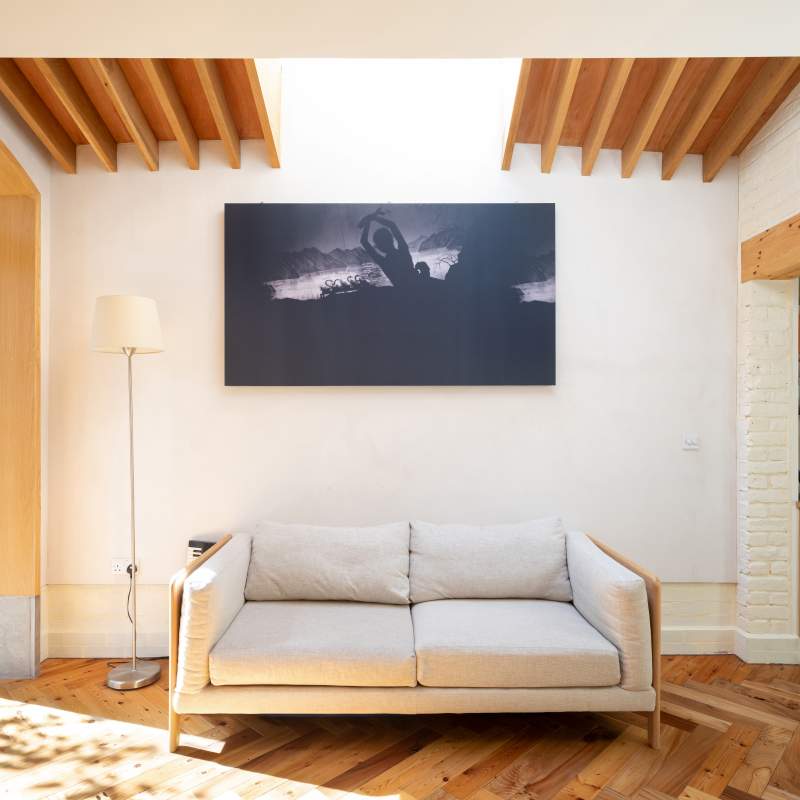
The floor is formed in polished concrete, set flush with the level of the rear yard to dissolve the boundary between inside and outside. Exposed brick-tile walls reinforce a sense of continuity with the existing structure, while a large glazed roof introduces overhead light, drawing daylight deep into the plan.
Sliding doors open the dining space directly into the yard, allowing the two zones to operate as a single extended living environment. A recessed planter runs continuously from interior to exterior, strengthening the perception of a shared ecological ground plane and introducing planting directly into the architectural section.
First Floor Intervention
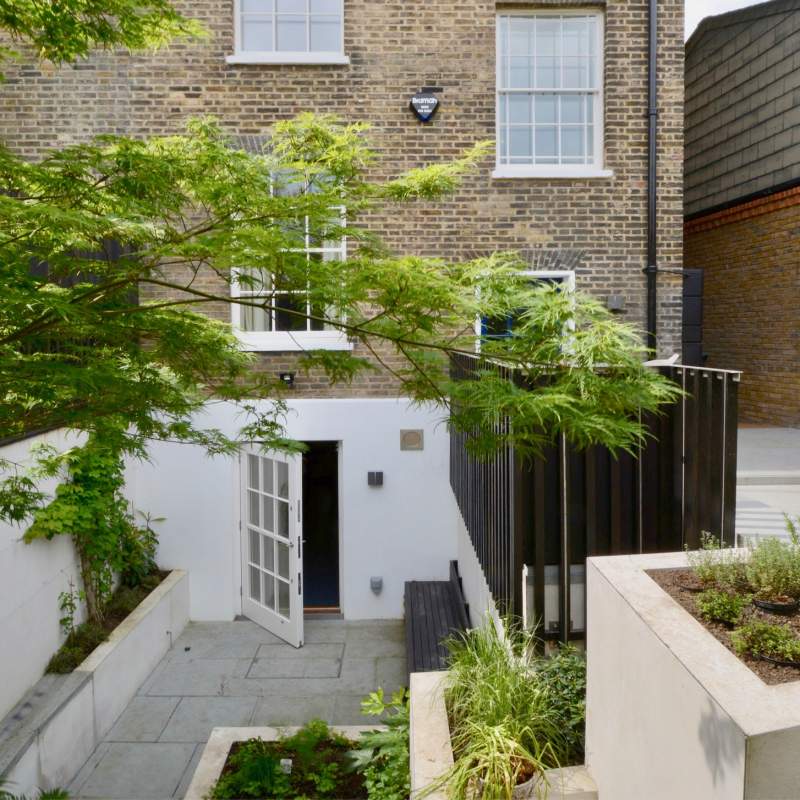
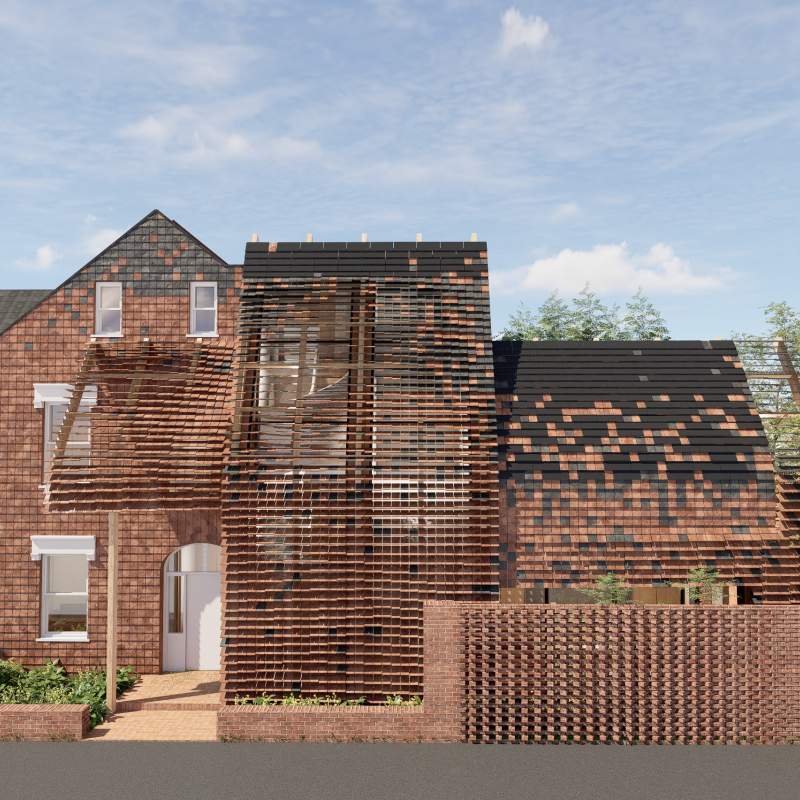
At first floor level, a new bathroom volume is introduced as a sculpted brick form that appears to hover within the rear elevation. Its expression is deliberately articulated to read as both solid and lightweight, reinforcing the relationship between old and new construction.
The extension is formed using a timber frame structure with brick slip cladding applied internally and externally. This system allows the new work to sit in visual continuity with the original Victorian terrace while significantly improving thermal performance, achieving up to seven times the insulation value of a traditional solid brick wall.
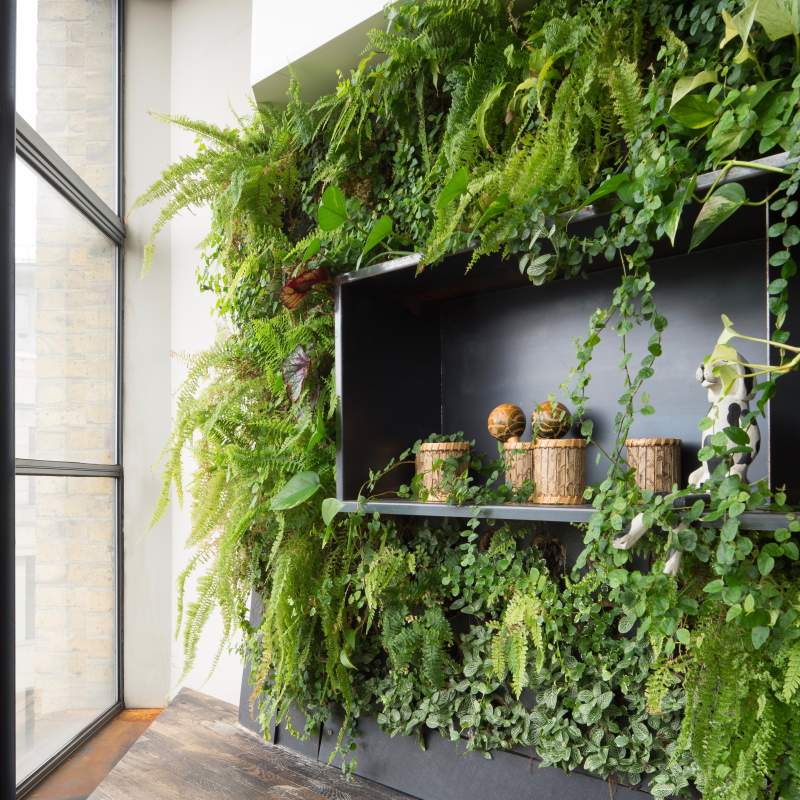
A planted window seat is integrated into the bathroom, introducing greenery at upper level while providing visual screening from neighbouring properties. This small ecological insertion softens the boundary condition and extends the presence of landscape into the private interior.
Material and Environmental Approach
The project uses material continuity and structural clarity to reconcile heritage context with contemporary performance requirements. Brick slip construction allows the extension to remain visually coherent with the existing terrace while enabling a highly insulated envelope.
The result is a thermally efficient addition that maintains the character of the original building, avoiding visual rupture while significantly improving environmental performance.
Photography: Arboreal Architecture
Location: East London (Hackney)
Property type: Late-Victorian terraced house (residential retrofit with rear extension and first-floor addition)
Scope: The project involved the extension and thermal upgrade of a late-Victorian terraced house in Hackney, reconfiguring a constrained rear condition where the original garden had been truncated by a former industrial structure. Works included a ground-floor rear extension forming a new dining space within an open-plan sequence of living, kitchen, and garden areas, designed to improve spatial continuity and daylight penetration. A first-floor bathroom extension was added as a lightweight brick-clad volume using a high-performance timber frame and brick slip construction system. The scope also included improved building fabric performance, integration of passive environmental strategies, and detailed material coordination to enhance thermal efficiency while maintaining visual continuity with the original Victorian terrace.
Key Features:
Extension and retrofit of a late-Victorian terraced house in Hackney, East London
Ground floor rear extension forming a new dining space within a continuous spatial sequence
Reconnection of living, kitchen, dining, and yard into a single open-plan arrangement
Polished concrete floor levelled with rear yard to dissolve internal/external threshold
Large glazed roof introducing controlled daylight deep into the plan
Sliding glazing system enabling full opening between dining space and garden
Recessed internal/external planter forming a continuous green edge through the building
First-floor bathroom extension expressed as a lightweight “floating” brick volume
Timber frame construction with brick slip cladding for improved thermal performance
Integrated planting within bathroom window seat for privacy and ecological softening
Careful material continuity with existing Victorian brickwork and terrace context
Project Results:
Transformed a constrained rear condition into a usable and light-filled living environment
Strengthened spatial continuity between house and garden despite limited site depth
Significantly improved thermal performance through upgraded envelope construction
Increased natural daylight and cross-spatial visual connection throughout ground floor
Enhanced everyday usability through open-plan living and flexible dining space
Improved privacy and comfort at upper level through integrated bathroom design
Introduced small-scale ecological elements within dense urban residential fabric
Maintained strong visual continuity with the original Victorian terrace while upgrading performance
Delivered a calm, materially consistent extension that reconciles heritage context with contemporary living needs