Why Arboreal?
14.09.26
Learning from living systems
Architecture has traditionally been very good at making things from materials that are extracted, processed and assembled. But many of the systems we depend on are based on a very different model.
In nature, there is no waste in the conventional sense. One organism's by-product becomes another's resource. Materials move through cycles. Energy comes from the sun. Things grow, change, decay and become part of something else. This is one of the reasons we are interested in natural systems as a source of architectural knowledge.
It is not about copying the shapes of leaves or branches. It is about looking more closely at the principles behind them: efficiency, adaptation, interconnectedness, repair, renewal and the careful use of resources.
Our approach to materials comes from the same place. We look for opportunities to use timber, wood fibre, cork, lime, clay and other natural or plant-based materials, alongside reclaimed and reused materials. These can offer alternatives to the highly energy-intensive processes behind many conventional construction materials.
Architecture as part of a larger system
A building does not exist on its own. It sits within a landscape, a neighbourhood and an ecosystem. It uses materials and energy that have come from somewhere, and it will eventually need to be maintained, adapted or taken apart. This means that sustainable architecture cannot simply be about reducing the energy used to heat a building.
We think about where materials come from, how they are made, how long they might last, whether they can be repaired, what happens when they are no longer needed and what else might be able to use them afterwards. We sometimes describe this as two-hundred-year thinking: looking beyond the completion of a project and considering its much longer life. A building should not be designed as a disposable object.
Existing buildings are therefore important to us. Retaining a structure, repairing it, adapting it or finding another use for its materials can often be more responsible than starting again. The embodied energy and resources already present in a building are valuable.
This is why much of our work involves retrofit and adaptive reuse alongside new construction.
Trees are both material and ecosystem
There is also a more direct connection between trees and architecture.
Timber is one of the materials we return to again and again. It can be structural, insulating, tactile and beautiful. When sourced responsibly and used carefully, it can form part of a lower-carbon construction system. But a tree is much more than timber.
While it grows, it stores carbon, provides habitat, shades the ground, affects water and temperature, supports biodiversity and becomes part of a complex living network. That wider ecological role is important to the way we think about architecture.
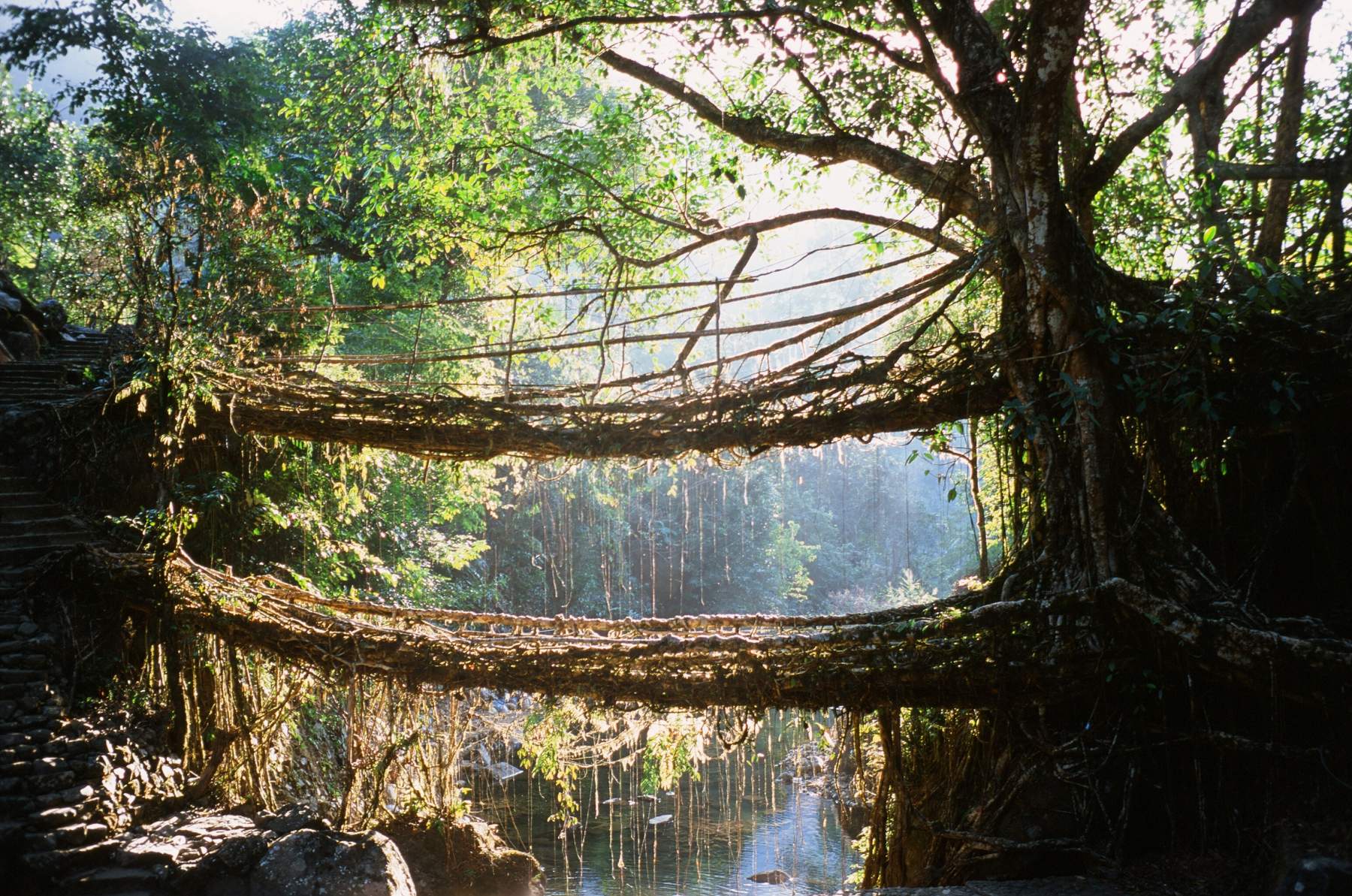
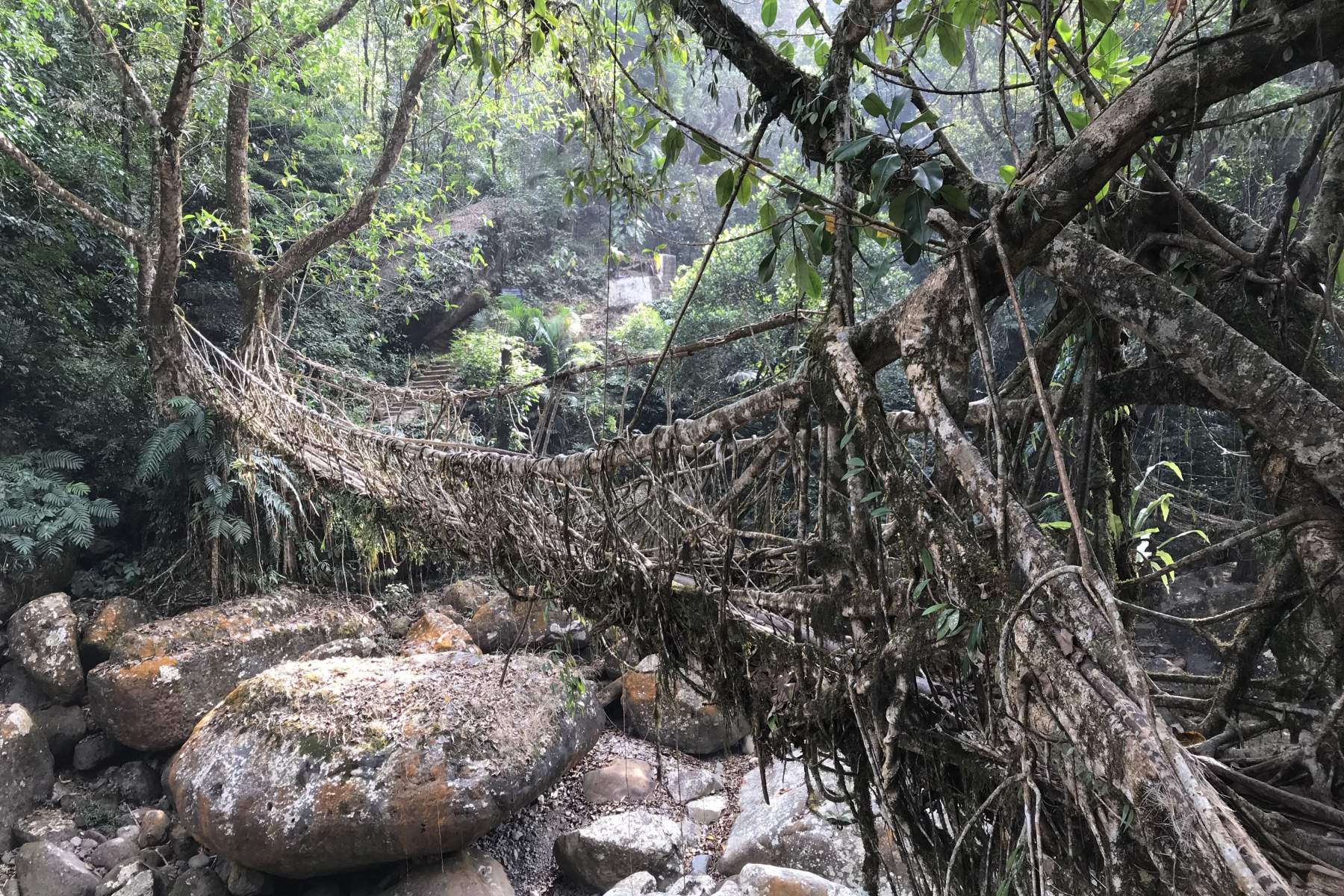
Our interest in trees has therefore developed beyond simply using timber as a building material. The Arboretum on our website reflects this curiosity, bringing together examples of trees, plants, natural materials and the systems they demonstrate. From cork oak and its regenerating bark to the structures of leaves and seed pods, we look at the natural world as a place to observe and learn.
From nature to architecture
Some of our projects make this relationship particularly direct.
In our Treehouse project in Hemel Hempstead, for example, the existing mature trees were treated not as constraints to be removed, but as fundamental to the design. The trees became what we described as “co-clients” - an idea that changes the starting point of the architectural process.
Other projects explore the relationship in less visible ways. A deep retrofit might retain an existing brick wall rather than replacing it. A timber extension might use plant-based insulation. A carefully positioned window can provide daylight, views and useful solar gain. A landscape can create habitat as well as a garden.
These decisions may appear unrelated, but they are connected by the same question:
How can a building become part of its environment rather than simply occupying it?
Growing, adapting and changing
Trees also remind us that architecture does not have to be fixed. A tree changes throughout its life. It grows around damage, responds to light, sheds parts of itself and continually adjusts to its surroundings. Buildings obviously cannot behave in exactly the same way, but they can be designed with change in mind. Families grow and change. Ways of working change. Technologies change. Buildings themselves age. A sustainable building should therefore have the capacity to adapt.
This is particularly important when working with existing homes. An extension or retrofit should not only answer today's brief, but consider how the building might continue to work for the people who use it in ten, twenty or fifty years. Longevity, repair and adaptability are therefore as important to sustainability as insulation, airtightness or energy generation.
A different idea of sustainability
For us, this is ultimately what Arboreal means. It is not a particular architectural style, and it does not mean putting plants on buildings or making architecture look organic. It is an attitude towards making.
It means looking at the whole system rather than a single component. It means valuing what already exists. It means choosing materials with their whole life in mind. It means designing buildings that can change rather than become obsolete. It means considering the landscape and the other species with which we share it.
And it means recognising that architecture is part of the natural world, whether we acknowledge it or not.
We cannot make buildings without taking something from the earth. But we can ask how much we take, what we give back, how long what we make might last, and whether our buildings can contribute positively to the places in which they stand.
Perhaps that is the most important lesson we can take from a tree. It does not exist alone. It grows within a system, relies on that system and contributes to it. It takes resources, but also gives something back. It changes over time and becomes part of the life around it. That is the kind of relationship we are interested in exploring through architecture.
That is why we are Arboreal.
Photos by: Tom Raymont and Judita Berndorff