The London Homeowner’s Guide to EnerPHit: Retrofitting Historic Properties
15.09.26
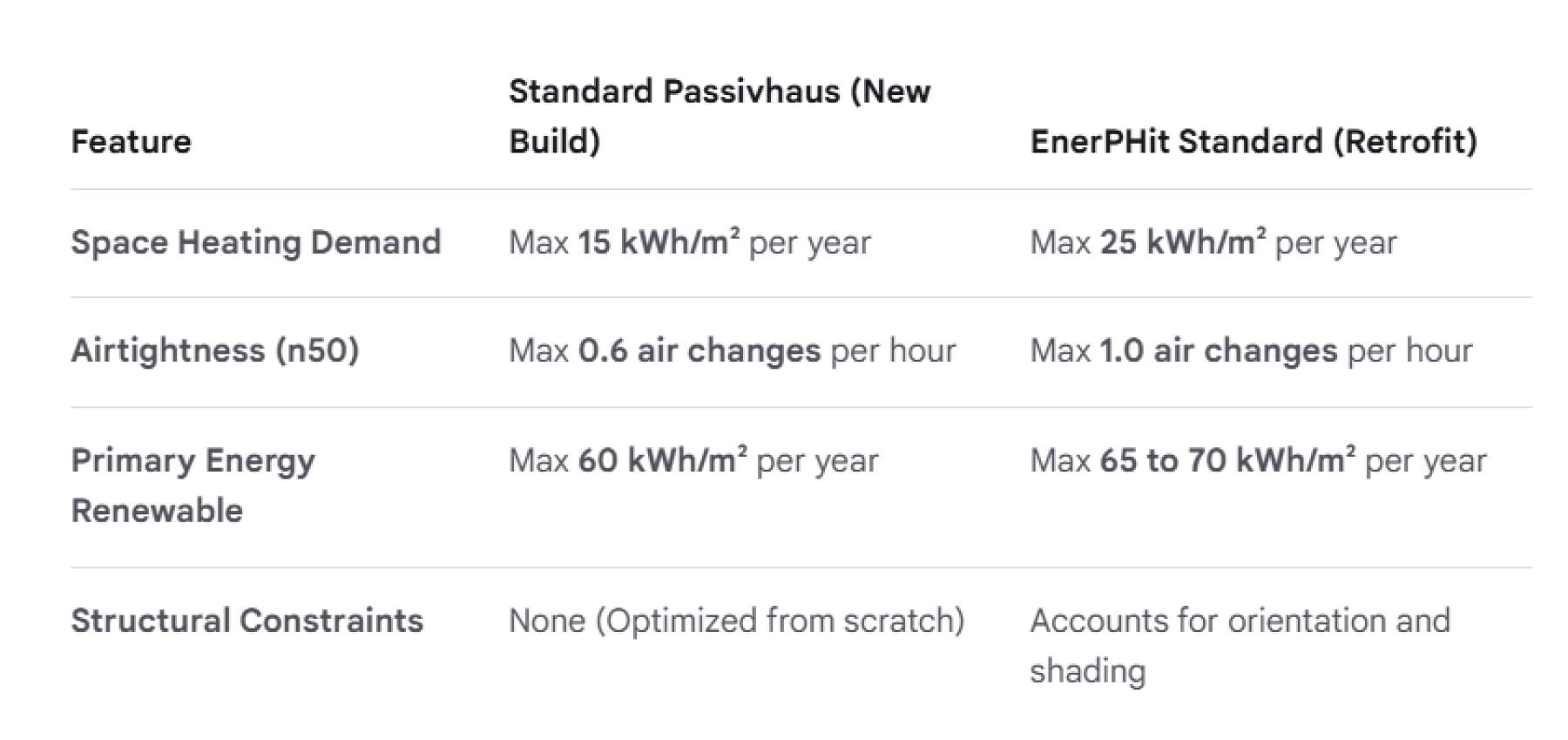
An EnerPHit retrofit is the official global standard for upgrading an existing building using Passivhaus principles. To achieve EnerPHit certification in the UK, a property must drastically lower its heating demand- typically down to 25 kWh/m² per year - while dramatically improving indoor air quality and eliminating drafts.
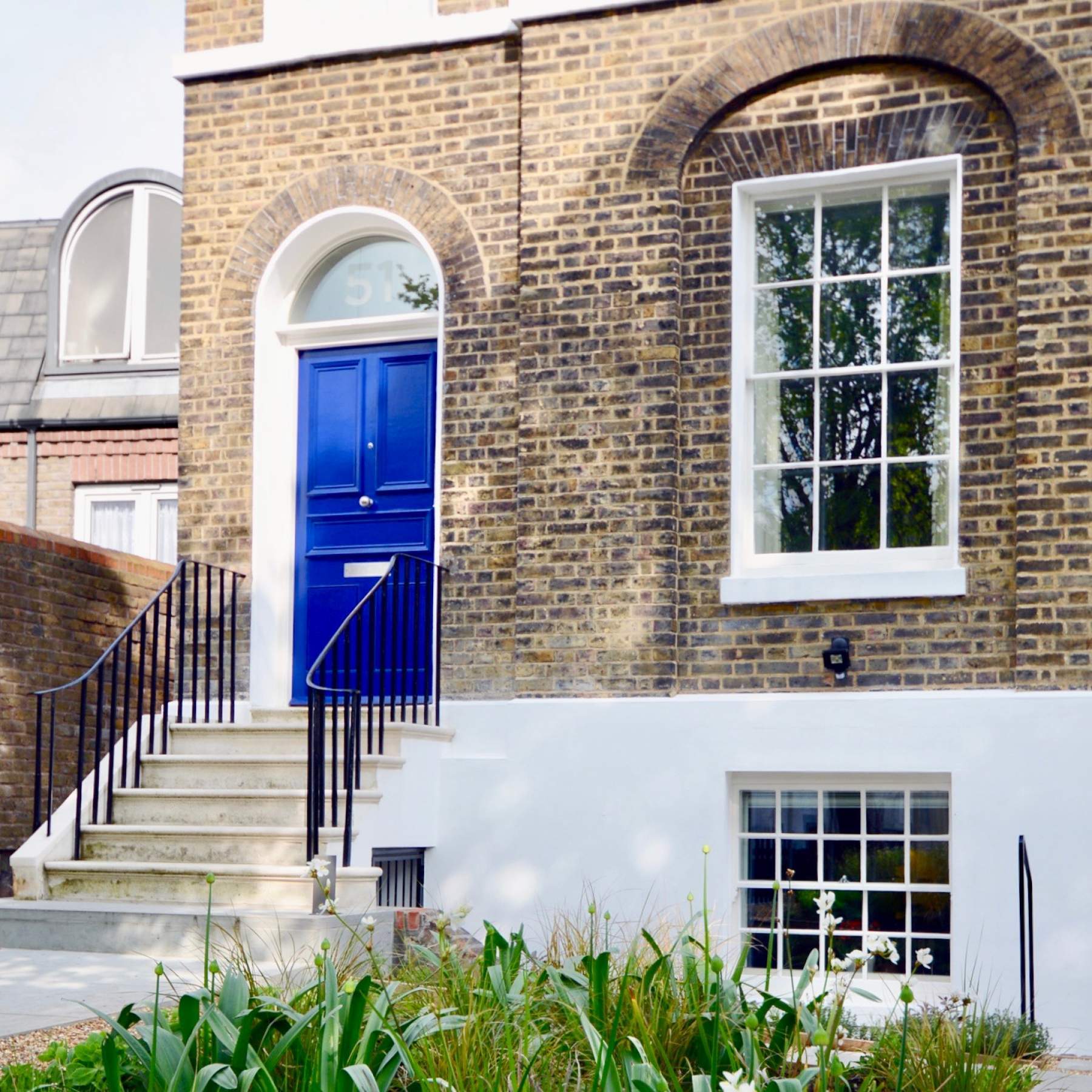
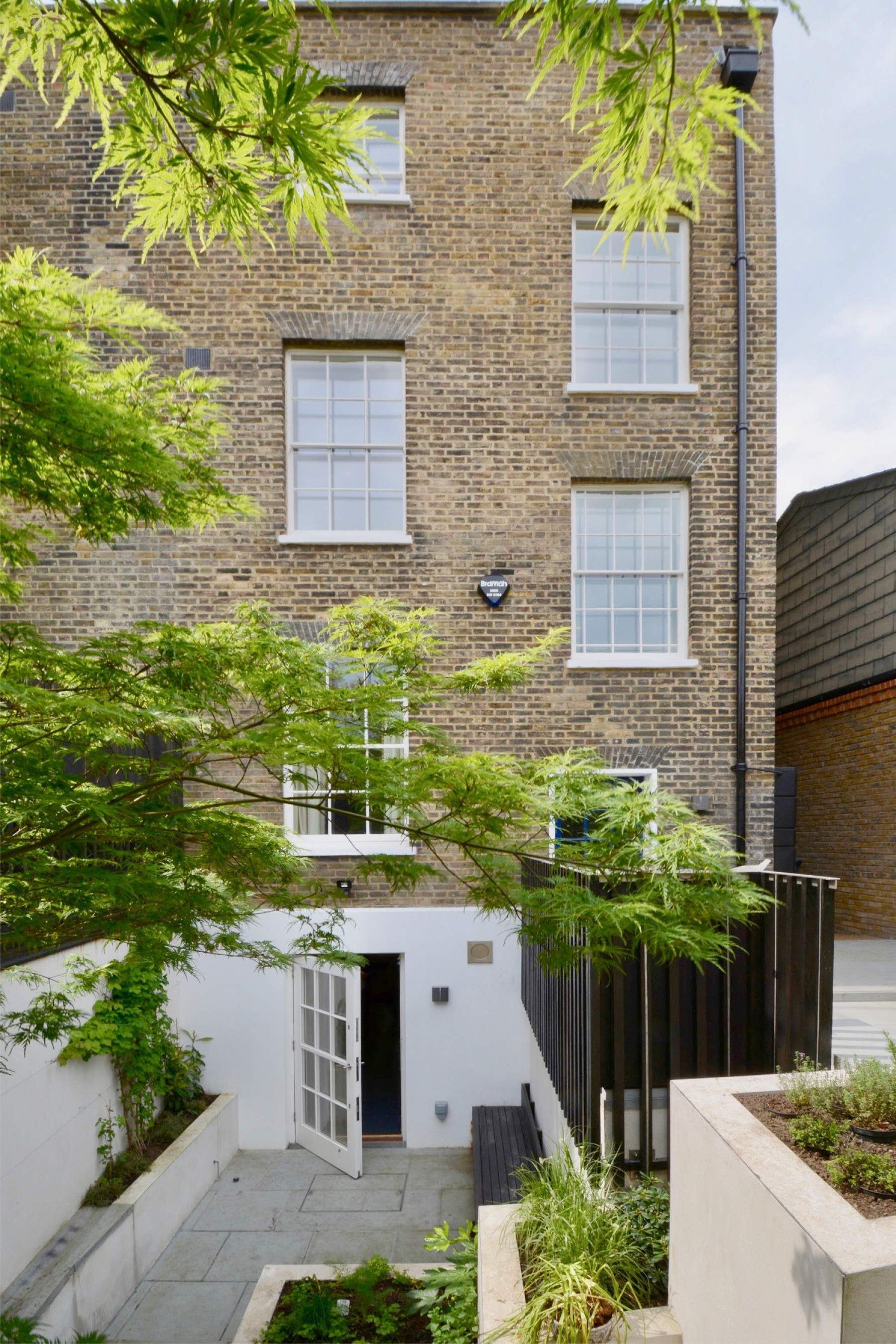
For London homeowners, applying this standard to historic solid-wall properties (such as Victorian, Georgian, or Edwardian terraces) is the ultimate way to future-proof a home against rising energy costs while preserving its architectural heritage.
EnerPHit vs. Standard Passivhaus: What is the Difference?
While a pristine new-build can easily target the baseline Passivhaus standard, retrofitting an older urban property presents physical constraints like structural orientation, cold bridging from party walls, and conservation regulations. Because of these challenges, the Passivhaus Institut developed the EnerPHit standard.
Why London Terraces Need a Fabric-First EnerPHit Approach?
Traditional London housing stock relies heavily on uninsulated solid brick walls. These buildings were originally designed to "breathe" via open fireplaces and leaky sash windows. When modern homeowners plug these gaps without a strategic plan, moisture gets trapped, leading to structural dampness and toxic mold.
An EnerPHit retrofit addresses this using a fabric-first methodology:
Continuous Internal Wall Insulation (IWI): Since changing the external brick facade is rarely permitted in London conservation areas, high-performance breathable insulation (like wood-fiber boards or lime-based renders) is applied internally. This keeps the masonry structurally sound while retaining heat.
Thermal Bridge Elimination: Older buildings suffer from massive heat loss where timber floor joints meet the external cold brickwork. An experienced Passivhaus architect in London uses specialized detailing to isolate these connections and prevent cold bridging.
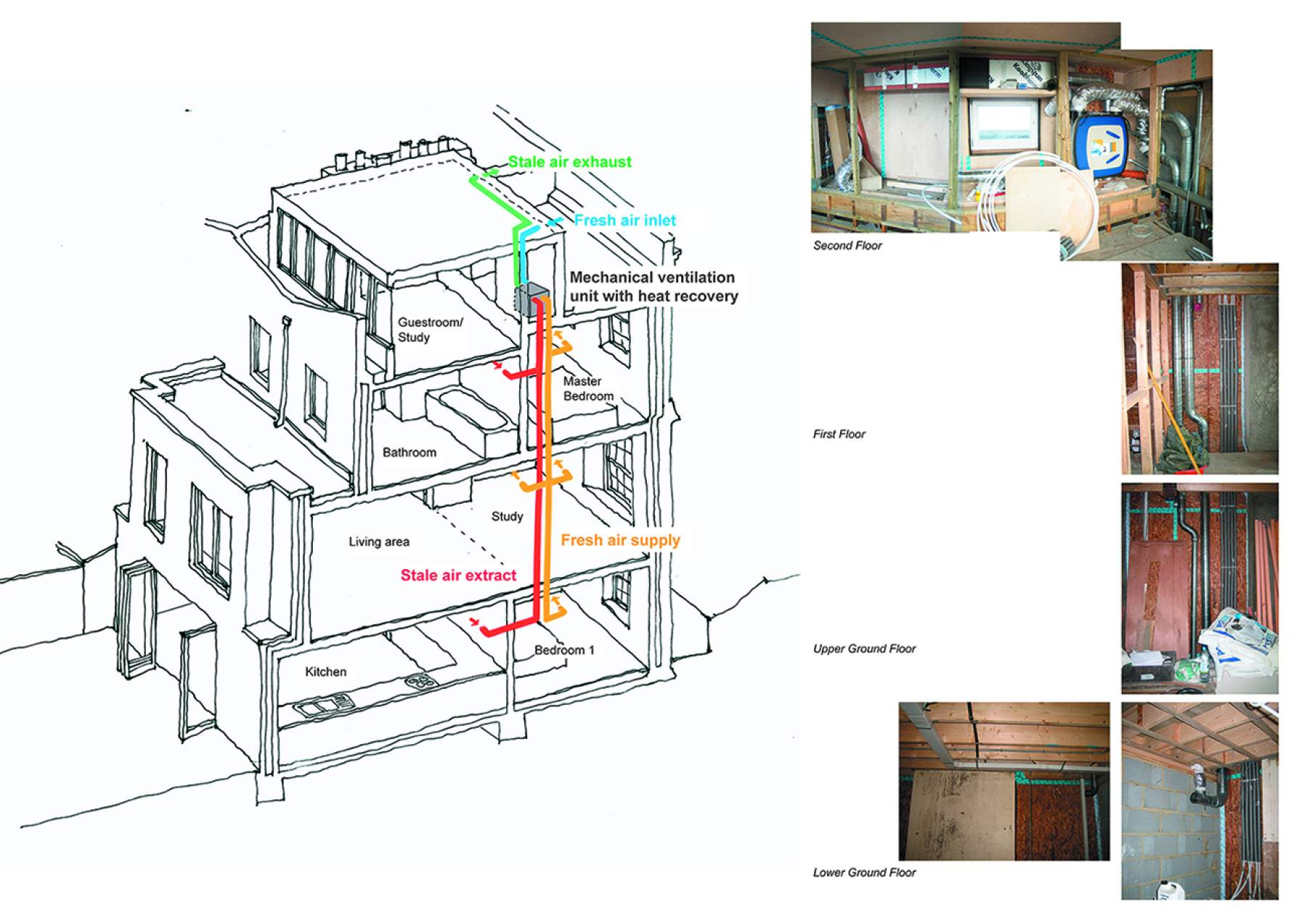
Mechanical Ventilation with Heat Recovery (MVHR): To ensure a constant supply of fresh, filtered air without loosing indoor heat, an MVHR system is integrated. This extracts stale air from kitchens and bathrooms, passes it through a heat exchanger, and pre-warms fresh incoming air.
Triple-Glazed Heritage Windows: Replacing draughty single glazing with high-spec, triple-glazed timber sash replicas dramatically cuts down acoustic pollution from busy London streets while maintaining historical compliance.
Navigating Conservation and Planning in London Boroughs
One of the largest hurdles for a deep retrofit in areas like Hackney, Islington, Camden, or Tower Hamlets is navigating local planning constraints. If your home is a listed building or sits within a designated conservation area, external visual alterations are tightly restricted.
The benefit of the EnerPHit framework is its flexibility. Because it prioritizes internal performance upgrades, you can achieve world-class energy efficiency entirely behind closed doors. When external changes are required, such as solar panel arrays or high-performance windows, working with a dedicated sustainable renovation architect in East London ensures your planning applications are backed by rigorous building physics and heritage empathy.
Frequently Asked Questions About EnerPHit Retrofits
Can any period property achieve EnerPHit certification?
Most period properties can achieve certification, though structural layout and party-wall configurations may require customized solutions. If full certification is blocked by extreme site constraints, the Passivhaus Institut allows for an EnerPHit Deferred Path, where upgrades are executed in planned, certified steps over several years.
How much does a deep retrofit cost in London?
The cost of an EnerPHit retrofit varies heavily based on the property’s baseline condition, structural modifications, and material choices. While the initial capital expenditure is higher than a standard cosmetic renovation, it eliminates heating bills by up to 90%, protects the building fabric permanently, and substantially increases the property's premium resale value.
Get in touch if you would like to find out more about retrofit or EnerPHit of your property.