Small Spaces, Big Impact: How Retrofit Can Cut Carbon and Improve London Homes
13.05.26
London’s housing stock is full of small, constrained and often overlooked spaces - narrow kitchens, dark rear sculleries, awkward extensions added over decades. Yet within these tight urban conditions lies one of the greatest opportunities for reducing carbon emissions and improving everyday living standards: the retrofit and intelligent reworking of what already exists.
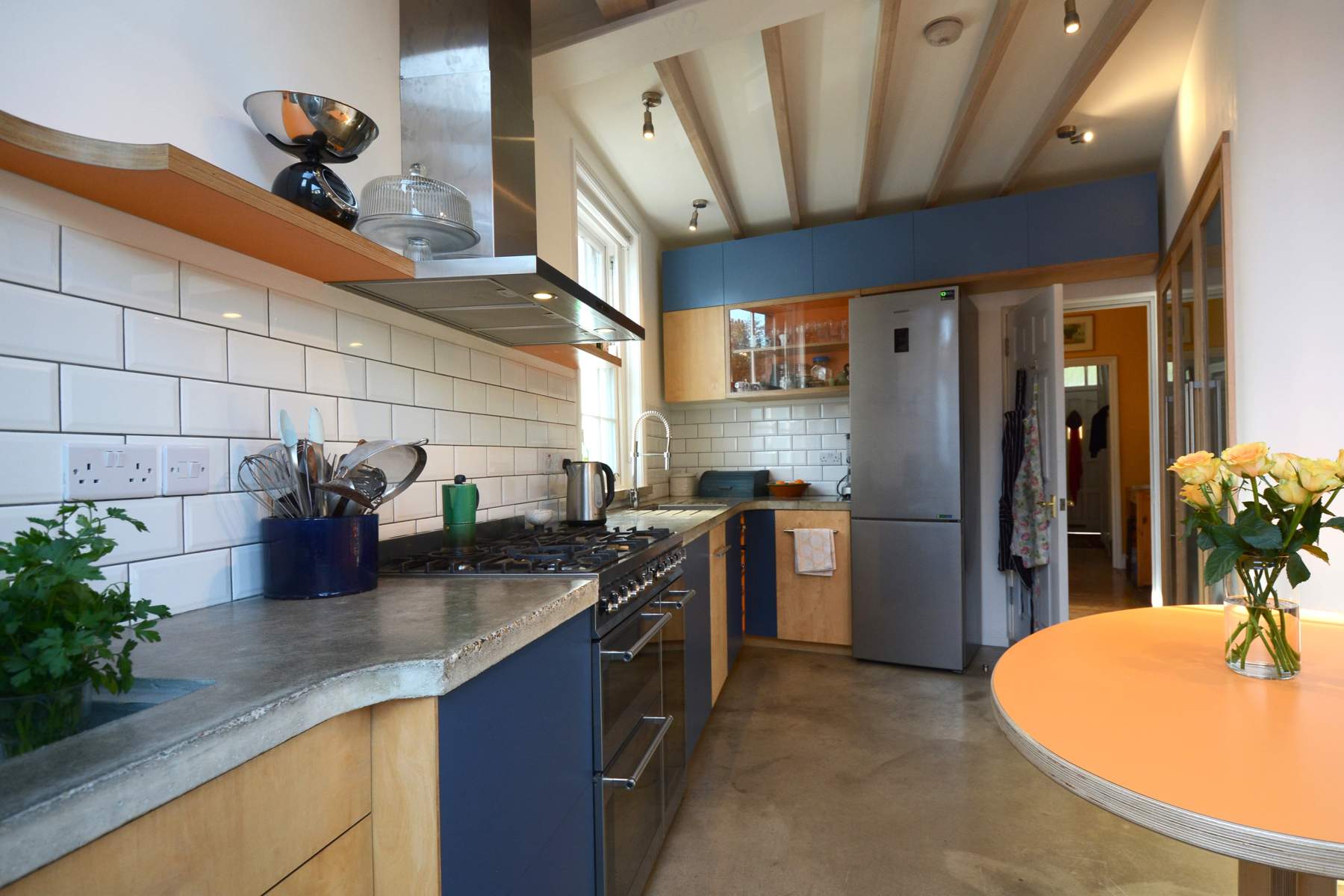
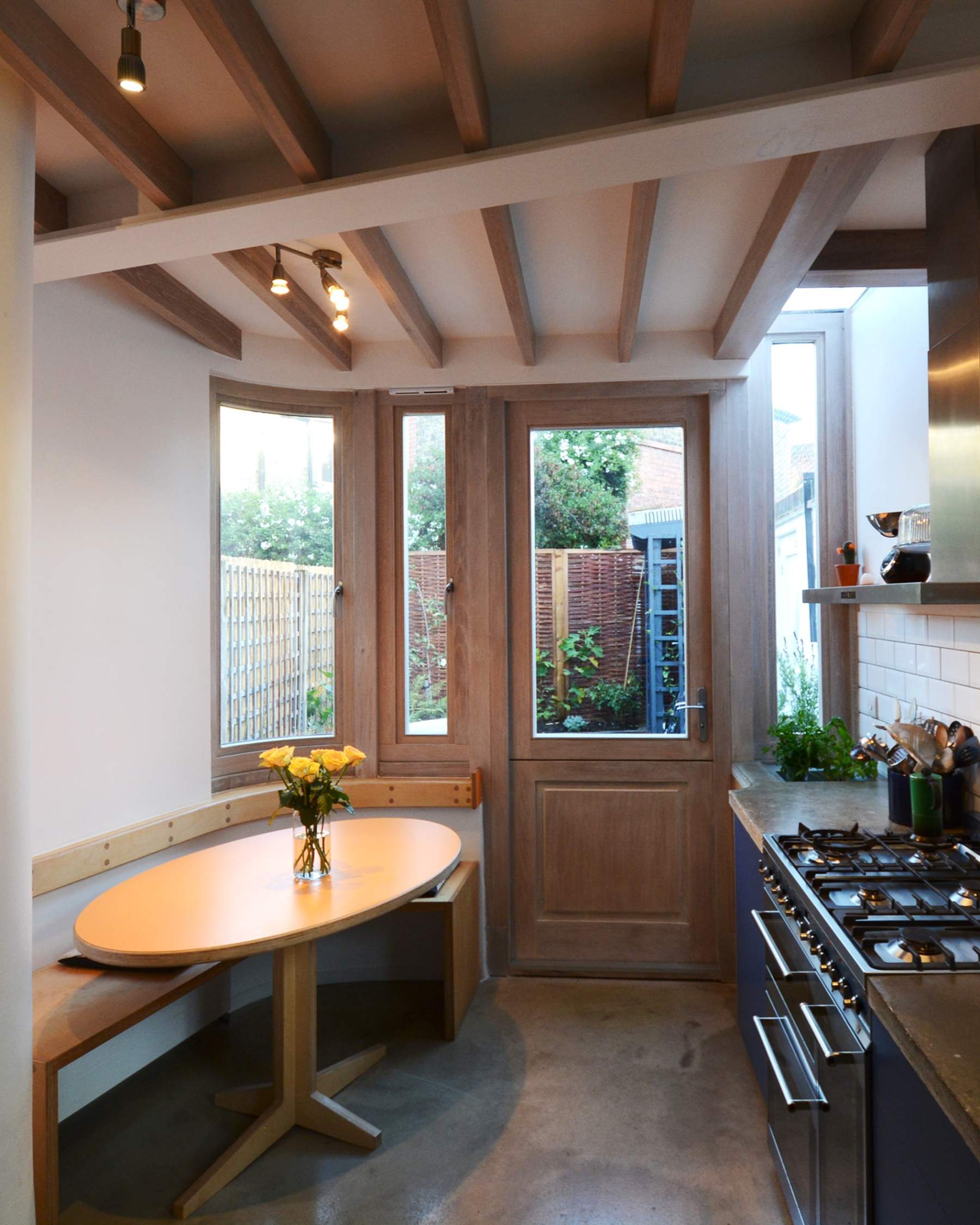
Globe House, "a tiny" project by Arboreal Architecture in the heart of Bethnal Green, East London, demonstrates how even the smallest intervention can fundamentally change how a home functions. The project added just 3.6m² to an existing Edwardian terrace, yet the impact on space, light and usability is transformative.
Rather than defaulting to demolition or large-scale expansion, the design approach focused on working with what was already there. The original kitchen measured only 8.5m², poorly lit and disconnected from the garden. Instead of increasing footprint significantly, the intervention carefully reconfigured geometry, daylight and spatial relationships to unlock generosity within constraint.
A subtle curved extension opens diagonal views towards the garden, creating a built-in dining nook and window seat. Glazing wraps around the rear façade, drawing light deep into the plan, while a rooflight further enhances natural illumination. A continuous worktop extends outward to form an indoor–outdoor herb planter, dissolving the boundary between house and garden. Integrated storage and concealed utility spaces allow the kitchen to remain calm, functional and uncluttered despite its compact size.
This approach reflects a broader shift in how we must think about housing in dense cities like London. Space is limited, carbon budgets are tightening, and the environmental cost of demolition and new construction is increasingly difficult to justify. Retrofitting and improving existing homes is not only more sustainable - it is essential.
According to industry data, the construction sector accounts for a significant proportion of global carbon emissions, with much of this embedded in material production and new build activity. By contrast, reusing structures, improving insulation, optimising layouts and designing for longevity can dramatically reduce environmental impact while improving comfort and performance.
Globe House is a small example of a much larger principle: that good design can do more with less. A well-considered intervention can improve daylight, reduce energy demand, enhance thermal comfort and support healthier patterns of living - all without unnecessary expansion or waste.
At Arboreal Architecture, we work across projects of all sizes, from compact flat refurbishments to larger home extensions, always with the same goal: to design out waste, improve performance, and create spaces that support how people actually live. This means prioritising retrofit over replacement, material efficiency over excess, and long-term adaptability over short-term gain.
In many cases, the most sustainable square metre is the one that already exists.
As London continues to grow and densify, the challenge is not simply to build more, but to build better within what we already have. Tiny, constrained spaces are not problems to be solved by expansion alone - they are opportunities to rethink how homes can evolve, adapt and support modern life with less environmental cost.
If you are considering a project - whether a small flat improvement or a larger home transformation - we would be happy to explore how it can be made to work better for your needs, your comfort and the planet.