Integrate with Nature
26.08.26
The natural world is remarkably efficient.
Living systems grow, adapt, exchange energy and recycle nutrients in cycles that can continue generation after generation without degrading the environment that supports them. Nature produces an extraordinary diversity of structures and materials, largely using soil, water and sunlight, at ambient temperatures and pressures.
There is a technical brilliance in this that we still have much to learn from.
Many conventional building materials, by contrast, rely on manufacturing processes involving high temperatures, high pressures and intensive chemical reactions. Concrete, steel and plastics have enabled extraordinary changes in the way we build, but their environmental consequences are increasingly difficult to ignore.
At Arboreal Architecture, we look towards other possibilities.
We are interested in materials that can be grown rather than extracted, and in plant-based and natural products that can be made, used, reused and, where possible, returned safely to the earth. This does not mean rejecting technology or seeking a nostalgic return to the past. It means learning from the systems that have sustained life for millions of years and applying that knowledge to the way we design buildings today.
Thinking Beyond the Life of a Building
We often use what we call two-hundred-year thinking.
When considering a building material, we ask where it has come from and where it might eventually end up. What resources were needed to make it? How long will it last? Can it be repaired or reused? And what happens when the building itself needs to change?
These questions encourage a different approach to architecture.
Instead of thinking only about the moment a building is completed, we consider its longer life: how it will adapt, age, be maintained and eventually be taken apart. We look for materials and construction methods that can support these longer cycles rather than creating waste that future generations will need to manage.
Natural and plant-based materials can offer an important part of this approach. Timber, wood fibre, cork and other bio-based products can help create buildings with lower embodied carbon while supporting healthier and more breathable internal environments.
The material choices we make are therefore not simply technical decisions. They are part of a much larger relationship between the building, its occupants and the wider world.
Nature as More Than an Aesthetic
For us, integrating with nature is about much more than visual inspiration.
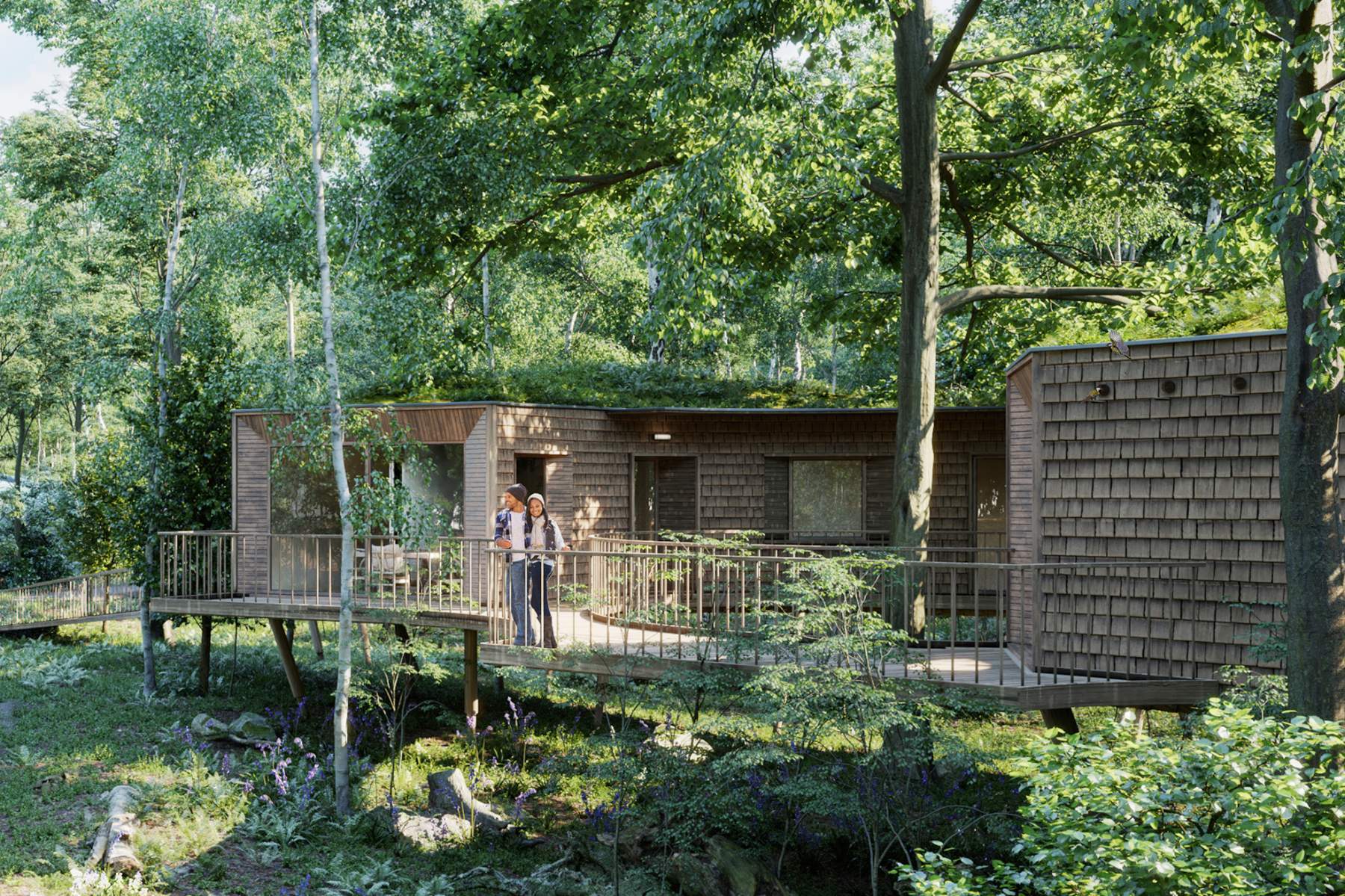
Nature is often brought into architecture through planting, views or materials that imitate natural forms. These can all play an important role, but a deeper integration begins with understanding a place as a living system.
Before building, we ask what is already there.
What is living on the site? What habitats, trees, soils and species are present? What should be protected? And what could be restored, re-grown or re-wilded?
Every project offers an opportunity to think about how our need to make a home can coexist more graciously with the life already present around it.
Sometimes this means retaining an existing tree or mature planting. Sometimes it means creating new habitat, improving biodiversity or allowing parts of a site to become wilder over time. In other cases, it means simply disturbing less and working more carefully with what is already there.
Insulating Without Isolating
Buildings are, by necessity, places of protection.
They shelter us from the weather, provide warmth and create spaces where we can rest and live. But our buildings and cities can also separate us from the natural world.
The challenge is to create homes that provide comfort without complete disconnection.
Good sustainable architecture can insulate us from cold and heat without isolating us from the changing seasons, daylight, planting, wildlife and the wider landscape. It can create a closer relationship between inside and outside while still providing the privacy, shelter and comfort we need.
This is not simply an ethical responsibility. It is also an opportunity.
Nature offers an extraordinary source of knowledge, beauty and inspiration. By working more closely with natural systems, materials and living landscapes, we can create buildings that are not only lower in carbon but richer, healthier and more connected to the places in which they stand.
For Arboreal Architecture, integrating with nature means continuing to ask questions.
What can we learn from the living world? What should we protect? What could grow here again? And how can architecture help us return, step by step, to a closer relationship with the natural systems that sustain us?