From Sketch to Site: What It Really Looks Like to Build a Home with Arboreal Architecture
21.05.26
“What actually happens between hiring an architect and moving into the finished home?”
For many homeowners, the process remains opaque. They imagine drawings, planning applications and building works, but the reality is far more layered - and far more collaborative. At Arboreal Architecture, each project unfolds as a sequence of conversations, testing, refinement and decision-making. From the earliest sketch to post-occupancy review, the process is designed not simply to produce a building, but to guide clients confidently through the complexity of creating one.
Here is how that journey typically takes shape
1. The First Conversation: Ideas, Questions and Early Sketches
Every project begins around a table or at the site. Estate agent plans are unfolded. Tea or coffee is poured. Clients arrive with aspirations, uncertainties and often a long list of questions: Can this work? Is the budget realistic? How ambitious can we be?
This opening stage - part briefing, part brainstorming session - is where the architectural process truly starts. Rather than arriving with fixed solutions we begin by listening. Sketch pens and tracing paper quickly come into play as ideas are tested in real time: layouts explored, extensions imagined, constraints identified.
Timelines, planning risks and rough construction costs are discussed from the outset. By the end of the process, clients receive a clear appraisal of where they stand - including initial sketches, budget ranges, key risks and practical next steps. For many homeowners, this stage marks the first moment the project begins to feel tangible.
2. Developing the Concept: From Sketches to Spatial Experience
Once the brief is established, the project moves into concept design. At this point, Arboreal Architecture deliberately avoids rushing into polished imagery. The emphasis instead is placed on understanding how spaces should function, connect and feel. Multiple layout options are explored through hand sketches and 2D studies before evolving into more immersive forms of representation.
Collaboration remains central throughout. Ideas are shared through an online Miro board, allowing clients to comment on developing proposals in real time. The process becomes conversational and iterative: architects presenting possibilities, clients responding, designs evolving accordingly. Gradually, sketches become three-dimensional models, perspectives and daylight studies. Clients can inhabit the project long before construction begins - testing atmosphere, scale and movement within the proposed home.
It is often during this phase that clients begin to understand the transformative potential of architectural design: the difference between simply adding space and fundamentally improving how a home is lived in.
3. Planning with Clarity - and Realistic Costs
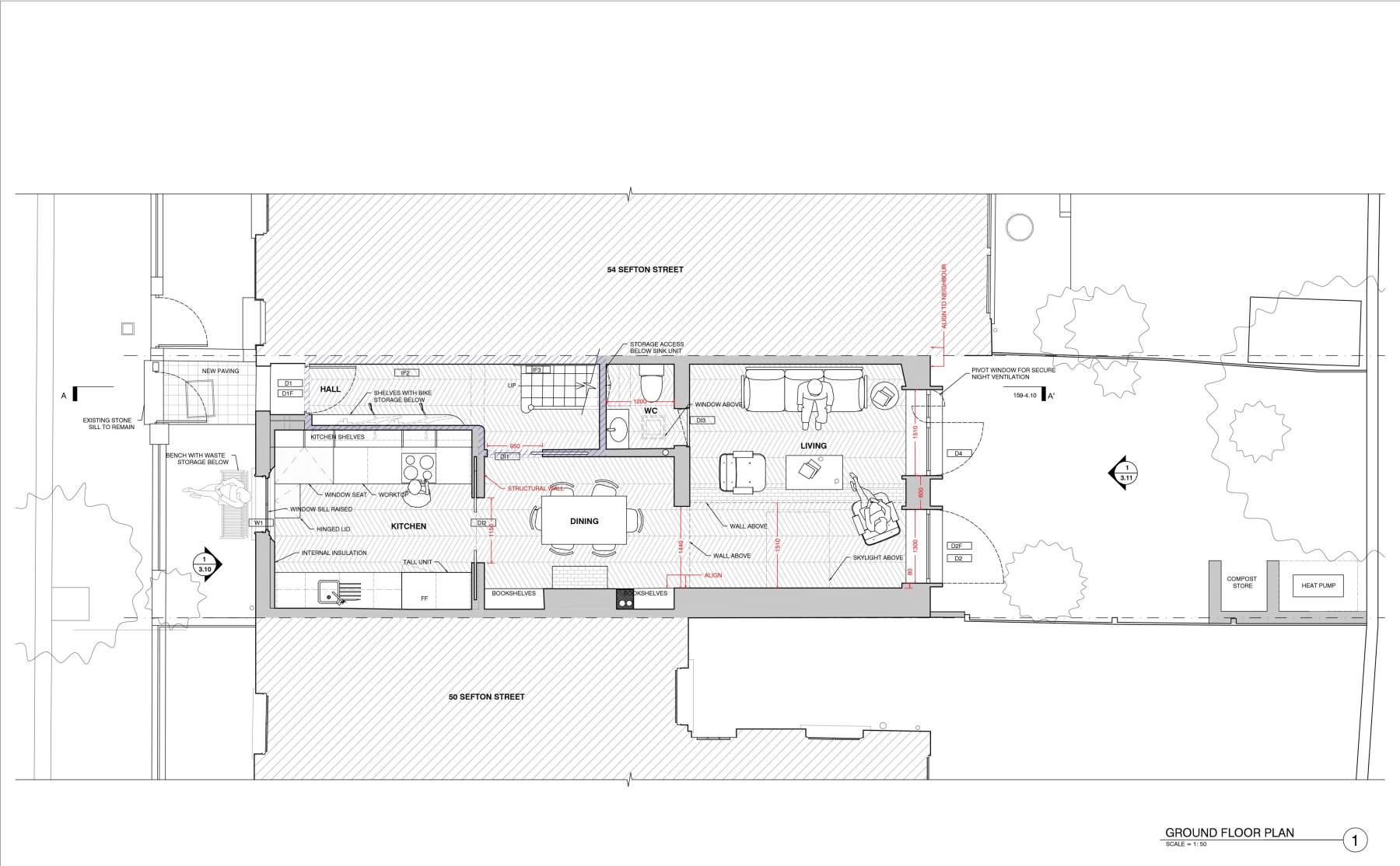
With a preferred concept established, attention turns to planning. Detailed drawing packages are prepared alongside supporting documentation such as heritage statements for listed buildings or homes within Conservation Areas. Consultants are coordinated where required, ensuring the proposal is robust before submission.
But crucially, the planning stage is not approached in isolation from cost. Before any application is submitted, Arboreal Architecture discusses the cost report. The intention is straightforward: clients should move forward with informed expectations rather than optimistic assumptions.
This integration of design ambition with financial realism has become an increasingly important part of contemporary residential practice - particularly in London, where planning constraints and construction costs can shift rapidly. The result is a process grounded as much in transparency as in creativity.
4. Technical Design and Interior Development
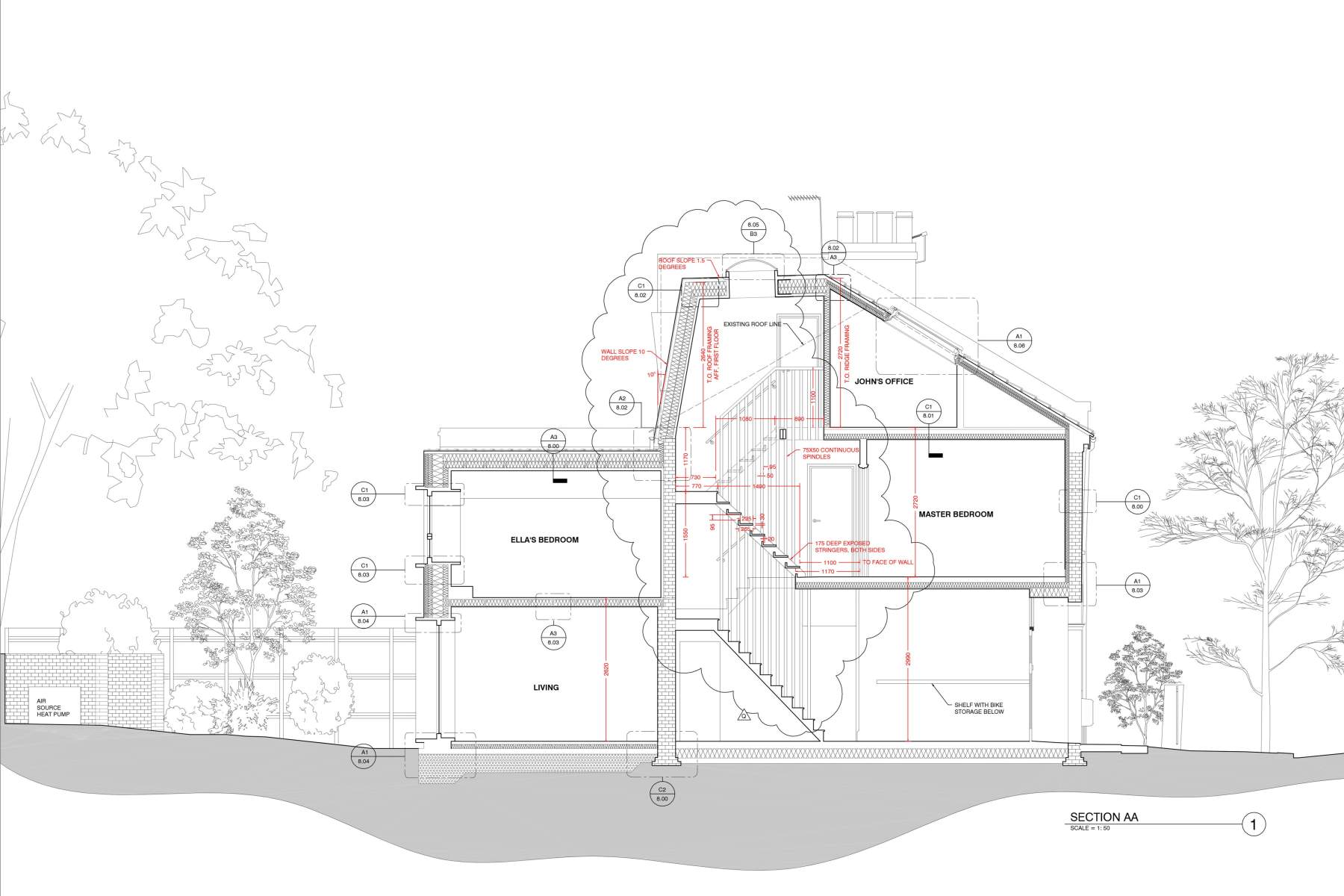
Once planning approval is secured, the project enters its most detailed phase. Technical design transforms architectural intent into buildable information. Drawings are developed to coordinate structure, insulation, heating systems, services and sustainable strategies. The earlier cost report remains an active reference throughout, helping guide decisions and maintain budget alignment as technical detail increases.
At the same time, the interior language of the project begins to emerge. Joinery, lighting, finishes, material palettes and bespoke elements are developed in parallel with construction information. Key supplier quotes - from window manufacturers to specialist joinery contractors - are often sought early to keep costs rooted in current market realities.
For architects, this stage is where conceptual thinking, and technical precision must operate simultaneously. Every detail contributes to whether the finished building feels resolved.
5. Assembling the Right Team
A successful project depends as much on the builder as the drawings themselves. Over time, Arboreal Architecture has developed long-standing relationships with contractors and craftspeople experienced in delivering highly detailed residential work. Tender packages are carefully prepared and suitable builders shortlisted not only on price, but on compatibility, quality and understanding of the project’s ambitions.
Structural engineers and specialist consultants are brought into close collaboration as the construction team forms around the project. The aim is not simply procurement, but alignment - ensuring the people delivering the work understand the architectural vision behind it.
6. Construction: Staying Involved Beyond the Drawings
For many practices, the architect’s role diminishes once construction begins. At Arboreal Architecture, it continues. Site visits, design reviews and ongoing coordination remain integral throughout the build process. Questions are resolved as they arise, workmanship is monitored and design intent protected during construction. Importantly, design itself does not stop once work starts on site. Joinery details may still evolve. Material selections are refined. Unexpected site conditions can generate new opportunities - or require careful adaptation. Construction becomes less a handover and more a continuation of the design process in built form.
7. After Completion: Learning from the Finished Home
Completion is not treated as the final chapter. The practice regularly returns after occupation to understand how homes are performing in everyday life. Post-occupancy evaluations help assess comfort, energy performance and how spaces are being used. These conversations feed directly into future projects, creating an ongoing cycle of learning and refinement. For a practice focused on long-term residential performance, the process does not end at practical completion - it extends into how the building supports daily life over time.
In Essence
What emerges from this process is not simply a sequence of project stages, but a framework for collaboration.
Clients receive:
A design process shaped around dialogue and transparency
Early and realistic cost guidance
Access to trusted builders and consultants
Attention to both strategic decisions and fine detail
Continued involvement throughout construction and beyond
Building a home remains one of the most significant undertakings many clients will ever embark upon. The architect’s role is not only to design the building, but to guide that journey with clarity, creativity and experience.
If you are considering a renovation, extension or new-build project and are looking for a collaborative architectural team to help shape the process from first sketch to final detail, Arboreal Architecture welcomes the conversation.