Fresh Air by Design: An Introduction to MVHR
16.06.26
As the UK's climate continues to change, homes are increasingly being asked to do more: stay warm in winter, remain comfortable during hotter summers, and use less energy overall. Improving the performance of our buildings is an important part of responding to these challenges while creating healthier places to live.
One of the questions we are frequently asked by clients is whether Mechanical Ventilation with Heat Recovery (MVHR) is worth considering. While MVHR has become increasingly common in low-energy and Passivhaus-inspired homes, many people are unfamiliar with how it works and the benefits it can provide.
This guide brings together the questions we are most often asked about MVHR systems, offering clear explanations to help homeowners, self-builders and renovators make informed decisions about ventilation, comfort and energy performance.
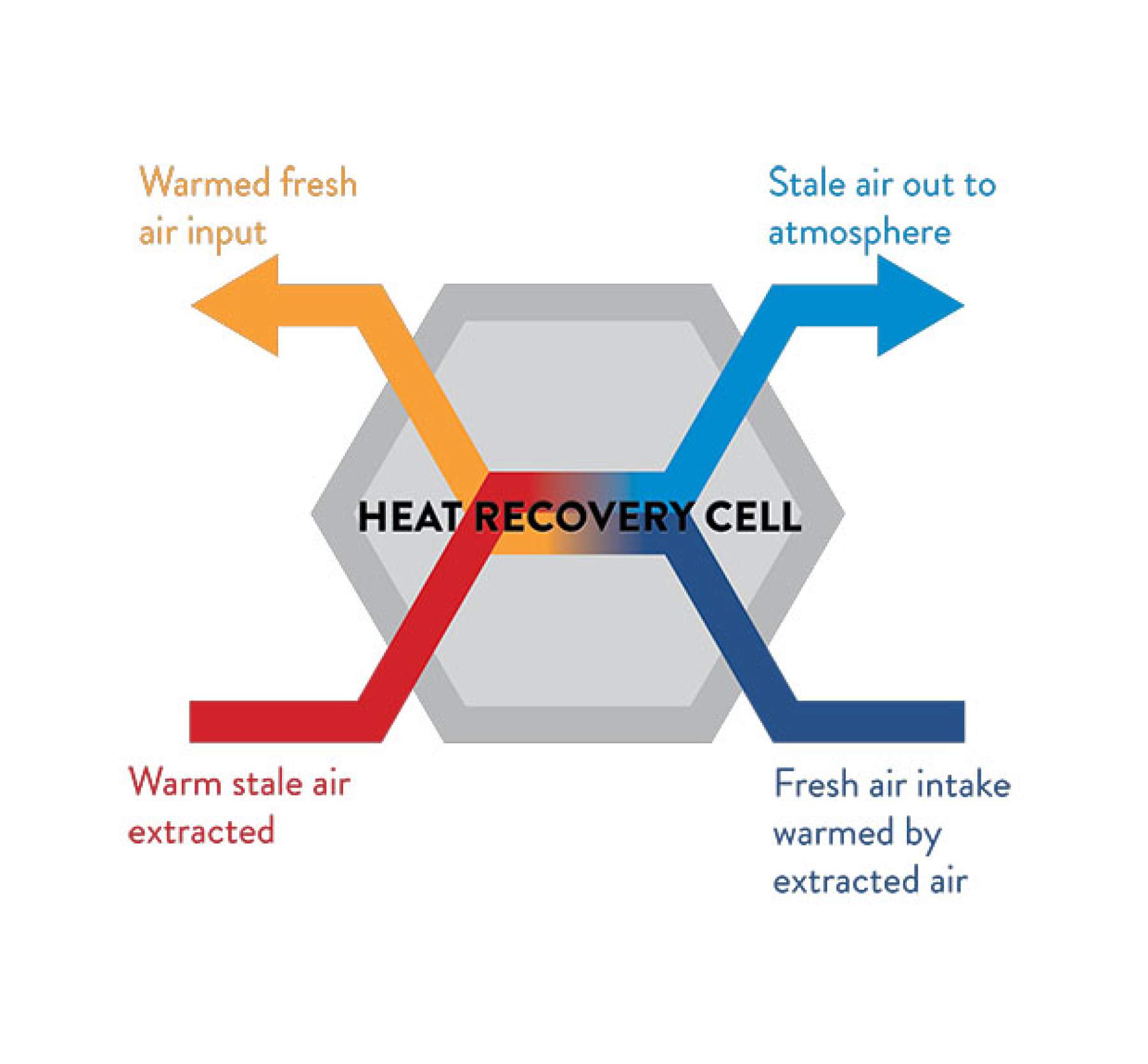
What is MVHR? Mechanical Ventilation with Heat Recovery (MVHR) is a whole-house ventilation system that continuously supplies fresh, filtered air while extracting stale air from kitchens, bathrooms and utility spaces. As the air passes through the unit, heat from the outgoing air is transferred to the incoming fresh air, helping maintain comfort while reducing heat loss.
Will MVHR reduce heating demand? Yes. An MVHR system recovers heat that would otherwise be lost through extractor fans, trickle vents and uncontrolled draughts. By retaining more of this useful heat, the heating system has less work to do, helping improve overall energy efficiency.
Does my home need to be airtight? MVHR performs best in an airtight building. Reducing uncontrolled draughts improves comfort, lowers energy use and allows the ventilation system to work as intended.
As homes are renovated or built to modern standards, they naturally become more airtight. Without adequate ventilation, this can increase the risk of condensation and mould. MVHR provides a reliable supply of fresh air while allowing the building fabric to remain well sealed.
Are MVHR systems noisy? A well-designed and correctly commissioned system should be barely noticeable in day-to-day use. Careful sizing of ductwork, appropriate air speeds and acoustic attenuation all help ensure quiet operation throughout the home.
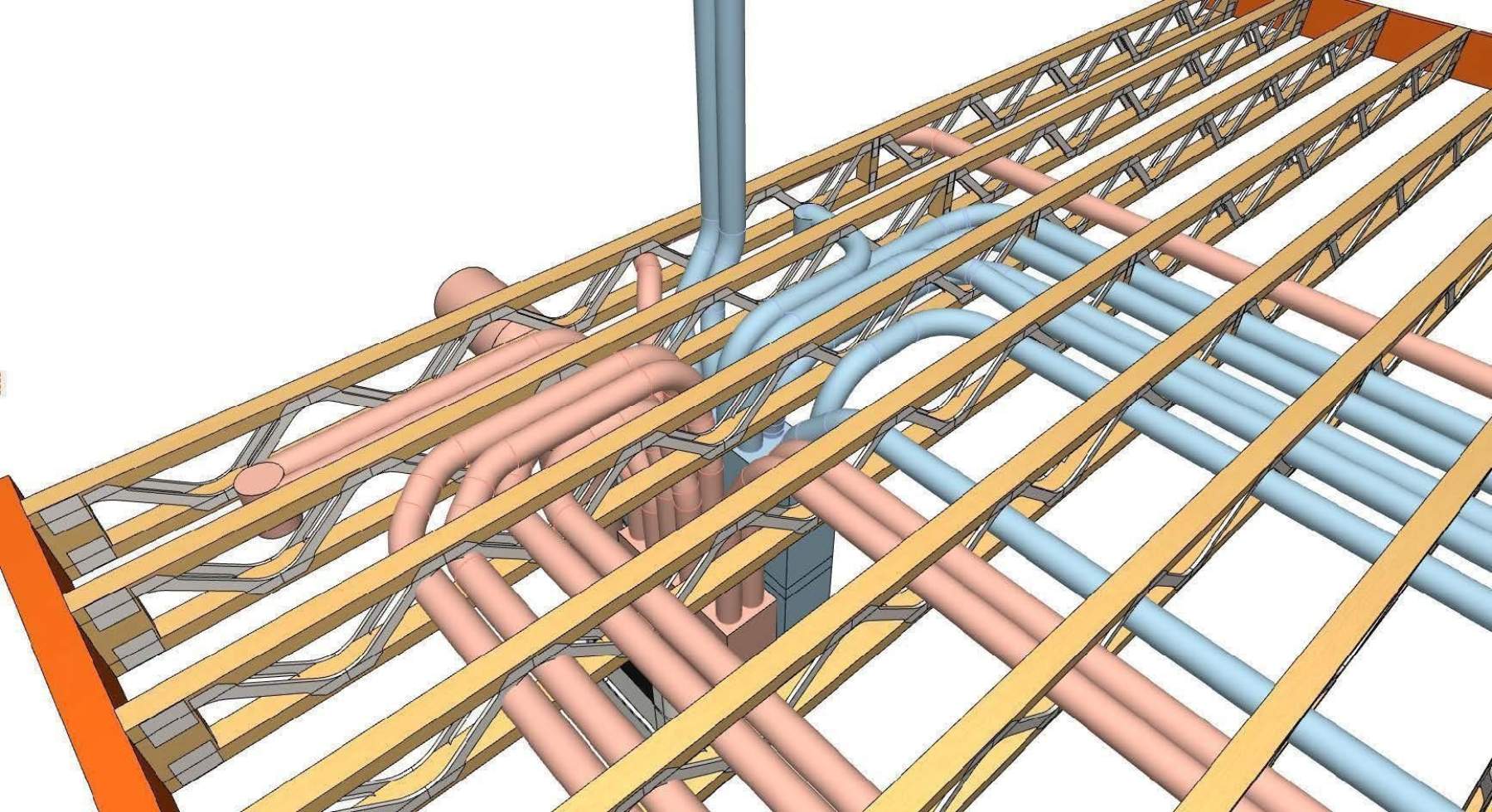
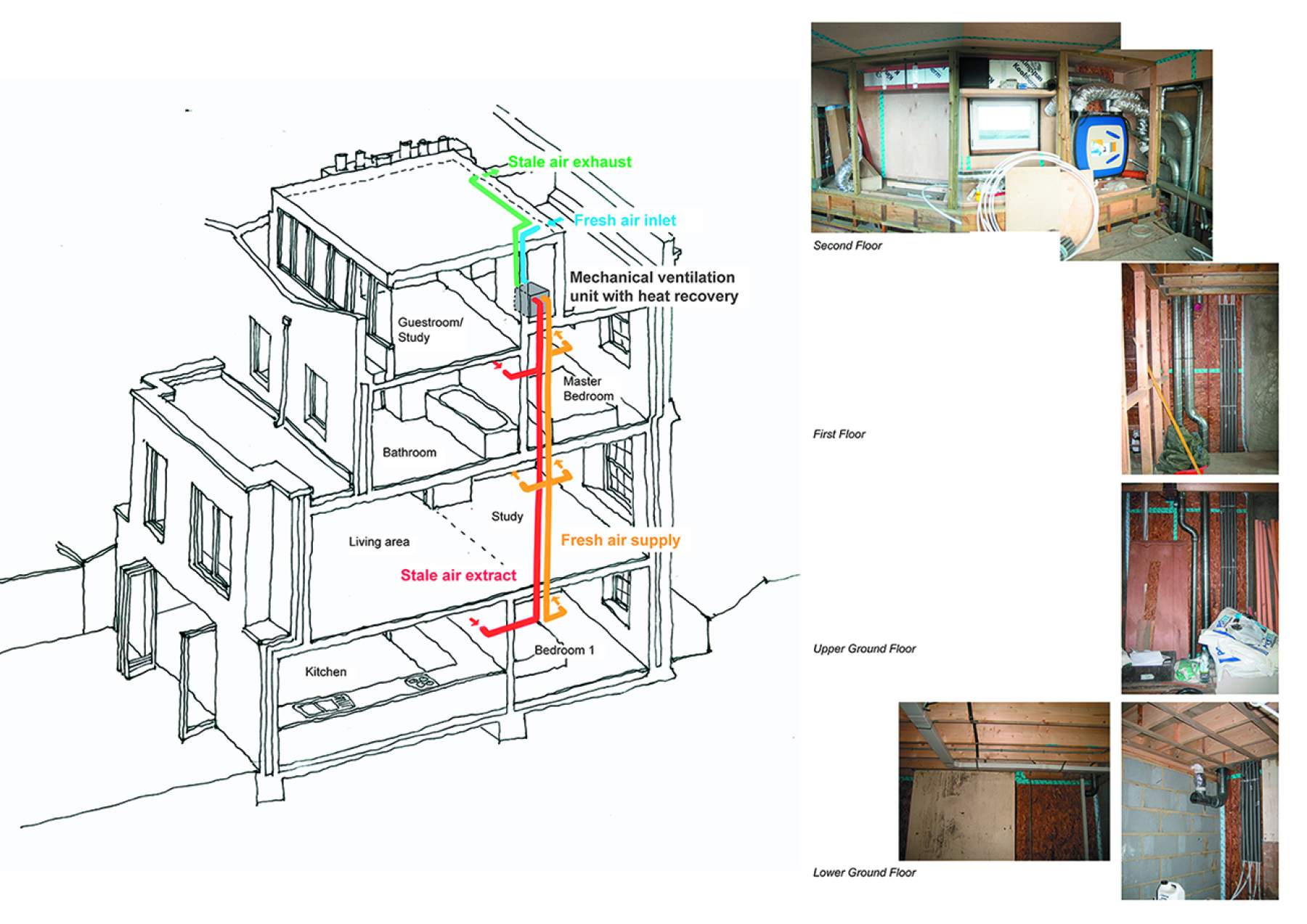
How much space does an MVHR system require? The ventilation unit itself is typically located in a utility room, plant room, loft or similar service space. Ductwork is distributed throughout the building and can often be concealed within floors, ceilings or service zones. We work closely with the wider design team to integrate the system as discreetly as possible.
Where should the MVHR unit be located? Ideally, the unit should be positioned close to an external wall or roof to minimise the length of external ductwork. This helps improve efficiency and simplifies installation and maintenance.
Can MVHR help keep my home cool in summer? MVHR is primarily a ventilation system rather than an air-conditioning system. During warmer weather, most units use a summer bypass mode, which helps remove excess heat from the home when external conditions are favourable. While this can improve comfort, MVHR should not be relied upon as the primary means of cooling.
Will MVHR help with condensation and damp? In many cases, yes. By continuously removing moisture-laden air and introducing fresh air, MVHR helps maintain healthier humidity levels throughout the home. This can significantly reduce condensation and the conditions that encourage mould growth.
Do I still need a cooker hood? Yes. Cooker hoods remove grease, cooking odours and high concentrations of moisture directly at source. They perform a different role from the MVHR system and remain an important part of a healthy kitchen environment.
Can I have a wood-burning stove or fireplace? Open fireplaces are generally incompatible with low-energy, airtight homes because they require significant amounts of replacement air.
Room-sealed stoves with a dedicated external air supply can often be incorporated successfully. We recommend discussing the specific appliance during the design stage.
Does MVHR filter outdoor pollution? Yes. MVHR filters remove pollen, dust, insects and many airborne particles before fresh air enters the home. Additional filtration options are available where outdoor air quality is a particular concern.
What is the difference between radial and branch ductwork? Radial systems use individual ducts running directly between the unit and each room. They are typically quieter, easier to balance and simpler to maintain than traditional branch systems. For most residential projects, we favour radial layouts because of their performance and reliability.
How does air move between rooms? Air is supplied to living spaces and bedrooms and extracted from bathrooms, kitchens and utility areas. Small gaps beneath internal doors allow air to move through the home even when doors are closed.
Will the external ducts go through the roof or the wall? Either approach is possible. The preferred solution will depend on the location of the MVHR unit, the building design and aesthetic considerations. We coordinate these details carefully to ensure both good performance and a clean external appearance.
Where are ventilation valves positioned? Extract valves are typically located at high level in kitchens, bathrooms and utility spaces, where warm, moisture-rich air naturally accumulates. Supply valves can often be positioned at high level, low level or within floors, depending on the design requirements of each room.
What maintenance is required? MVHR systems are straightforward to maintain. Filters should be checked every six to twelve months and cleaned or replaced as required. Valves and external grilles should be kept free from dust, and the unit itself should be professionally serviced periodically to ensure optimal performance.
Can MVHR provide active cooling? Some systems can incorporate cooling functions, although cooling capacity is limited by the amount of air being moved through the building. Where greater cooling is required, alternative ventilation and heat pump solutions may be more appropriate.