Arboreal Architecture
  • Approach
  • Projects
  • Practice
  • News
  • Arboretum
  • Studio
  • Awards
  • Teaching
  • Contact
  • Reuse Flat | Award-Winning Sustainable Apartment Retrofit in Hackney, London

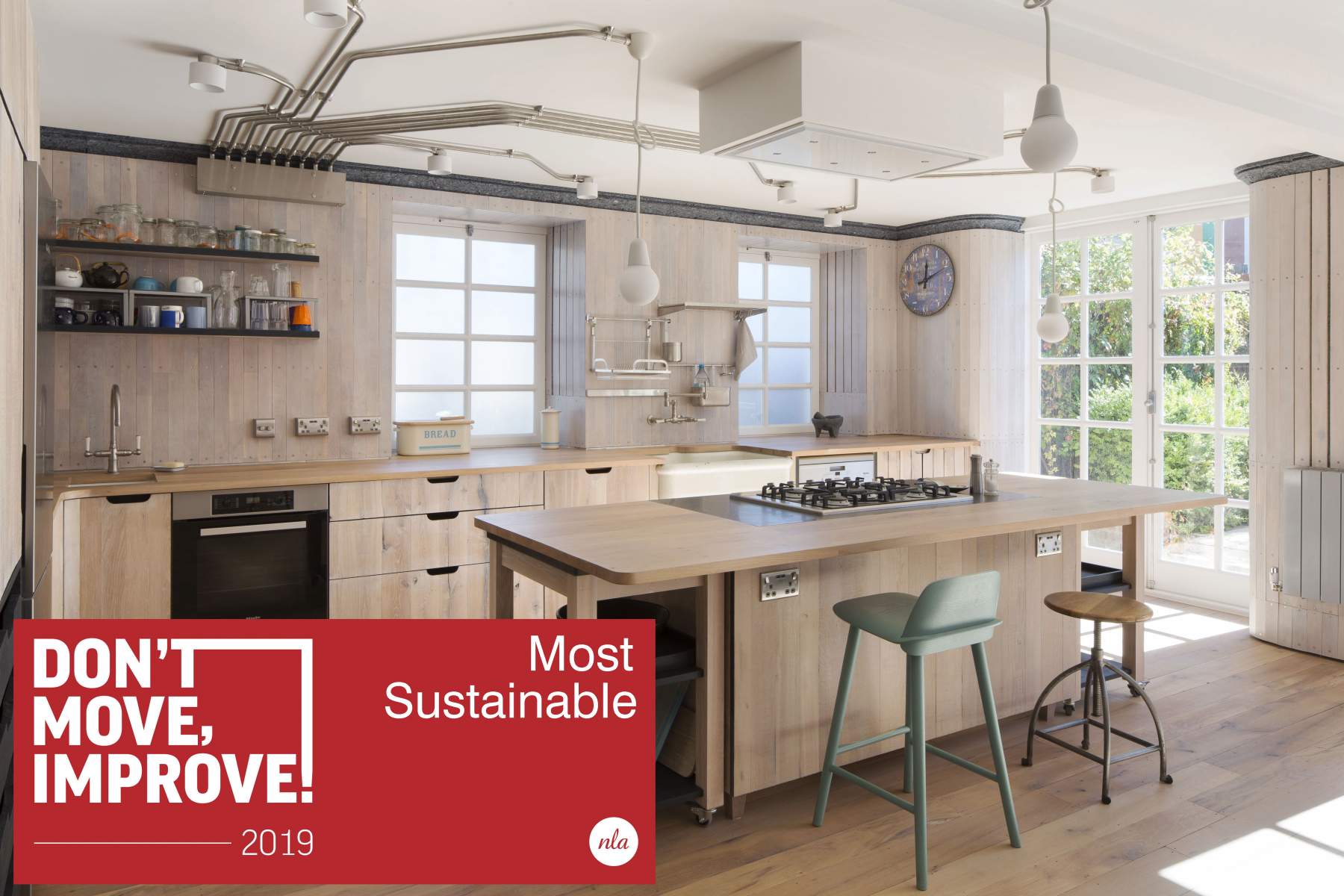
    Reuse Flat is an award-winning sustainable apartment renovation in Hackney, East London, recognised at the Don’t Move, Improve! Awards as the Most Sustainable Project (2019). The project transforms a three-bedroom ground-floor flat through a low-carbon, zero-waste refurbishment focused on reuse, circular design, and material efficiency.

    This eco renovation reimagines the kitchen, dining, and living spaces using a deep retrofit approach, improving thermal performance through a new internal lining while retaining and reusing as much of the existing building fabric as possible. The project prioritises reclaimed materials, circular construction methods, and future disassembly, ensuring components can be reused again at end of life.

    Key sustainable design strategies include reclaimed timber reused as internal wall panelling, rubble repurposed into garden landscaping walls, and insulation made from recycled textiles. These interventions demonstrate how low-carbon architecture in London can reduce construction waste while improving building performance and spatial quality.

    The UK construction industry is responsible for a significant proportion of national waste, estimated at around 60% of total UK waste production, making projects like Reuse Flat a critical example of how sustainable architecture can directly address the climate impact of building practices. The project explores how eco renovation, material reuse, and zero-waste construction can move from niche strategies to mainstream practice.

    Designed by Arboreal Architecture, Reuse Flat demonstrates how sustainable residential design in London can combine environmental performance, architectural quality, and practical innovation. The project has been widely recognised and featured by House Beautiful and the Architectural Association, and discussed in a podcast interview with architect Tom Raymont, where the themes of circular design, material reuse, and domestic sustainability were explored in depth.

    Reuse Flat offers an example of low-carbon refurbishment, sustainable interior architecture, and circular economy design in East London, showing how existing homes can be transformed into highly efficient, waste-conscious, and future-ready living spaces.
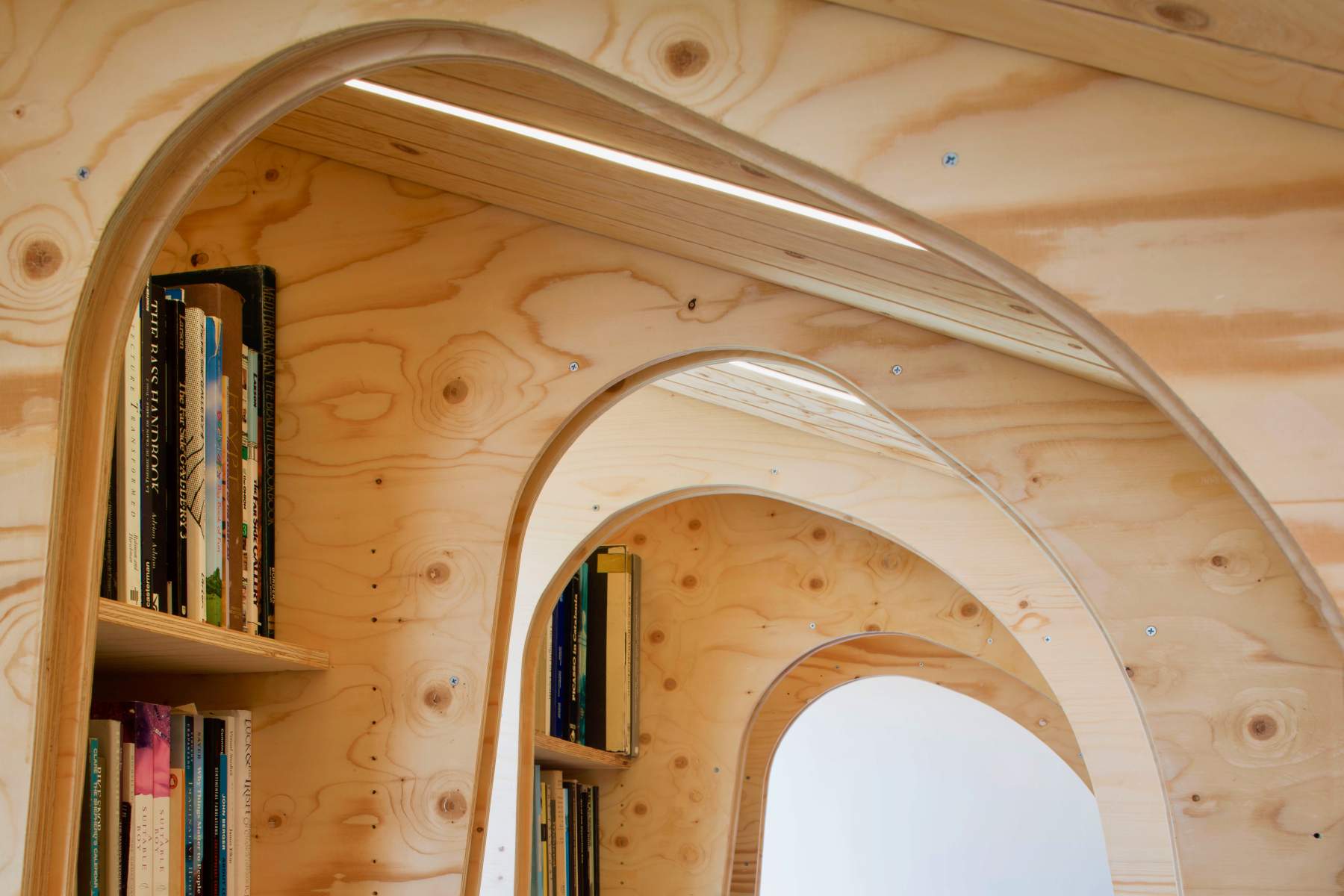
  • Loft Library | Award-Winning Innovative Loft Extension in London

    Loft Library is an award-winning residential loft extension, recognised as the Most Innovative Project at the Don’t Move, Improve! Awards 2019, celebrating the most creative home renovation and extension projects in London.

    The project was shortlisted among 37 of London’s most innovative residential architecture projects in the 2019 Don’t Move, Improve! Awards, a leading UK programme that highlights outstanding house extensions, loft conversions, and residential renovations across all 33 London boroughs.

    The awards programme is supported by leading industry voices, with Dezeen as media partner, and judged by an expert panel chaired by NLA founder Peter Murray. The 2019 jury included architect Carl Turner, Ash Sakula co-founder Cany Ash, journalist Philippa Stockley, Levitt Bernstein’s Jo McCafferty, and Dezeen editor Amy Frearson.

    Judges noted that the 2019 shortlist reflected a growing shift in sustainable residential architecture in London, with an increasing focus on natural materials, low-carbon construction, and expressive spatial design. Projects increasingly explored timber, brick, and other natural materials, alongside innovative ceiling and roof configurations that reshape domestic space.

    A key theme identified across entries was a move toward more sustainable home extensions and loft conversions, where architecture responds closely to how people actually live. This approach has resulted in more personalised, characterful homes that combine energy-conscious design, material innovation, and architectural individuality.

    Loft Library reflects this broader trend in eco-conscious residential design and innovative loft conversion architecture in London, demonstrating how small-scale domestic projects can achieve both spatial creativity and sustainable performance.

    The judges said that the standard of entries was higher than ever this year. Trends they identified included use of natural materials, introduction of colour, and creatively designed ceilings and roofs.

    "It's good to see a trend of gentle experimentation with sustainable natural substances, particularly brick and wood, and of homes being extended in ways that revolve around their owners' lives, resulting in something both idiosyncratic and full of character," said Stockley.

    "To make this happen, architects are really listening to and responding to their clients' wishes."

  • Bethnal Green Memorial | Award-Winning Memorial Architecture in East London

    The Bethnal Green Memorial is an award-winning commemorative architectural project in East London, designed for the Stairway to Heaven Memorial Trust. The project honours the memory of those who lost their lives in the Bethnal Green tragedy and creates a permanent public space for reflection, remembrance, and collective gathering within the urban fabric of East London.

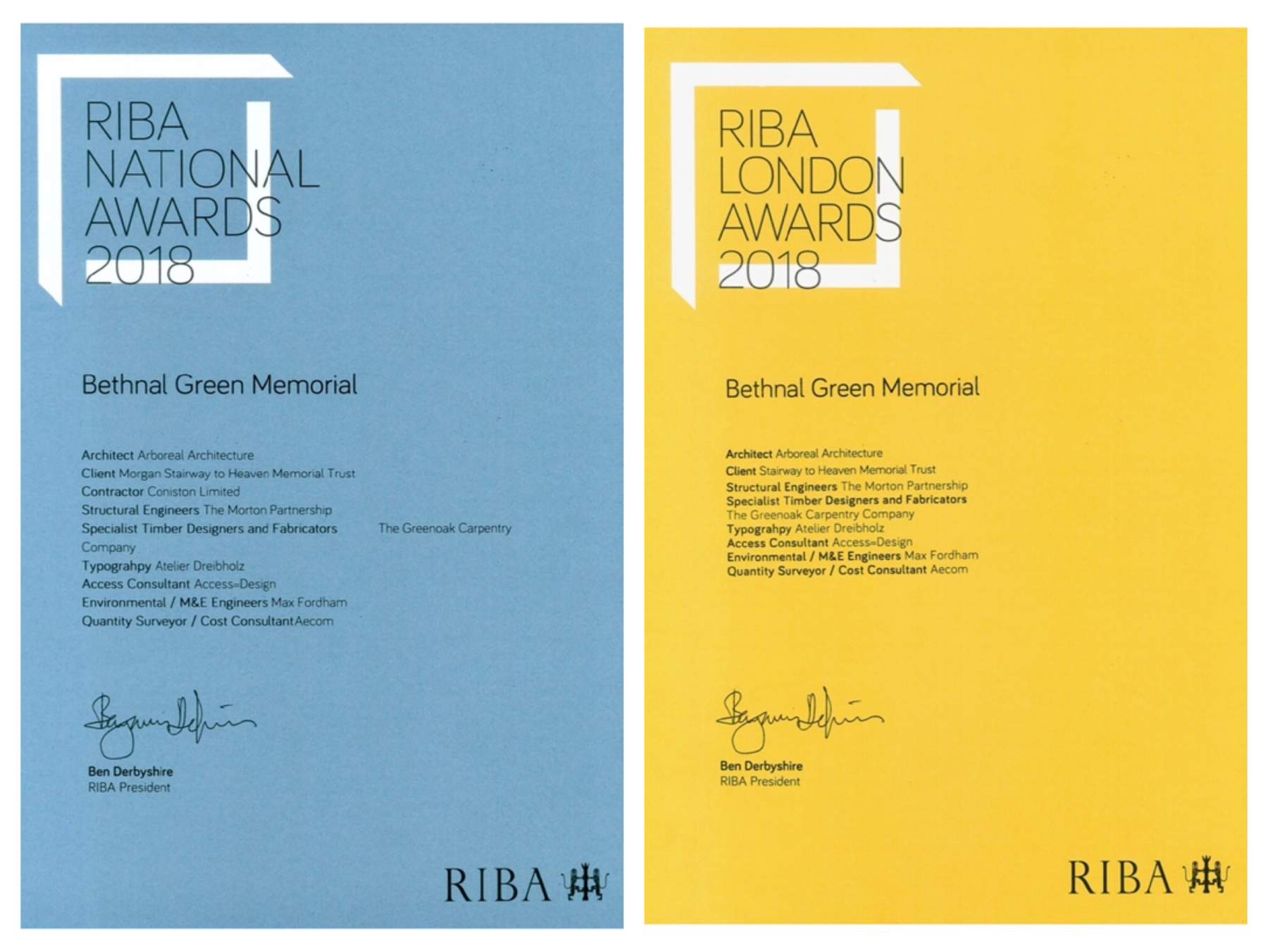
    The memorial has received significant national recognition, including the Royal Institute of British Architects (RIBA) London Award 2018, as well as RIBA London Project Architect of the Year 2018, and a special mention for Best Project in the UK under £1m, highlighting its exceptional architectural quality achieved within a carefully constrained budget.

    The project operates at the intersection of architecture, sculpture, and public memorial design, creating a space that is both spatially engaging and emotionally resonant. Described by the RIBA jury as “a striking memorial that is part sculpture, part architecture,” the design demonstrates strong conceptual clarity, intellectual rigour, and a carefully considered spatial experience for the public.

    The memorial’s form is driven by a clear narrative and a deeply considered relationship between structure, material, and human experience. It combines precise construction detailing, structural complexity, and refined material execution, resulting in a monument that is both durable and sensitive to its commemorative purpose.

    A central focus of the design is the visitor experience and spatial interaction, allowing individuals to move through and engage with the memorial in a reflective and personal way. The architecture is intentionally restrained yet powerful, using spatial sequence and material presence to create a quiet but impactful environment for remembrance.

    The Bethnal Green Memorial is an important example of public memorial architecture in London, demonstrating how contemporary design can address historical events with sensitivity, dignity, and architectural clarity while contributing to the civic and cultural landscape of East London.

    RIBA London Award 2018

    RIBA London Project Architect of the Year 2018

    and a special mention for best project in the UK under £1m.

    Client: Stairway to Heaven Memorial Trust

    "A striking memorial that is part sculpture, part architecture and that has intellectual conceptual rigour, a poignant justification for its form, a clear consideration to the viewer's experience and spatial interaction, a construction and structural complexity, and is built to an impeccable level of finish and detail." as mentioned by the RIBA Architecture.


  • Bethnal Green Memorial | RIBA Award-Winning Memorial in London

    Bethnal Green Memorial is an award-winning commemorative architecture project in East London, created for the Stairway to Heaven Memorial Trust.

    The project has received major recognition from the Royal Institute of British Architects, winning both the RIBA London Award 2018 and the RIBA National Award 2018, confirming its significance as one of the UK’s leading examples of contemporary memorial architecture.

    The memorial combines architecture and sculpture to create a powerful public space for reflection and remembrance, distinguished by its spatial clarity, material precision, and thoughtful engagement with visitors.

  • Larch Hut | Finalist – Hampshire Countryside Awards 2017 | Demountable Timber Micro-Dwelling

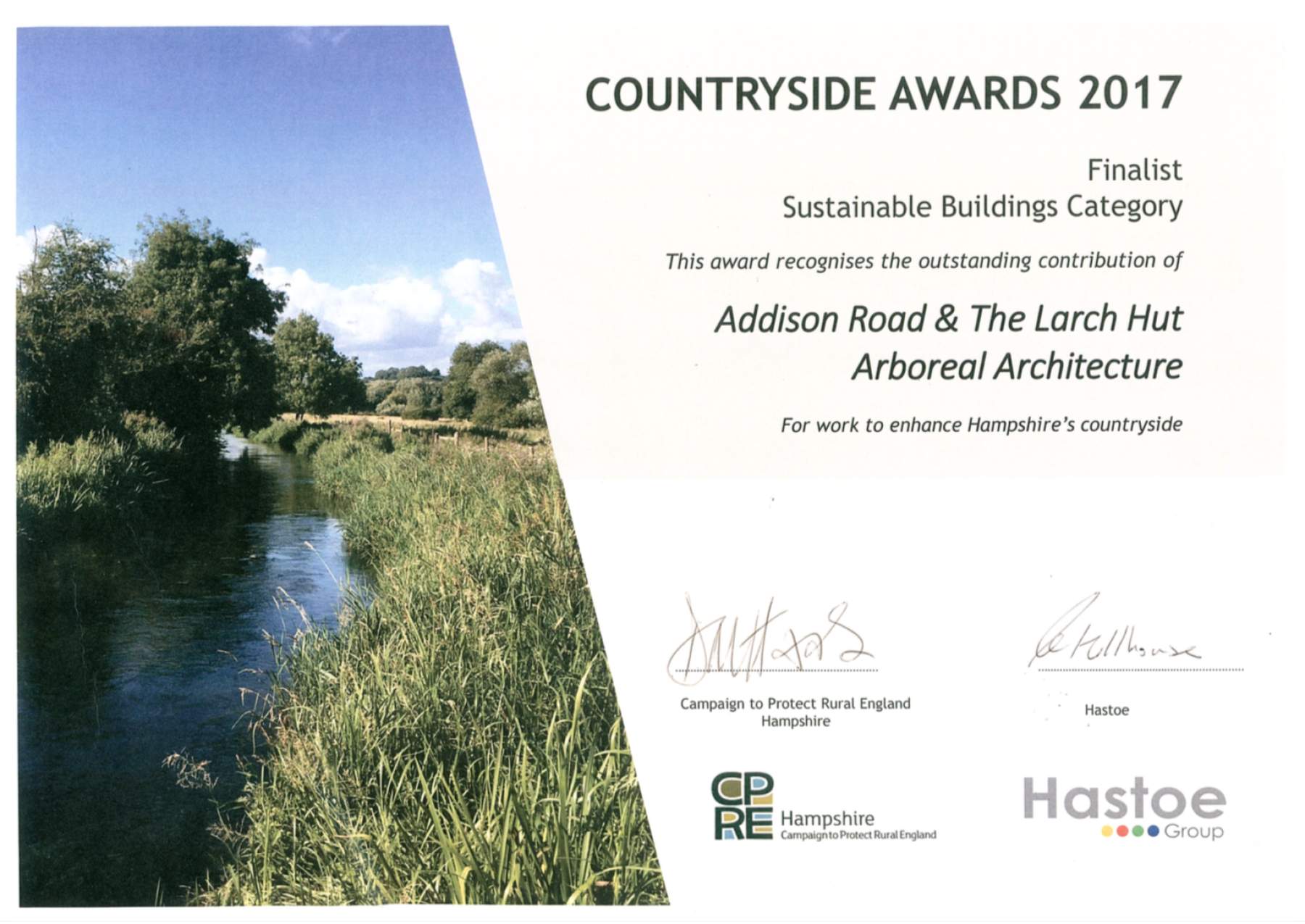
    The Larch Hut is a finalist for the Hampshire Countryside Awards 2017, recognised for its innovative approach to demountable timber architecture, off-grid living, and low-impact rural design.

    Designed as a lightweight and fully relocatable micro-dwelling, the Larch Hut is constructed almost entirely from larch timber (Larix decidua) and natural materials. Originally built as a retreat in the Umbrian hills of Italy, the structure was later carefully dismantled and reassembled in the New Forest, UK, demonstrating a fully reversible and transportable architectural system.

    At its core, the project explores demountable timber construction and circular building principles, where all components are designed for disassembly, reuse, and relocation without material loss. A modular structural system of exposed cross-braced timber beams allows the entire building to be assembled without permanent fixings, integrating structure and interior furniture into a continuous architectural framework.

    Built-in elements such as the bed, desk, and shelving are directly formed from the structural logic of the building, creating a highly efficient and compact spatial system where architecture and furniture operate as one unified design strategy.

    The material approach prioritises low-carbon, natural, and breathable construction methods. External larch cladding is left rough-sawn to weather naturally over time, allowing the building to evolve through exposure to climate, while internal surfaces are finished with linseed oil for a more refined tactile environment. Insulation is provided using sheep’s wool, supporting a natural, high-performance thermal envelope with minimal environmental impact.

    Material efficiency is further reinforced through the reuse of offcuts, which are repurposed to form the entrance platform, ensuring minimal waste and extending the circular logic of the construction process.

    The Larch Hut demonstrates how small-scale timber architecture can be lightweight, reversible, and ecologically responsive, offering a model for portable, low-impact living. It stands as an example of sustainable micro-architecture, demountable cabin design, and circular timber construction in the UK and beyond.

  • Clapham Retrofit | Residential Project of the Year | AJ Retrofit Awards 2014 | CIBSE Award-Winning Deep Retrofit

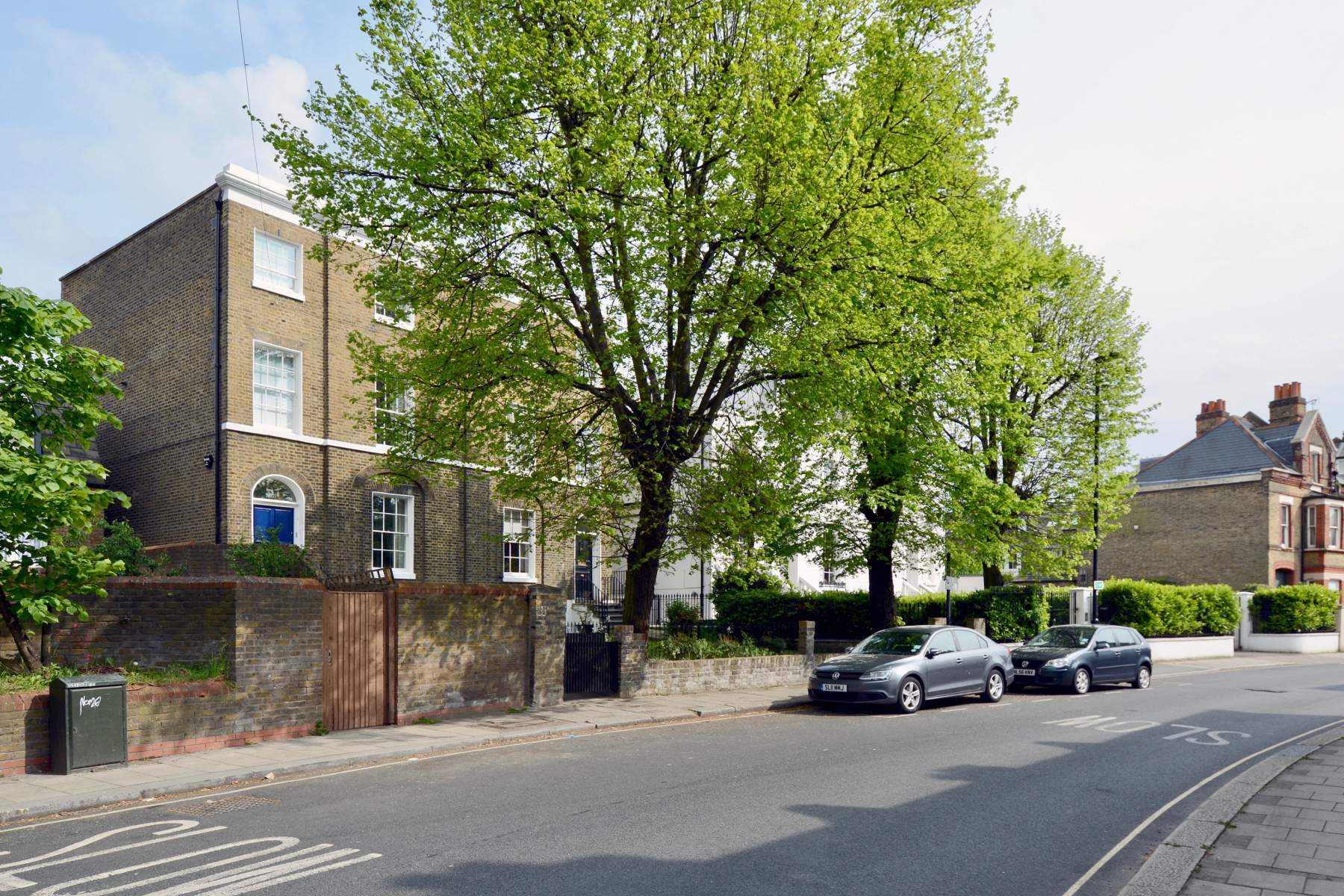
    The Clapham Retrofit is an award-winning deep retrofit of a 170-year-old Grade II listed Victorian townhouse in South London, recognised with Residential Project of the Year at the AJ Retrofit Awards 2014.

    The project was also recognised by the Chartered Institution of Building Services Engineers (CIBSE) for its outstanding performance in delivering high levels of user comfort, energy efficiency, and measured building performance within a historic residential context.

    This pioneering retrofit transforms an imposing Victorian townhouse in Clapham into one of the UK’s most significant examples of low-energy heritage refurbishment, and the first listed building in England to achieve the AECB Silver Performance Standard.

    The design adopts a rigorous fabric-first deep retrofit strategy, carefully upgrading the existing building envelope to dramatically improve thermal performance while retaining and respecting the historic fabric of the Grade II listed structure. The approach prioritises airtightness, insulation, and thermal bridge reduction to create a highly efficient and comfortable living environment.

    The project demonstrates how sustainable architecture and heritage conservation can operate together, achieving significant reductions in energy demand while maintaining the architectural character of the original Victorian townhouse.

    Clapham Retrofit is a landmark example of low-carbon residential retrofit, heritage building performance upgrade, and sustainable Victorian housing renovation in London, setting a benchmark for how historic homes can be transformed to meet contemporary environmental standards without compromise to their architectural value.

    CIBSE: Recognising the new build or refurbishment of a building in the residential sector that most effectively demonstrates high levels of user satisfaction and comfort whilst delivering outstanding measured building performance.: "An imposing 170-year old Grade II listed Victorian townhouse in Clapham has undergone a deep retrofit to become the first listed building in England to meet the AECB Silver Performance Standard."

© Arboreal Architecture Limited 2026
  • info@arborealarchitecture.com
  • Instagram
  • LinkedIn
  • YouTube
  • Facebook