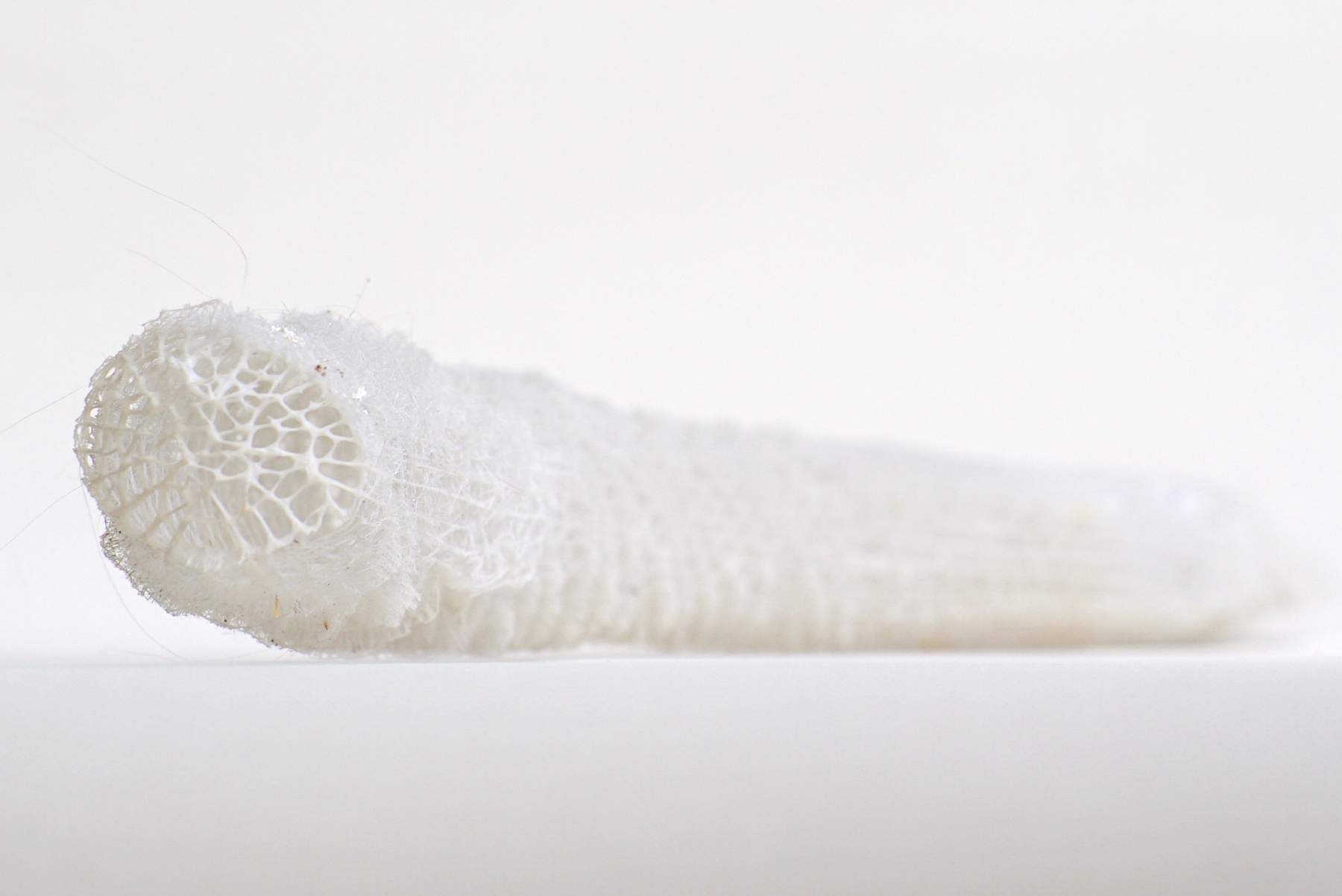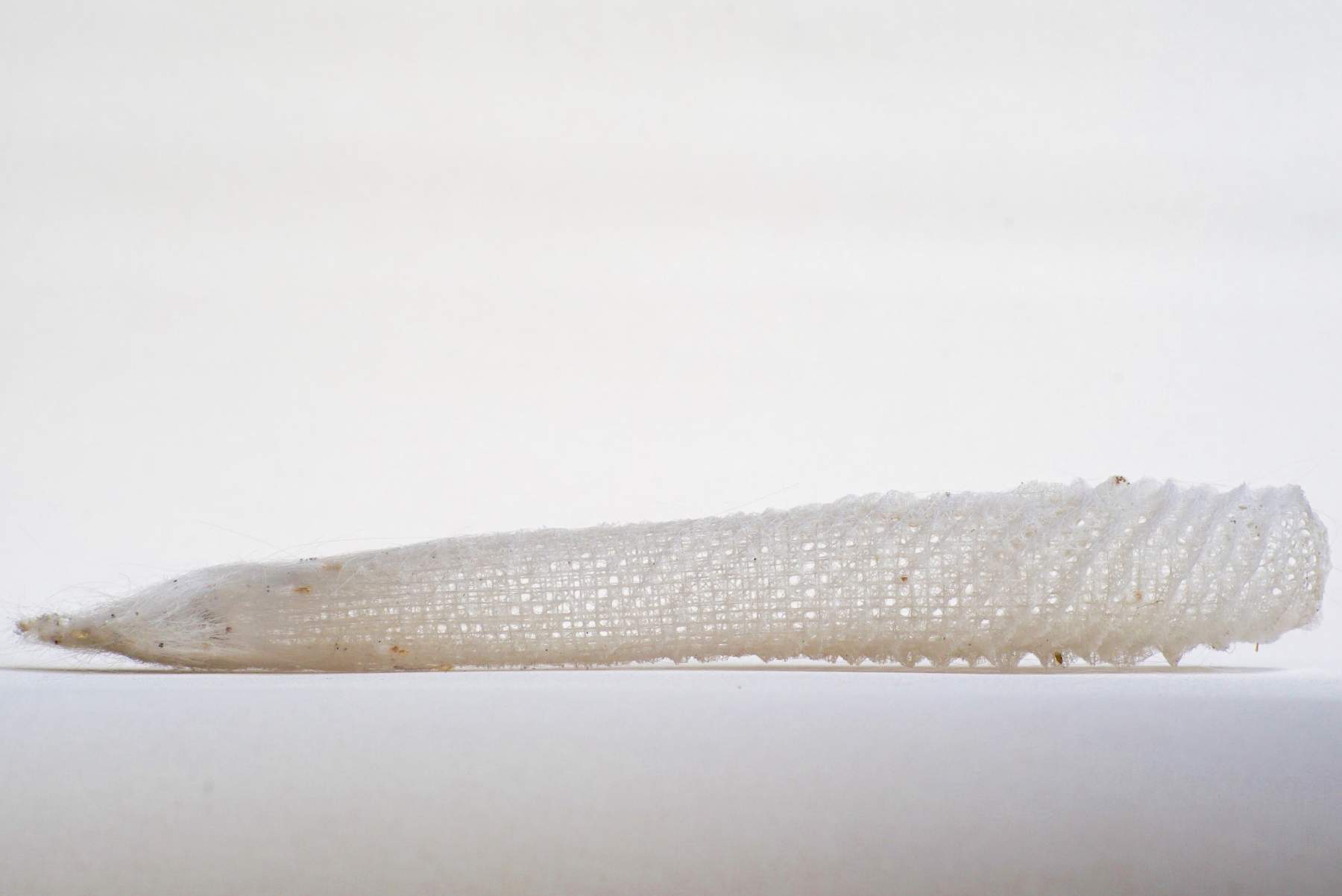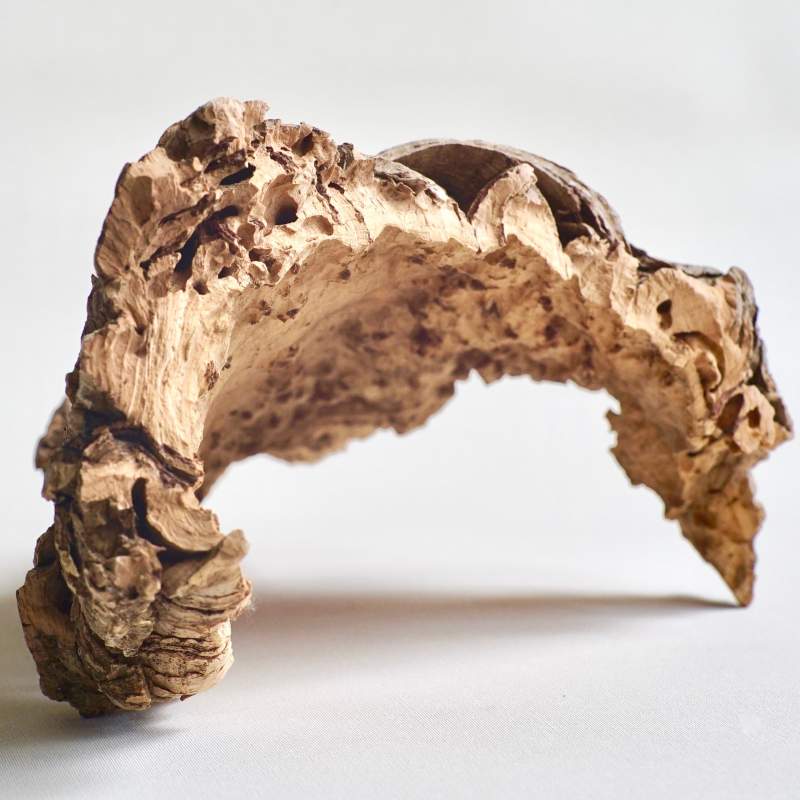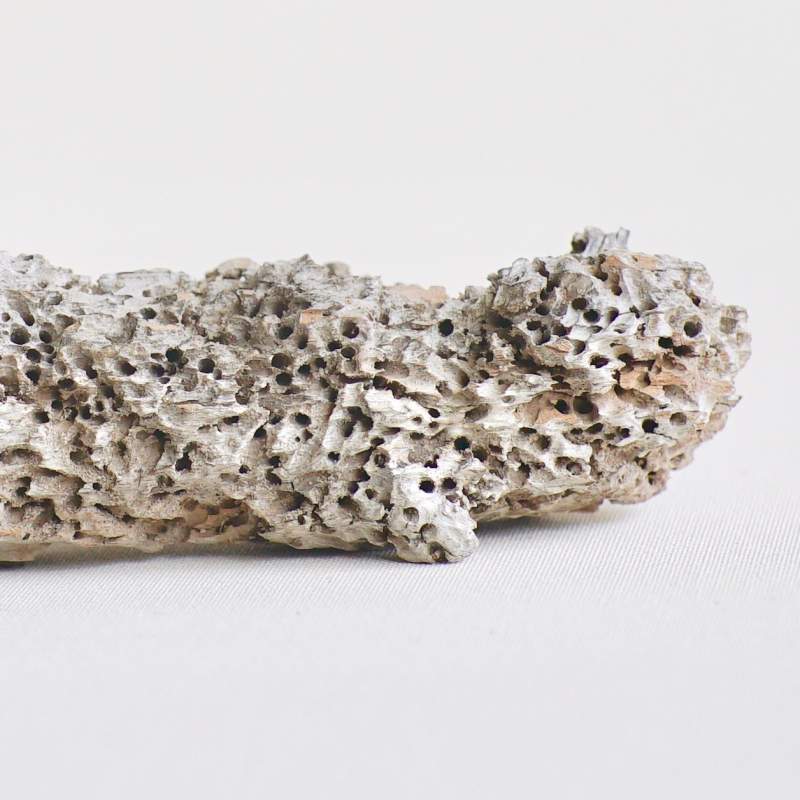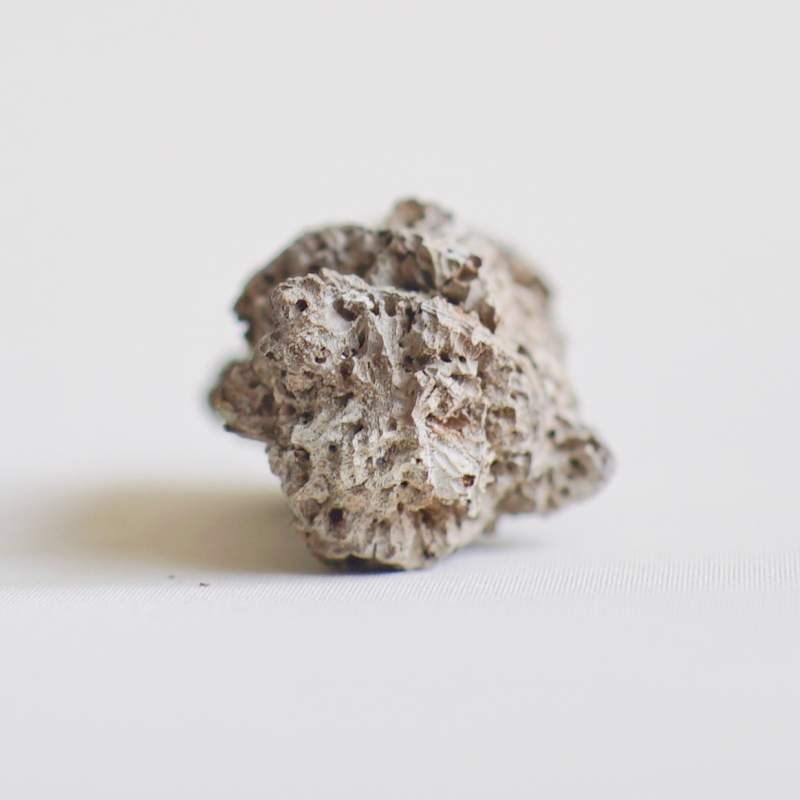
Euplectella aspergillum
Euplectella aspergillum: A Structure Woven by Water
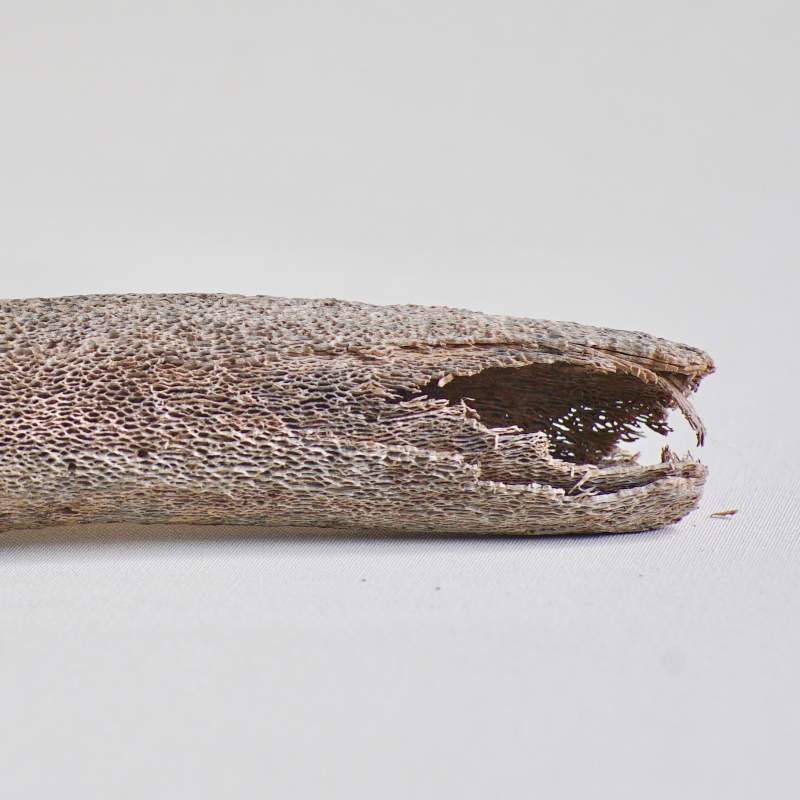
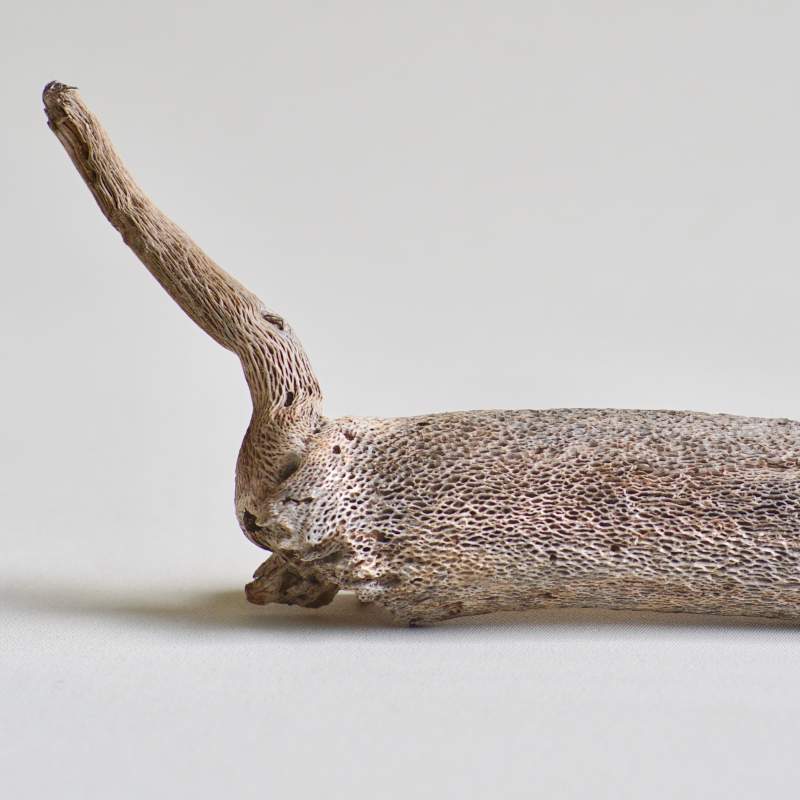
The Venus’ flower basket is a deep-sea glass sponge found in the dark, high-pressure environments of the Pacific and Indian Oceans, typically at depths exceeding 500 metres. At first encounter, it appears less like a living organism and more like an artefact: a delicate cylindrical lattice formed from interwoven silica strands, rising from the seabed as a fragile yet highly ordered structure.
Unlike mineral formations produced through geological processes, this structure is biologically generated. The sponge constructs its body from silica extracted from seawater, assembling it into a precise architectural framework composed of hexactine spicules—six-pointed structural elements that interlock to form a continuous tubular mesh. The result is a form that is both porous and rigid, open yet structurally stable, capable of withstanding the immense pressures of the deep ocean.
The geometry of Euplectella aspergillum is not random. Its lattice follows a complex hierarchical system of reinforcement, distributing stress across a network of interconnected filaments. This arrangement produces an unusually high strength-to-weight ratio, allowing the structure to remain intact in conditions that would collapse most engineered materials.
An Architecture of Flow
The body of the sponge functions as a filtering device. Seawater is drawn through microscopic pores, passed through its internal channels, and expelled through an opening at the top of the tubular form. In this continuous process, suspended particles and plankton are extracted as nourishment.
What emerges is a structure defined by flow rather than enclosure. Unlike architectural systems designed to resist environmental forces, the Venus’ flower basket is shaped by them. Water is not excluded but organised, channelled through a spatial system that transforms movement into sustenance.
Its form can therefore be understood as a record of fluid dynamics: a materialised response to the movement of water through space over time.
Symbiosis and Occupation
Within the central cavity of many specimens lives a pair of small shrimp, entering the sponge at a juvenile stage and growing too large to exit. Confined within the internal chamber, they establish a long-term symbiotic relationship with their host. The sponge provides shelter and protection, while the shrimp assist in maintaining internal cleanliness by removing debris.
In some cultural interpretations, particularly in Japan, this pairing has been understood as a symbol of lifelong partnership, and dried specimens are traditionally given as wedding gifts. The structure thus extends beyond biology into cultural meaning, becoming an object through which ideas of cohabitation and mutual dependence are expressed.
Material Intelligence
The most striking aspect of Euplectella aspergillum lies in its method of construction. Unlike industrial glass, which requires high temperatures and energy-intensive processes, the sponge produces its silica skeleton at ambient ocean temperatures. The material is assembled molecule by molecule, forming fibres that exhibit properties comparable to optical systems used in human engineering.
Embedded within this biological construction is a level of structural intelligence that has drawn the attention of materials scientists and architects alike. The sponge’s lattice demonstrates principles of lightweight construction, redundancy, and load distribution that are directly relevant to contemporary structural design.
Its geometry has informed research into biomimetic architecture, particularly in the development of lattice structures and fibre-based systems that prioritise efficiency and material economy.
A Deep-Sea Prototype
Euplectella aspergillum can be understood as a naturally occurring prototype for architectural systems that operate under extreme conditions. It demonstrates how structure, material and performance can be integrated into a single continuous system, shaped not by external design but by evolutionary pressure and environmental constraint.
Suspended in the darkness of the deep ocean, the Venus’ flower basket is both fragile and enduring: a structure built from flow, sustained by exchange, and refined over geological time. In its woven silica form, we encounter an architecture that precedes human construction, yet speaks directly to its future possibilities.